



The Pan-African Paradigm of Linguistic Sovereignty and Post-Colonial Realignment
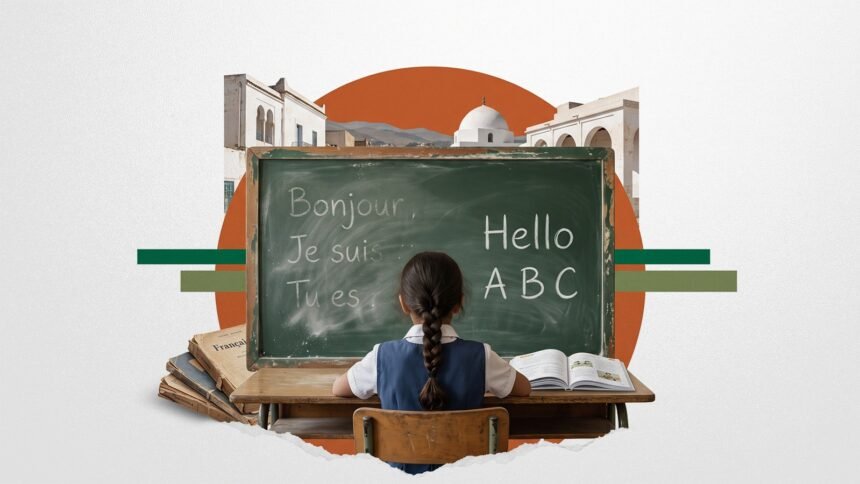
The eight-year-olds filing into Algerian classrooms this month will conjugate their first foreign verbs in English, not French, for the first time since independence six decades ago. The 2026-27 school year’s curriculum shift, making English rather than French the primary foreign language taught from the third year of primary school, is a modest administrative change with outsized symbolic weight: it marks the moment Algeria’s education system formally displaces the language of its former colonizer from the position it has occupied, largely unchallenged, since 1962. This is not an isolated Algerian phenomenon but part of a broader Maghrebi recalibration, as Morocco and Tunisia pursue parallel, if differently paced, shifts away from French dominance in schooling and public life. The paradigm at stake is one of linguistic sovereignty as a proxy for deeper geopolitical realignment: language policy has become, across North Africa, a tool through which states signal which global partners they intend to orient toward, and which colonial-era relationships they are prepared to retire formally, classroom by classroom, cohort by cohort.
A Policy Four Years in the Making
Algeria first introduced English alongside French in primary schools in 2022, under a directive from President Abdelmadjid Tebboune. Still, this academic year marks the first in which English fully displaces French as the primary foreign language taught to entering pupils, beginning in the third year of primary school around age eight. Education minister Mohamed Seghir Saadaoui confirmed in July that English instruction would begin at that stage, with French lessons continuing but in a diminished, secondary role. The gradual four-year rollout reflects the institutional caution required to restructure a national curriculum, retrain a teaching workforce still predominantly French-educated, and manage the political sensitivity of a policy that touches Algeria’s deepest historical wound: the legacy of 132 years of French colonial rule and the war of independence that ended it in 1962. That this shift has taken four years to move from announcement to full implementation illustrates how structurally embedded French remains in Algerian institutional life, even as the political will to displace it has clearly hardened.
A Relationship Already Fraying
The curriculum change did not emerge in a diplomatic vacuum. Algeria’s relationship with France has been tense since 2021. Despite a brief rapprochement in 2023, relations worsened significantly in 2024 after Paris declared its support for Morocco’s sovereignty claim over the disputed Western Sahara territory, a position Algeria, as the principal backer of the Polisario Front, regards as a direct affront to its regional interests. That diplomatic rupture provides the immediate political context for a curriculum decision that might otherwise read as purely pedagogical: Algeria’s language policy is functioning, in effect, as an instrument of foreign policy, communicating to Paris that Algiers is prepared to formally diminish France’s cultural and linguistic influence over the next generation of Algerians in direct response to unresolved geopolitical grievances. The education ministry’s own language, emphasizing “leveraging education gains” as a marker of national self-determination, situates the reform explicitly within this framework of sovereign assertion rather than neutral pedagogical modernization.
Morocco and Tunisia’s Parallel Paths
Algeria’s shift echoes, without exactly mirroring, similar transitions already under way in Morocco and Tunisia, both former French protectorates that pursued distinct post-independence language strategies. Morocco, independent since 1956, initially prioritized Arabisation over English adoption, but by 2023 had begun introducing English into public schools where it had previously been confined largely to private institutions, driven in part by generational demand: a 2021 British Council survey found 40 percent of Moroccan youth aged 15 to 25 considered English the most important language to learn, compared to just 10 percent favoring French. Tunisia, by contrast, never sought to displace French from education and administration as aggressively as its Maghrebi neighbors, maintaining a bilingual French-Arabic elite educational track since independence in 1956. That divergence across three states sharing a common colonial language history illustrates that linguistic sovereignty is not a uniform continental trajectory but a set of distinct national calculations, each shaped by its own balance of economic pragmatism, generational preference and geopolitical grievance.
Reclaiming the Classroom as Sovereign Ground
Algeria’s decision to make English the primary foreign language of its youngest students is, on its surface, a technical curriculum adjustment. Read against the backdrop of a deteriorating relationship with Paris and a regional pattern of Maghrebi states recalibrating their linguistic inheritance, it becomes something closer to a declaration: that the institutional architecture built under French colonial rule, and sustained for six decades after independence, is no longer sacrosanct. Whether this shift ultimately strengthens Algeria’s global economic integration, by aligning its youth with the dominant language of international commerce and the internet, or substitutes one external linguistic hegemony for another remains an open question. What is clear is that Algeria’s classrooms have become a site of genuine sovereign contestation, where the choice of which foreign tongue a child learns first is no longer a neutral pedagogical matter but a statement about which century, and which partners, the nation intends to face.