





Money Exists, Cheap Money Does Not
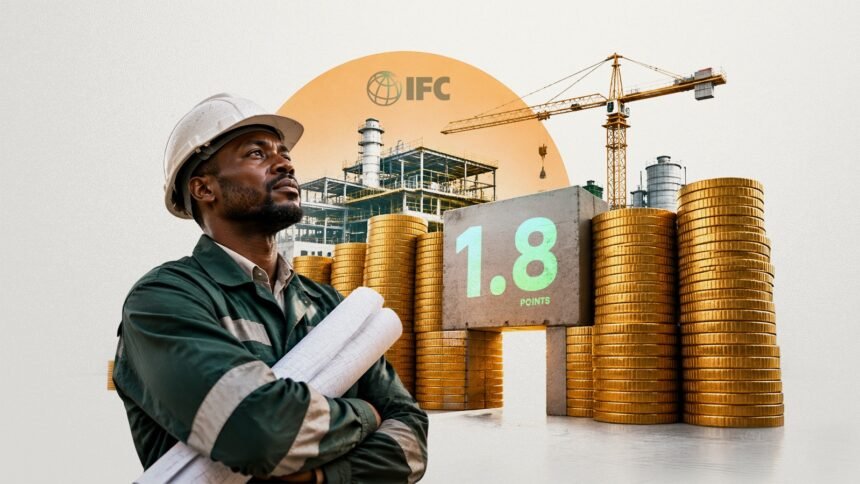
Africa does not lack investors willing to lend to its companies. It lacks investors willing to lend to them cheaply. That paradox sits at the center of new research from the International Finance Corporation, the World Bank Group’s private-sector arm, which finds that African firms pay a median real borrowing cost 180 basis points, or 1.8 percentage points, higher than companies in high-income economies.
The findings were presented by Césaire A. Meh, the IFC’s manager of private markets, at the Africa Financial Industry Summit in Luanda, Angola. They draw on more than 330,000 corporate bonds issued by over 50,000 firms around the world across 30 years. Between 2015 and 2024, the median real yield on corporate bonds in African countries was 2.8 percent, against 1 percent in high-income countries.
For African businesses trying to build factories, expand networks or refinance debt, that gap is not abstract. Every extra point of interest is money that does not go into wages, equipment, or growth, and it compounds a disadvantage that African governments already feel in sovereign debt markets.
Not One African Rate
The study shows that the premium is far from uniform. Among selected markets, real corporate bond yields were 4.9 percent in Nigeria, 4.7 percent in South Africa, 3.9 percent in Morocco and 2.1 percent in Egypt. Companies on the same continent are operating under very different financing conditions.
That variation matters because it undercuts the idea that African firms are penalized for being African. The research points instead to a mix of domestic fiscal conditions, exposure to global shocks, the depth of local investor markets, regulatory frameworks and the characteristics of individual companies. Several of those factors are within reach of policy.
When the State Borrows Cheaper, So Do Firms
One of the strongest findings links corporate borrowing costs to government finances. According to the analysis, a one-percentage-point fall in sovereign yields is associated with a 76-basis-point fall in corporate yields in domestic markets, and a 46-basis-point fall in international markets. Fiscal credibility, in other words, is not only a concern for finance ministries. It flows directly into what private businesses pay.
The study also measured exposure to Washington. A one-point rise in the US policy rate is associated with a 10-basis-point increase in domestic corporate yields, but a 47-basis-point increase in international markets. Firms that raise money at home are far better shielded from decisions taken at the US Federal Reserve than those that depend on foreign bond markets.
Pensions and Open Markets
The IFC identifies two policy levers in particular. The first is pension reform. Introducing mandatory or quasi-mandatory individually funded pension schemes is associated with rising domestic corporate bond issuance, reaching about 4.6 percent by the fourth year after reform, and with yields roughly 150 basis points lower in domestic markets for firms that issued bonds both before and after the change. Larger pools of local savings create local buyers for local debt.
The second is capital account liberalization: reducing capital controls, opening markets to foreign investors and easing regulation. The study links such measures to more corporate bond issuance, especially internationally, and to a 120-basis-point fall in international corporate yields for firms issuing before and after liberalization. The IFC presents the two reforms together, as complementary ways to widen the investor base.
What Companies Can Fix Themselves
Not everything depends on governments. Stronger disclosure rules are associated with lower corporate yields. Unlisted firms pay a premium of 22 basis points at home and 84 basis points abroad. In comparison, companies with a history of borrowing in loan or bond markets pay 23 basis points less domestically and 31 basis points less internationally. State-owned enterprises borrow more cheaply too, by 50 basis points at home and 37 basis points abroad.
The IFC’s prescription for companies falls into three areas: governance, through independent oversight, effective audit committees and credible boards; disclosure, through timely financial reporting and clear information on debt and the use of funds; and creditor protection, through covenants, collateral, guarantees and credible enforcement. These measures matter most where national institutions are still developing. For a mid-sized African company, the message is that the way it is run, and how openly it reports, can affect its cost of capital almost as much as the reputation of the country it operates in.
Lowering the Cost of Self-Reliance
The study arrives as African leaders increasingly argue that the continent is overcharged for capital. Its numbers give that argument a more precise shape, but they also shift part of the responsibility homeward. A deeper pool of domestic savings, credible public finances and transparent companies would make African firms less dependent on the moods of distant markets and on interest-rate decisions taken in Washington. That is a practical form of economic sovereignty: the ability to finance growth at home, in local markets, at a price that does not punish ambition. The 180-basis-point gap is a measure of how far there is to go, and the IFC’s findings suggest that much of the distance can be closed by choices African governments, regulators and businesses make themselves.