

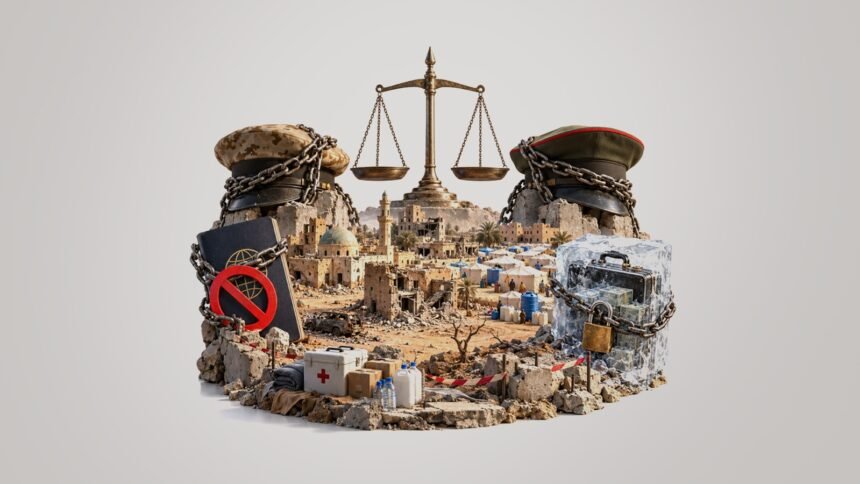
On the first anniversary of the fall of North Darfur’s capital, a foreign government has named individual commanders on both sides of Sudan’s war over rape and starvation, a reminder of how little accountability has so far come from inside the continent.
Up to 10,000 men, women, and children are believed to have been killed over two days as the Rapid Support Forces (RSF) seized El Fasher a year ago. Another 40,000 people remain unaccounted for. A city that had more than a million people before the war now holds fewer than 70,000. On Monday, October 26, 2026, the first anniversary of the city’s fall, the United Kingdom responded to those numbers with a list of names.
The British government said it had sanctioned 15 senior commanders from the RSF and the Sudanese Armed Forces (SAF) over suspected atrocities, including conflict-related sexual violence during the siege of El Fasher. The targeted individuals face a travel ban and an asset freeze. The Foreign, Commonwealth and Development Office said it hoped the action would ensure that “the horrors that took place at El Fasher will be known to the world”.
The measures matter less for their immediate bite than for what they record. By naming commanders from both armies, London has placed on the public record that sexual violence and starvation are not the conduct of one side alone, a point that the warring parties and their backers have each tried to blur.
Who Is Named
Among those sanctioned are Hussein Abu Jalak, an RSF colonel linked to atrocities during the siege, a period when hundreds of thousands of civilians were forced to subsist on animal feed, and Al-Nour Ahmed Adam, known as “Al-Qubba,” whom the UK identified as having played a prominent role in the siege and attack on the city.
The UK government said the new listings build on five previous rounds of British sanctions connected to Sudan’s war. That history is a caution as well as a context. Five rounds have not stopped the fighting, and a travel ban means little to a commander who does not plan to travel or who keeps his money beyond British reach.
Starvation and Rape as Weapons
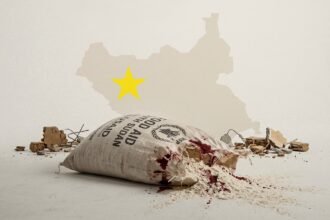
The announcement follows new work by the Centre for Information Resilience, a UK-funded organization, which documented systematic starvation and sexual violence against civilians by both sides. The British government said the evidence included footage of RSF fighters discussing cutting off El Fasher’s water supply and preventing traders from bringing food into the city.
Foreign Secretary Ed Miliband said that UK-funded investigations had documented the ongoing use of rape and starvation as weapons of war. “These are crimes against our humanity,” he said, adding that perpetrators must be held accountable and that outside support for the warring parties must end.
That last point is the most politically pointed. Calls to end external support are easy to make in general terms and hard to enforce against named states, and the war’s supply lines run through a region in which several governments have interests in the outcome.
Money for Survivors
Alongside the sanctions, the UK announced 15 million pounds in new support. Five million pounds is earmarked for survivors of conflict-related sexual violence, including sexual and reproductive healthcare, maternal health services, psychosocial support, and safe spaces for women and girls. A further 10 million pounds will support humanitarian operations, including clean water and sanitation at displacement sites around Tawila and essential health and protection services in El Obeid, the capital of North Kordofan, where fighting and restrictions on aid access have left civilians in acute need.
Set against a war that has forced 14 million people from their homes, the sum is modest. Its value lies in where it is aimed: at survivors whose needs are often the last to be funded and the first to be cut.
A City Still Under Pressure
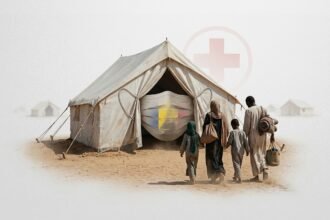
A year later, life inside El Fasher remains grim, with testimony pointing to routine detention, torture, and unlawful killings. A coalition of organizations campaigning for atrocity prevention and justice for Sudan marked the anniversary with a statement: “The victims will not be forgotten, survivors will be heard, and we will continue to pursue accountability for those responsible.”
Meanwhile, the war has changed shape. Over the past 12 months, it has become increasingly a drone war, and the most recent RSF strikes on power stations caused mass outages across eastern Sudan. The front line no longer needs to be near a city for its people to suffer the consequences.
Accountability Africa Can Own
There is an uncomfortable pattern in the fact that the most concrete step on El Fasher’s anniversary came from London. African institutions, from the African Union to regional bodies, have the mandates to name and pressure those responsible, yet the list of individuals punished for the siege is still being written mostly abroad. Real self-determination includes the capacity to judge one’s own atrocities.
Sanctions from outside can document and deter at the margins. Lasting justice for El Fasher will depend on Sudanese and African mechanisms that can investigate commanders on both sides, protect survivors who testify and keep the evidence safe until courts are ready to use it. Until then, the names on Britain’s list stand as a record of what the continent has not yet done for itself.