




On Cape Town’s Victoria & Alfred Waterfront, where cranes frame the skyline, and the sea air mixes with the smell of coffee from hotel lobbies, the latest African export on offer is not minerals or grain, but a spreadsheet.
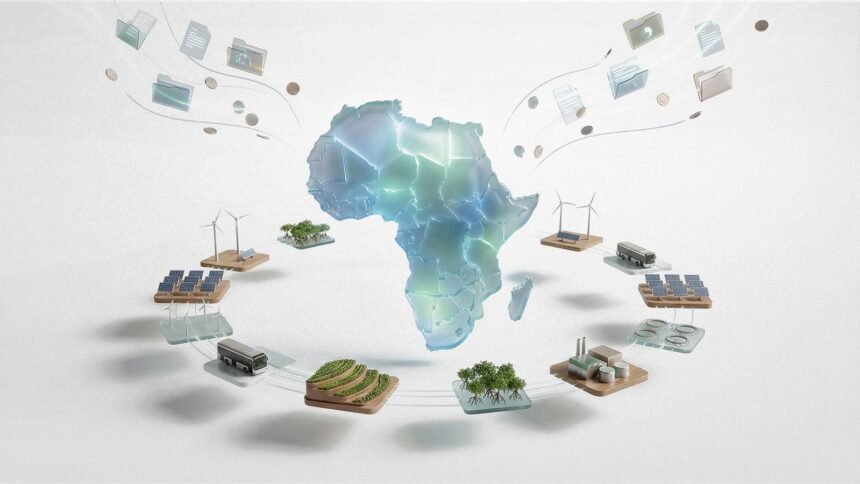
On it sit dozens of projects: solar mini‑grids, electric bus fleets, waste‑to‑energy plants, mangrove restoration schemes, and climate‑smart farms, together seeking just over $3.09 billion in funding.
They form the centerpiece of Africa’s Green Economy Summit 2026, a four‑day gathering that bills itself as a “deal‑making” marketplace rather than another climate talk shop.
Organizers say the curated portfolio, drawn from more than 25 African countries, spans early‑stage small and medium‑sized enterprises requiring roughly $90 million and near‑commercial or large‑scale infrastructure seeking close to $3 billion.
Beyond those headline numbers sits a broader pipeline of some $8.7 billion in green and blue economy ventures that regional analysts say is now emerging across the continent, a sign that Africa’s low‑carbon ambitions are being translated into business plans and term sheets.
The question hanging over Cape Town is whether global capital will move fast enough to meet that ambition at the scale the climate crisis demands.
Background and Stakes
Africa has contributed the least to historical greenhouse gas emissions. Yet it faces some of the sharpest climate shocks: longer droughts in the Horn of Africa, deadly floods from Libya to Mozambique, and heat already testing human limits in the Sahel.
At the same time, it holds about 60 percent of the world’s best solar resources, significant wind corridors, and some of the youngest cities on Earth, where energy systems and transport choices are still being built.
Those contrasts have turned the “green economy” from a catchphrase into an investment thesis.
Governments and entrepreneurs are experimenting with renewable‑energy auctions in South Africa, off‑grid solar in East Africa, and climate‑smart agriculture in West and Central Africa, while coastal states test blue‑economy models that pair conservation with aquaculture and tourism.
Yet the money falls far short of the ambition.
According to the Climate Policy Initiative’s latest “Landscape of Climate Finance in Africa,” climate finance flows on the continent grew by 48 percent to $43.7 billion in 2021–22, but that still represents only about 23 percent of what African countries say they need each year to meet their 2030 climate goals.
The African Development Bank estimates that Africa will require roughly $2.7 trillion by 2030 to meet those goals, with current flows covering less than a quarter of that figure.
“Climate finance in Africa has certainly grown, but it has nowhere near kept pace with need,” the Climate Policy Initiative report notes, warning that flows will have to at least quadruple annually to close the gap.
Against that backdrop, a summit promising a vetted, $3.09 billion portfolio of “investment‑ready” deals is both a sign of progress and a reminder of how large the shortfall remains.
Human Stories and Real‑World Examples
Behind each line item in the Cape Town pipeline is a bet on a different development path.
In secondary cities where diesel generators still rattle through the night, project developers are pitching solar‑plus‑battery mini‑grids to keep shops and clinics running when the main grid fails.
In congested capitals where commuters cram into aging minibuses, start‑ups are seeking backing to assemble electric vehicles locally, promising quieter streets and cleaner air.
Along eroding coastlines, proposals for mangrove restoration and sustainable fisheries frame the “blue economy” as both a buffer against stronger storms and a way to preserve livelihoods.
Elsewhere, small firms hope to turn organic waste into bio‑fertilizers and clean cooking fuels, chipping away at dependence on charcoal and firewood that drive deforestation.
For these entrepreneurs, access to capital is less about abstract targets and more about survival.
Borrowing costs are often higher than in wealthier markets; local banks may be wary of newer business models; and projects can be too small or too early‑stage to attract big institutional investors on their own.
The summit’s promise of direct introductions to development finance institutions, impact funds, and commercial banks is, to them, a rare opening.
“Elodie Delagneau, investment project lead at the VUKA Group, which organizes the summit, argues that this kind of curated matchmaking is exactly what has been missing. ‘AGES 2026 is not merely a conference; it is the definitive platform where serious capital meets serious impact,’ she said, emphasizing that the projects have been ‘meticulously vetted’ to de‑risk them for investors.”
Policy, Debate, and Expert Views
African policymakers have increasingly framed the green economy as central to a “just transition”, one that expands energy access, creates jobs, and builds industries while avoiding the high‑carbon path taken elsewhere.
Officials at the African Union and regional development banks have used recent climate summits to argue that investment in African clean energy, transport, and agriculture should be seen as a matter of mutual interest, not charity.
Investors and lenders often point to a different set of obstacles: regulatory uncertainty, currency risk, small average deal sizes, and thin project pipelines that meet their internal risk and return criteria.
The Cape Town summit’s backers say their selection process, which narrowed more than 100 applications down to a smaller group of vetted ventures, is meant to address that complaint.
Civil society groups, meanwhile, warn that “bankability” can become a filter that sidelines community‑scale or locally owned projects that may not fit standard templates but deliver deep social benefits.
They have pushed for stronger safeguards and for affected communities to have a real voice in how land is used, how benefits are shared, and who bears the risks when projects fail.
The latest climate‑finance data underline another concern: concentration.
CPI’s analysis finds that the ten African countries receiving the most climate finance account for 46 percent of total flows, while the ten most climate‑vulnerable countries receive just 11 percent.
Private climate finance, though it nearly doubled between 2019–20 and 2021–22, still accounts for only about 18 percent of Africa’s total climate flows, the lowest share of any region.
That raises a question about who will ultimately benefit from the deals struck in Cape Town.
Will the emerging $8.7 billion pipeline primarily reinforce a handful of better‑off markets, or can it pull in projects from countries that currently sit on the margins of global capital?
What This Summit Signals
In design, Africa’s Green Economy Summit is an experiment in closing the gap between the spreadsheet and the shovel.
It relies on closed‑door “deal rooms,” structured matchmaking, and an investor committee tasked with stress‑testing business models before they ever appear on stage.
If the experiment works, a meaningful share of the $3.09 billion in projects on display in Cape Town will inch toward financial close over the coming year, bringing construction jobs, new megawatts of clean power, and emissions avoided.
If it falters, it risks joining a long line of conferences that produced glossy brochures and little lasting change.
Either way, the summit reflects a broader shift.
African governments, financiers, and entrepreneurs are no longer waiting for a perfect global climate‑finance architecture; they are assembling their own pipelines, platforms, and standards, from national green‑investment plans to regional carbon‑market initiatives.
For now, the numbers remain lopsided.
Tens of billions of dollars in annual climate finance on the continent sound impressive until they are set against a $2.7 trillion need.
But the fact that there is now an identifiable, expanding portfolio of African green‑economy projects, marketed explicitly as a pan‑African opportunity, is itself a measure of how much the conversation has shifted in just a few years.
As delegates move between panel discussions and coffee lines beside the harbor, the story they are trying to tell is simple: Africa is not just a victim of climate change, but a laboratory for solutions.
Whether global finance chooses to see it that way and price the risk accordingly will help determine not just the continent’s trajectory but the world’s.