




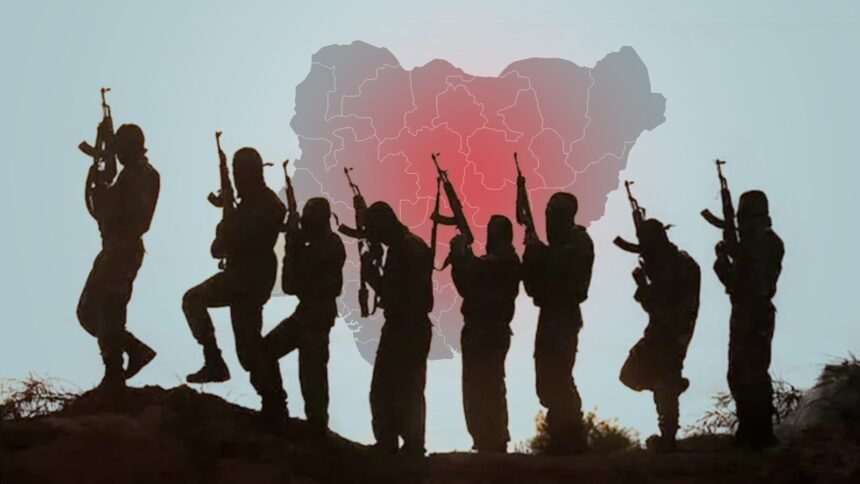
Nestled at the confluence of the Gulf of Guinea and the encroaching Sahara, Nigeria embodies Africa’s paradoxes—a vibrant mosaic of over 250 ethnicities, a pulsating economy fueled by black gold, yet a nation perpetually on the precipice of fragmentation. With 240 million souls, it is the continent’s demographic titan, its cultural heartbeat echoing from Lagos’s skyscrapers to Maiduguri’s dusty alleys. Yet, this giant wrestles with an existential siege: a decade-plus insurgency that has morphed from sectarian sermonizing into a hydra of terror, displacement, and despair. Boko Haram and its progeny do not merely challenge Abuja’s writ; they interrogate the very soul of Nigerian statehood, exposing fissures of faith, fortune, and forgotten peripheries. In this expanded treatise, we traverse the Pan-African sinews binding the fight, the indigenous inferno scorching the northeast, the tactical tapestries of resistance, the transatlantic tempests of U.S. engagement, and the parched prophecies of climate-fueled fury—illuminating a path where sovereignty, solidarity, and sustainability converge to silence the sirens of extremism.
Ubuntu’s Arsenal: Pan-African Symphonies Against Continental Jihad
Africa’s counterterrorism saga is a tapestry woven from the threads of colonial amputation and post-independence ambition, where arbitrary frontiers birthed perpetual borderlands of grievance. From the Maghreb’s al-Qaeda franchises to the Horn’s al-Shabaab marauders, extremism thrives in the interstices of weak governance, youthful bulges, and resource curses. Nigeria’s ordeal is but one verse in this epic lament, yet its scale demands continental crescendo—a Pan-African harmony rooted in the ethos of ubuntu, where individual security dissolves into collective destiny.
The African Union’s normative edifice stands as the bulwark. Born from the ashes of the Organization of African Unity, the AU’s 1999 Algiers Convention criminalized terrorism as a transnational scourge, mandating extradition and intelligence fusion. Its evolution culminated in the 2014 Malabo Protocol, a robust charter against mercenary financing and cyber-radicalization, ratified by 44 states yet languishing in implementation due to fiscal frailties. In the Lake Chad Basin, where Boko Haram’s caliphate fantasies once spanned four nations, the AU’s Multinational Joint Task Force (MNJTF) manifests this vision. Launched in 2015 with Benin joining the original quartet, the MNJTF’s 10,000-strong contingent has orchestrated cross-border sweeps, liberating swathes of territory and neutralizing over 1,000 fighters in 2024 alone. Operations like “Thunderbolt” in March 2025 dismantled ISWAP supply chains, intercepting Libyan-sourced RPGs en route to Sambisa Forest.
Yet, the MNJTF’s melody falters on discordant notes: troop contributions skew toward Nigeria (70%), straining its coffers, while Chad’s withdrawals amid domestic unrest expose vulnerabilities. The AU’s Peace and Security Architecture—encompassing the Continental Early Warning System and the African Standby Force—promises proactive deterrence, but funding gaps persist: only 6% of the AU budget derives from member states, with the rest from external patrons wary of sovereignty incursions. United Nations synergies amplify this: the UN Support Office in Somalia model inspires Sahel-focused initiatives, with UNOCT’s $50 million Counter-Terrorism Compact channeling deradicalization toolkits to madrasas in Kano and Sokoto. In 2025, the UN-AU Joint Task Force on Peace and Security convened in Addis Ababa, advocating “Silencing the Guns by 2030″—a roadmap integrating counterterrorism with Agenda 2063’s developmental pillars.
Pan-Africanism’s true potency lies in cultural reclamation: initiatives like the Nouakchott Process foster Maghrebi-Sahelian dialogue, while ECOWAS’s Conflict Prevention Framework mediates Nigeria’s spillover into Benin and Niger. As coups ripple through the Sahel—Burkina Faso’s 2022 putsch echoing Mali’s—Nigeria’s AU leadership must pivot toward preventive diplomacy, lest jihadists exploit power vacuums. The future beckons a federated front: blockchain-secured intelligence networks, youth corps channeling restive energies into continental service, and a Pan-African Counter-Terrorism Center in Abuja, symbolizing shared resolve against the continent’s familiar foe.
Naija’s Nemesis: Indigenous Crucible of Creed and Cataclysm
Nigeria’s insurgency is no imported malignancy but a homegrown metastasis, festering in the north’s arid neglect and metastasizing southward. Its genesis traces to Maiduguri’s dusty corridors in 2002, where Mohammed Yusuf, a charismatic cleric schooled in Salafist rigor, decried Western corruption as haram. His Jama’atu Ahlis Sunna Lidda’awati wal-Jihad (People Committed to the Prophet’s Teachings for Propagation and Jihad) began as a utopian commune that attracted the dispossessed with free education and welfare. Yusuf’s 2009 extrajudicial execution—broadcast in grisly footage—ignited the powder keg, transforming grievance into guerrilla war under Abubakar Shekau’s unhinged stewardship.
The schism of 2016 birthed rivals: Shekau’s JAS, a bastion of indiscriminate savagery—suicide vest-clad girls bombing markets, villages torched in nocturnal raids—clings to Borno’s forests, its ideology a puritanical rejection of modernity. ISWAP, forged in Islamic State allegiance, pursues governance in the Lake Chad islands, taxing fishermen and enforcing sharia courts with bureaucratic precision. Ansaru, the shadowy al-Qaeda remnant, targets expatriates; its 2023 abduction of Chinese miners in Zamfara was a grim reminder of economic sabotage. Splinter cells like the Lakurawa in the northwest blend banditry with jihad, rustling cattle to fund arms from Mali’s black markets.
The human ledger is staggering: over 40,000 fatalities since 2009, 2.5 million internally displaced, and 2025’s escalation—ISWAP’s July ambush in Diffa claiming 150 soldiers—portending darker dawns. Religious targeting lacerates the national psyche: Christmas Eve massacres in Plateau, where churches become charnel houses, fuel “genocide” cries from evangelical pulpits. Yet, empirical scrutiny reveals complexity; ACLED data indicate 65% of victims are Muslim, slain as collaborators or in crossfire. Farmer-herder clashes in the middle belt—1,800 deaths in 2024—often mislabeled as jihad, entwine ethnic animosities with insurgent opportunism, as Boko Haram arms Fulani militias for territorial gains.
This is a war on the Nigerian idea: oil-rich south subsidizing northern poverty, where 87 million live below $1.90 daily, illiteracy festers at 62%, and youth bulge into recruitment pools. Corruption’s specter looms—$400 billion siphoned since independence—eroding trust in Abuja’s distant decrees. The 2023 elections, marred by ballot snatching in Kano, underscored democratic fragility, with President Tinubu’s Muslim-Muslim ticket stoking southern fears. Yet resilience glimmers: women’s networks in IDP camps weave peace quilts, interfaith councils in Jos broker truces. Nigeria’s counterterrorism must thus be holistic, addressing not just bullets but the ballast of inequity.
Bulwark Blueprints: Naija’s Multifaceted Fortress Against Fanaticism
Victory in Nigeria demands a pantheon of strategies, where kinetic might marries kinetic mercy. The Nigerian Armed Forces, swollen to 200,000, pivot through operations like Hadin Kai—dawn raids reclaiming Monguno in 2021, drone swarms neutralizing convoys. U.S.-supplied A-29 Super Tucanos have logged 5,000 sorties, precision strikes halving ISWAP’s heavy weaponry. Yet, asymmetry persists; insurgents’ IEDs maim more than militaries conquer, with 2025 roadside bombs claiming 300 civilian lives.
Community sentinels form the vanguard’s vanguard. The Civilian Joint Task Force (CJTF), born from hunters’ lore in 2013 and now 26,000 strong, embeds local intelligence—whispers of stranger sightings that foil ambushes. Their valor reclaimed 80% of abducted Chibok girls by 2024, yet vigilante excesses—summary executions—demand regulation via the 2022 Vigilante Act. Deradicalization sanctuaries offer redemption: Operation Safe Corridor has processed 2,800 surrenderees since 2016, blending Quranic exegesis with carpentry skills in the Malkohi camp, and recidivism has dipped to 15% through family reintegration.
Legal ramparts fortify the fray: the 2022 Terrorism Prevention Amendment Act empowers FININT units to freeze crypto wallets funding jihad, while cyber commands dismantle Telegram propaganda. Challenges cascade—20% of defense allocations vanishing into phantom contracts, human rights probes documenting 1,200 arbitrary detentions in Giwa Barracks. The future envisions tech-infused transcendence: AI predictive modeling forecasting attacks via satellite imagery of crop failures signaling recruitment spikes; blockchain for transparent aid distribution in camps housing 800,000; and a National Reconciliation Commission, akin to South Africa’s TRC, to exorcise historical ghosts. Naija’s bulwark must evolve from suppression to symbiosis, forging a social contract where every citizen is a stakeholder in security.
Eagle’s Eclipse: American Overtures in Nigeria’s Security Theater
U.S. engagement with Nigerian counterterrorism is a ballet of benevolence and brinkmanship, post-9/11 zeal tempered by African agency. AFRICOM’s inception in 2007 heralded partnership: $1.2 billion in security assistance since 2010, training 15,000 troops in counter-IED tactics at Fort Riley analogs. The 2013 FTO designation unlocked Leahy-vetted aid, culminating in the 2021 $500 million Super Tucano deal that bolstered air superiority over Sambisa.
The Trump resurgence injects unpredictability. October 2025’s “Country of Particular Concern” label, citing Christian persecutions, escalated to November ultimatums: ground troops or “precision hellfire” to vanquish “radical Islamic terror.” Echoing Cheney’s unitary executive—unfettered prerogative in foreign quagmires—this risks replicating Iraq’s hubris, alienating a sovereign partner. Abuja’s retort: welcoming ISR drones from Nigerien bases while rebuffing boots, preserving the 2025 Bilateral Defense Accord’s intelligence pillars.
Beneath the rhetoric, pragmatism prevails; Nigeria anchors the Trans-Sahara Counterterrorism Partnership, and U.S. Special Forces mentors in Yobe. Evangelical echo chambers distort realities—farmer-herder violence conflated with jihad—yet strategic calculus binds: containing ISWAP’s Sahel creep, securing Gulf oil lanes. Prudent pathways beckon: expanded IMET programs, sanctions on corrupt generals, and AU-mediated forums to harmonize unilateral impulses with multilateral mandates. America’s role must illuminate, not incinerate, Nigeria’s indigenous light.
Sahel’s Searing: Climate Cataclysms Igniting Communal Conflagrations
Beneath jihad’s banner unfurls an environmental elegy, where Nigeria’s middle belt becomes ground zero for the climate-displacement-conflict nexus. Desertification engulfs 350,000 hectares each year; Lake Chad—a lifeline for 30 million—shriveled to 10% of its 1960 expanse due to evapotranspiration and damming. Fulani nomads, guardians of 20 million cattle, migrate southward, clashing with sedentary farmers over vanishing pastures.
This is an anthropogenic apocalypse: IPCC projections forecast 3°C warming by 2050, exacerbating Sahel droughts. In Benue, 2025 floods submerged 1 million acres, displacing 600,000 and priming insurgent recruitment amid famine. Boko Haram exploits the chaos—taxing herder caravans, arming militias in proxy wars. Casualties mount: 2,500 in 2024 clashes, blurring ecology with ethnicity.
Mitigation mandates audacity: the Great Green Wall, planting 100 million hectares across 11 nations, has restored 20 million hectares in Nigeria via agroforestry. Tinubu’s 2023 Livestock Plan envisions 5,000 ranches, sedentarizing herders with boreholes and veterinary hubs. International covenants—the UN’s Loss and Damage Fund and the AU’s Climate Change Strategy—pledge billions, yet delivery dawdles. The horizon demands fusion: satellite-monitored grazing corridors, conflict-sensitive adaptation in IDP resilience programs, and constitutional devolution empowering states to mediate land disputes. Only by quenching the earth’s thirst can Nigeria douse the flames of fury.
In this labyrinth, Nigeria’s destiny hinges on renaissance: Pan-African fortitude, indigenous ingenuity, tactical transcendence, transatlantic temperance, and ecological equilibrium. As the caliphate’s shadows lengthen, the Giant awakens—not through foreign saviors, but sovereign synergy. Constitutional conclaves to renegotiate federation, youth dividends harvesting demographic bounty, and narratives of Naija unity can yet forge an unbreakable chain. The echoes fade; resilience resounds.


