





The Pan-African Imperative: Restructuring Sovereignty Amid Intersecting Crises
Across the African landscape, the contemporary configuration of governance operates under intense pressure as nations balance state security with their citizens’ fundamental liberties. The Pan-African vision for a self-sustaining, democratic continent depends heavily on the resilience of independent civic institutions, a transparent judiciary, and an active press corps. When statutory protections are rolled back within individual states, the resulting institutional vacuum compromises human security and disrupts regional stability. Reclaiming the continent’s shared future requires a comprehensive defense of civic spaces, ensuring that member states move past arbitrary legal enforcement to establish a governance framework anchored in the rule of law and the collective protection of human dignity.
Ebola in Africa: The Epidemiological Burden of a Persistent Pathogen
The historical and contemporary footprint of the Ebola virus across sub-Saharan Africa represents one of the most severe challenges to human capital, economic stability, and public health systems. Since its discovery, this highly lethal hemorrhagic fever has re-emerged in recurrent cycles, draining national treasuries and overwhelming local health infrastructures. The viral pathogen spreads rapidly through direct contact with highly infectious bodily fluids, transforming standard caregiving and traditional community burial practices into active vectors for transmission. Managing such high-consequence biological threats requires uninterrupted operations, precise contact tracing, and reliable isolation protocols—administrative necessities that are incredibly difficult to maintain in areas characterized by deep structural marginalization and historical infrastructure deficits.
The Intersection of Conflict and Biological Threats
The execution of health interventions faces its most volatile operational barrier within the eastern provinces of the Democratic Republic of Congo, where a prolonged history of armed conflict has completely compromised civic safety. In this fragile territory, the rollout of life-saving medical countermeasures is directly disrupted by a pervasive atmosphere of physical insecurity and violent crime. Rather than functioning as neutral spaces of healing, regional health centers have increasingly become targets of armed aggression. This convergence of military conflict and biological peril creates an incredibly dangerous environment for both local and international responders, as basic public health activities must be executed under the constant threat of active skirmishes, tactical ambushes, and targeted asset destruction.
Tactical Aggression and Clinical Raids
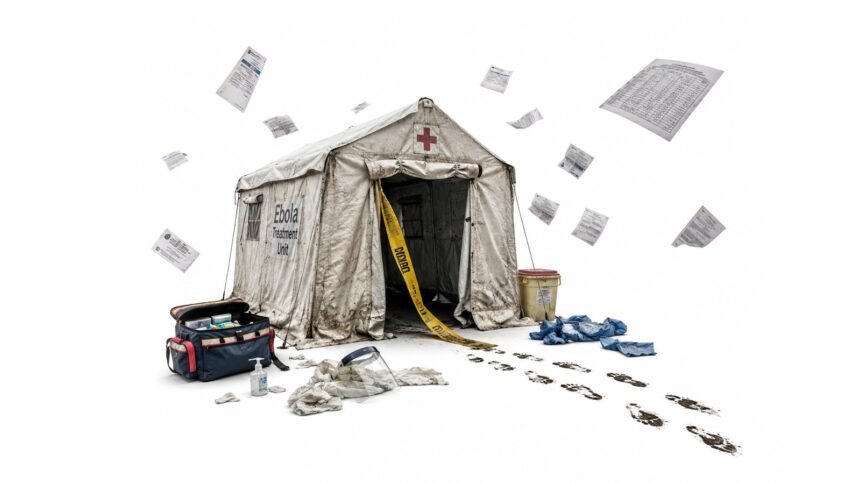
The strategic barrier to outbreak containment is illustrated by the deliberate, targeted actions of lawless armed groups and irregular militias operating across the Albertine Rift. In North Kivu province, a severe security incident occurred near Butembo when a group of assailants armed with bladed weapons stormed a local clinic. The attackers bypassed the facility’s unsecured perimeter to forcibly remove a woman and her six-year-old daughter, who had officially tested positive for the virus. This clinical raid underscores a broader, systematic pattern of tactical aggression, where irregular combatants actively target isolation tents, ambush safe and dignified burial teams, and disrupt the tracking networks used by responders. Operating without protection from the state’s military or police forces, these local clinics remain highly vulnerable to armed groups who view public health infrastructure as an extension of hostile state authority.
Community Distrust and the Threat of Super-Spreading
The direct consequence of these violent disruptions is an immediate, catastrophic acceleration of the underlying health crisis, fueled by an escalating wave of community distrust. When armed groups forcibly remove confirmed patients from specialized treatment facilities, they create a severe risk of domestic super-spreading events. Public health managers, including Dr. Lubambo Maboko Gaston in North Kivu, have issued urgent appeals for missing patients to return to clinical isolation, warning that their reintegration into crowded community enclaves will inevitably lead to the infection of relatives and neighbors. This situation is worsened by the fact that recurrent violence forces medical teams to temporarily suspend contact tracing, preventing the timely identification of transmission chains. This operational gridlock has allowed the current outbreak to expand significantly, infecting 837 people and causing 196 fatalities nationally, with Ituri province accounting for over 90% of cases and North Kivu recording 67 confirmed cases and 38 deaths.
Transatlantic Capital Allocations and Strategic Logistics
Managing this complex emergency requires significant bilateral interventions and transatlantic financial support to stabilize the security-health nexus. The United States government has historically functioned as a primary external funding partner, deploying substantial capital injections to strengthen the state’s baseline response capabilities. This targeted assistance is directed toward building high-security emergency operations centers, procuring personal protective equipment, and establishing fortified laboratory testing networks capable of processing diagnostics under field conditions. However, the long-term effectiveness of these joint initiatives is frequently hindered by logistical bottlenecks and the challenge of maintaining secure transport corridors, as foreign financial aid cannot easily overcome the lack of basic security in conflict-affected zones.
Multilateral Interventions and the Warning of Worst-Case Outbreaks
On the multilateral front, the technical coordination of the response is spearheaded by the Africa Centers for Disease Control and Prevention (Africa CDC) and the World Health Organization. These international bodies have deployed specialized teams to design community-based surveillance models and distribute experimental vaccines to frontline workers. Despite these efforts, leadership at the Africa CDC has issued stark warnings that the combination of active conflict and community resistance could transform the current surge into one of the worst epidemiological crises the region has ever seen. Multilateral monitors emphasize that technical solutions, such as vaccination campaigns, cannot succeed without a parallel, comprehensive strategy to restore basic public safety and rebuild civic trust among marginalized local populations.
Constitutional Deadlock and the Strategy for Structural Peace
The long-term resolution of the concurrent health and security crises in eastern Congo is deeply complicated by shifting constitutional dynamics and political gridlock within the central government. Recent legislative developments in Kinshasa, including the adoption of a controversial Senate bill that could enable a new term for the presidency, have concentrated political energy in the capital, distracting from the stabilization of peripheral borderlands. Reclaiming the path to sustainable human security requires a decisive transition away from purely reactive, ad-hoc military deployments toward a comprehensive strategy that prioritizes local judicial reform, transparent infrastructure development, and the demobilization of irregular militias. Success will ultimately be measured by the state’s capacity to deliver a predictable, non-corrupt administration and to protect its most vulnerable health clinics, securing a dignified, safe, and fully self-determining future for the republic.