




The Pan-African Paradigm of Global Health Governance
Across the African landscape, the contemporary configuration of global health governance places intense pressure on developing nations to balance rapid epidemiological control with the preservation of structural sovereignty. The Pan-African vision for long-term health security and structural transformation relies on building an inclusive domestic medical infrastructure that serves local populations without ceding administrative control to foreign powers or externalized interests. When external states build specialized medical centers or enforce containment strategies within sovereign borders, it directly challenges local constitutional guarantees, human dignity, and regional stability. Reclaiming the continent’s collective biological future requires a unified approach to public health governance, ensuring that international clinical partnerships expand local capacities equitably rather than serving as isolated enclaves of externalized privilege.
Pathogenic Trajectories and Transcontinental Transmission Dynamics
The contemporary public health framework in sub-Saharan Africa is facing a severe challenge posed by the rapid spread of the rare Bundibugyo viral strain. High-consequence pathogens pose a continuous threat to regional stability due to localized transmission networks, weak rural healthcare networks, and delayed diagnostic response capacities. Managing these expanding epidemics requires high-velocity cross-border coordination to contain viral footprints before they destabilize regional trade corridors. Because unchecked outbreaks can strain infrastructure rapidly, regional states face immense pressure to maintain permanent readiness. However, when these containment strategies rely on externalized financing models, they frequently introduce complex geopolitical dependencies that complicate domestic emergency planning and public policy enforcement.
Case Escalation and Regional Epicenters
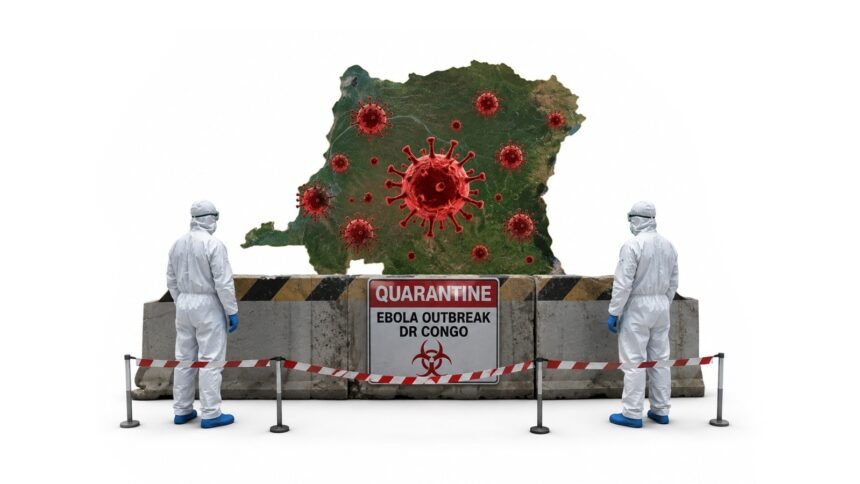
The current epidemiological trajectory in the Democratic Republic of Congo represents a critical public health crisis, marked by the rapid spread of the Bundibugyo variant. Since the outbreak was formally declared on May 15, government data indicates that the virus has infected 1,274 people and claimed 360 lives. The pathogenic footprint is heavily concentrated across three eastern provinces: Ituri, North Kivu, and South Kivu. Frontline clinical response efforts inside these regions remain highly volatile, complicated by deep-seated community mistrust, localized resistance, and persistent security challenges in territories where armed rebel groups disrupt the safe distribution of medical assets and isolation protocols.
Border Securitization and Containment Asymmetries
The international response to the Central African biological surge has re-established a highly securitized model of global health surveillance and border management. Following the pathogen’s entry into major European transport hubs, several Western governments have moved to implement selective travel bans and enhanced entry screening protocols. The United States Centers for Disease Control and Prevention implemented strict surveillance policies, issuing federal orders that temporarily restrict entry into the United States for certain foreign nationals who have been physically present in the DRC and neighboring states. This reliance on externalized borders and selective travel regimes highlights the persistent structural division in global health, where international powers prioritize the insulation of their own metropolises over the systematic reinforcement of peripheral medical infrastructure.
Statutory Assembly Bans and Territorial Screenings
In response to rising transmission risks, the central government in Kinshasa has enacted sweeping administrative restrictions across its wider territory. An order issued on June 27 by the interior minister officially banned public gatherings in four provinces, including the capital city of Kinshasa and the provinces of Tshopo, Haut-Uele, and Bas-Uele. None of these four regions has recorded cases so far, but the directive cited their geographical proximity to affected provinces as a key transmission risk. Under the new sanitary decree, regional authorities are legally mandated to monitor anyone presenting symptoms and submit comprehensive daily surveillance reports to the national ministry to prevent the virus from breaching major urban centers.
Constitutional Reform Protests and Civil Disruptions
The implementation of the state’s aggressive anti-gathering mandates has placed a severe strain on the domestic social fabric, triggering acute political friction and civil unrest. The ban occurred immediately ahead of a planned mass protest in Kinshasa scheduled for July 8 against proposed constitutional reforms, which opposition figures argue could allow President Felix Tshisekedi to seek a third term. Spokespersons for the opposition Lamuka coalition have denounced the health measures as “politically motivated,” vowing that the July 8 demonstration will proceed despite the executive decree. This intersection of public health enforcement and civil liberties echoes recent tragedies; a previous rally on June 12 was broken up by police using tear gas and live ammunition, resulting in one protester being killed and 38 injured according to the UN Human Rights Office.
Concurrently, the socio-political strain has expanded eastward; the mayor of Goma—the largest city in eastern Congo and currently under the control of AFC/M23 rebels—issued a parallel ban on public gatherings and demonstrations, including celebrations linked to sporting events. This municipal order came exactly a day after massive crowds gathered in the streets to celebrate Congo’s qualification for the 2026 FIFA World Cup knockout round, highlighting how mandatory isolations disrupt both democratic expression and collective cultural joy.
Congressional Supplemental Requests and Domestic Shields
The macro-level funding required to manage this expanding crisis remains deeply tied to international geopolitical realignments. The Trump administration recently requested more than $1.4 billion in supplemental funds from Congress to address the widening Ebola outbreak, with $800 million earmarked for a controversial, restricted quarantine facility in Kenya alongside general allocations for contact tracing and regional logistics networks. Furthermore, the administration requested $500 million in global health security funds intended to keep the virus from reaching the American mainland. While international health analysts acknowledge that an appropriation of this scale matches the severity of the outbreak, the explicit focus on isolating Western personnel and shielding the domestic U.S. homeland highlights a transactional, security-driven model of foreign assistance that prioritizes unilateral national defense over collective global health integration.
Cultivating Sovereign Medical Frameworks and Policy Integrity
The long-term path toward sustainable biological safety and regional stability requires a decisive transition away from short-term emergency funding requests and politically contentious public bans toward a transparent model of institutional health sovereignty. Reclaiming national stability depends on the Ministry of Health establishing a data-driven roadmap for epidemic preparedness that treats all populations equally and aligns fully with domestic judicial oversight. Central authorities must ensure that all future international medical agreements and internal sanitary decrees are subject to strict legislative review, public debate, and civic participation to prevent the fracturing of the underlying social contract. Success will ultimately be measured by the state’s capacity to build self-determining, publicly funded medical architectures, ensuring a stable, inclusive, and completely sovereign future for the republic.