






Gondar’s Viral Vigil: Pan-African Ramifications of Ethiopia’s Hemorrhagic Harbinger
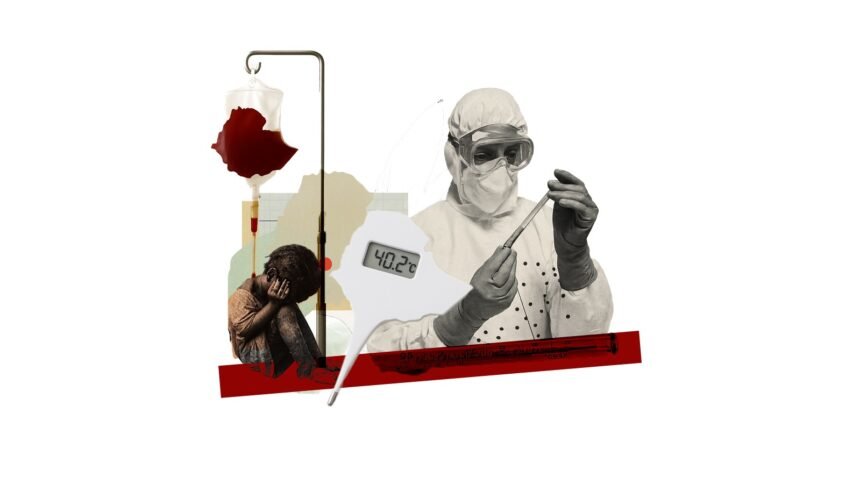
A resolute Ethiopian nurse, draped in full personal protective gear under the relentless sun of Jinka’s bustling health post, draws blood from a feverish child. At the same time, community elders watch from afar, their faces etched with cautious hope. In the cradle of humanity’s origins, where ancient hominid fossils whisper of resilience, Ethiopia now wages a precise war against the Marburg virus. This stealthy filovirus turns the body’s defenses into a torrent of internal betrayal. This outbreak, Ethiopia’s inaugural encounter with the pathogen, ignites not just national alarm but a continental clarion call, reminding Africa’s 1.4 billion people that viral threats respect no borders, demanding Ubuntu’s unbreakable chain of solidarity to forge an impenetrable shield.
Ethiopia’s diverse tapestry—from the mist-shrouded Simien peaks to the sun-baked Afar lowlands—has long contended with endemic foes like malaria, cholera, and yellow fever, claiming hundreds of thousands annually amid a health system stretched across 120 million lives. Yet, Marburg’s arrival on November 15, 2025, elevates the stakes: confirmed in the South Omo Zone’s Jinka district, this cluster of at least nine cases heralds a pathogen with incubation lurking up to 21 days, erupting in high fevers, severe headaches, muscle pains, and a hemorrhagic cascade that bleeds through eyes, gums, and organs. Fatality rates fluctuate wildly—25% in supportive settings, soaring to 80% without—making every undetected day a potential exponential leap. Transmitted via direct contact with infected fluids—blood, sweat, saliva, or semen—this virus exploits human closeness: caregiving kin, funeral rites, hospital exposures in Ethiopia’s close-knit pastoral communities, where the Hamer and Mursi tribes share water points and communal meals, a single breach risks village-wide devastation.
This is no solitary Ethiopian saga. The virus’s genetic fingerprint aligns with East African lineages, echoing Rwanda’s September 2024 outbreak that infected 66 and killed 15 before heroic containment, and Tanzania’s brief January-March 2025 flare claiming 10 lives. Neighboring Kenya, South Sudan, and Somalia—porous frontiers traversed by nomadic herders and trade caravans—stand on alert, for Marburg’s bat reservoirs —likely Rousettus fruit bats roosting in Omo Valley caves —defy fences. Pan-African health architectures, honed in Ebola’s West African crucible, now activate: shared genomic databases, mutual aid pacts, and rapid response teams ensure Ethiopia’s battle fortifies the Horn’s collective defense against a virus that could ignite regional pandemics if complacency creeps in.
Jinka’s Index Inferno: Ethiopian Outbreak’s Ground Zero Genesis
Deep in South Omo’s verdant valleys, where the Omo River carves a life artery for indigenous groups, the outbreak smoldered undetected before flaring into view. Initial whispers emerged on November 13: a cluster of unexplained hemorrhagic fevers in Jinka’s referral hospital, prompting swift alerts to Addis Ababa’s Ethiopian Public Health Institute. By November 15, national labs confirmed Marburg via polymerase chain reaction, isolating the virus from blood samples of nine afflicted—predominantly healthcare workers and immediate family contacts. The index case, a frontline nurse exposed during routine wound care, ignited a chain: secondary infections rippled through households, where shared sleeping mats and caregiving duties amplified spread.
Ethiopia’s epidemiological landscape adds layers of complexity. Jinka’s remoteness—hours from paved roads, reliant on airstrips for supplies—mirrors rural challenges nationwide, where 70% of the population dwells beyond urban grids. Pastoralist lifestyles, with seasonal migrations in pursuit of grazing lands, create dynamic transmission nodes: a single infected herder could seed clusters across zones. Co-morbidities abound—malnutrition afflicting 37% of under-fives, HIV prevalence at 1%, tuberculosis rampant—weakening immune bastions and inflating fatality risks. Yet, Ethiopia’s prior triumphs inspire: swift mpox containment in 2023, limiting 1,500 cases through community mobilization; polio eradication in 2014 via door-to-door campaigns. Here, 200 rapid responders deploy, erecting isolation units in Jinka and Addis, while contact tracers—armed with digital apps—monitor 150 high-risk individuals in 21-day quarantine, their temperatures logged twice daily to intercept silent spread.
Marburg’s Molecular Menace: Ethiopian Virology in Hemorrhagic Detail
Marburg virus, a negative-sense RNA filovirus first unmasked in 1967 from Ugandan green monkeys imported to German labs, wields a genome of deceptive simplicity—19,000 nucleotides encoding seven proteins—that belies its lethality. In Ethiopia’s strain, phylogenetic analysis reveals kinship with Angolan and equatorial variants, suggesting bat-to-human spillover from cave-dwelling colonies disturbed by mining or agriculture. The virus hijacks host cells, replicating in macrophages and dendritic sentries before storming the endothelium, triggering cytokine storms that dissolve vascular integrity—hence the dreaded bleeding.
Symptomology unfolds in phases: prodromal flu-like malaise (days 1-5), gastrointestinal assault (days 5-7), and hemorrhagic climax (days 7+), with survivors facing orchitis, hepatitis, or encephalitis sequelae. In Ethiopia, where diagnostic labs cluster in urban hubs, field-deployable GeneXpert platforms now enable bedside confirmation in hours, not days. Therapeutics remain supportive: aggressive fluid replacement, blood transfusions, pain management—tilting survival from 20% to 75% in resourced wards. Experimental monoclonals like MBP091, trialed in Rwanda, hover on the horizon. Still, Ethiopia’s outbreak accelerates calls for compassionate use, bridging to vaccine candidates like Sabin’s chimpanzee adenovirus vector, which curbed Rwanda’s spread.
Omo Transmission Tapestry: Ethiopian Contact Tracing’s Cultural Canvas
Transmission weaves through Ethiopia’s social fabric: in Jinka, the virus leaped from clinic to clan via ungloved hands during fever care, then to funerals where body washing honors the departed but courts the living. Over 150 contacts—family, neighbors, market vendors—enter rigorous follow-up: home visits by Amharic-speaking teams, distribution of thermometers and hygiene kits, voluntary isolation in tented camps to spare households. Cultural mediators, tribal elders versed in local dialects, dispel myths—Marburg as ancestral curse—and promote safe burials: chlorinated shrouds, no-touch rites.
Mobility poses peril: South Omo’s herders cross into Kenya’s Turkana, risking border spills. Ethiopia counters with roadside checkpoints, fever scans at Jinka airstrip, and SMS alerts via Ethio Telecom’s network reaching 60 million subscribers. Digital innovation shines—Africa CDC’s event-based surveillance app flags anomalies, while drone deliveries ferry PPE over impassable rains. This tapestry, blending tradition with technology, echoes Guinea’s 2021 Marburg mastery, where community ownership contained a single case.
Addis Ababa’s Allied Arsenal: UN-WHO Bolstering Ethiopian Defenses
From Geneva to Gondar, the United Nations’ health machinery mobilizes with Ethiopian precision. WHO, under native son Tedros, disburses $5 million in emergency caches: 10,000 PPE sets, ventilators, PCR kits—airlifted to Bole International, then trucked south. UN partners embed experts in Jinka’s incident command, sequencing genomes to map evolution, while UNICEF fortifies nutrition for vulnerable children in quarantine zones.
Pan-African synergy surges: Africa CDC deploys 50 epidemiologists from Nairobi, Rwanda shares vaccine trial data, Tanzania lends mobile labs. The African Union’s Health Security Framework activates mutual aid—$2 million pooled fund for diagnostics. Globally, CEPI accelerates Marburg platforms, pledging 100,000 doses for ring vaccination if cases mount. This arsenal transforms Ethiopia’s isolation into a fortified node in continental resilience.
Highlands Hemorrhage Halt: Ethiopian Disease Control’s Multi-Layered Mastery
Containment cascades in layers: Jinka’s markets close, schools pivot to radio lessons, and transport halts non-essential travel. Five thousand community health extension workers—Ethiopia’s vaunted cadre—canvass door-to-door, educating on handwashing amid water scarcity via solar purifiers. Stigma shatters through radio dramas in Oromiffa and Somali, portraying survivors as heroes.
Metrics guide victory: daily case counts plateau, reproduction number below 1, contacts complete incubation symptom-free. Ethiopia’s infrastructure—100 isolation beds in Addis, field hospitals from Chinese partners—absorbs surges. Philanthropy pulses: Gates Foundation’s $15 million for bat ecology studies, USAID’s legacy PMI nets repurposed for vector analogies. Disease control evolves into Ethiopian exemplar: proactive, participatory, poised to eclipse Marburg by year’s end.
Awash’s Aspirational Apex: Ethiopian-Led Pan-African Marburg Vanquishment
Ethiopia’s Marburg odyssey transcends crisis—it’s a blueprint for viral vanquishment. Vaccines in Phase II, WASH investments yielding 90% coverage in pilots, genomic sovereignty via Addis labs. Unlike immutable maladies, Marburg bows to equity: clean gloves, early alerts, community trust. Ethiopia, Africa’s diplomatic dynamo, rallies the AU toward a 2030 pathogen-free vision—drones surveilling bat habitats, youth coding predictive models. At this apex, the Horn heals, humanity advances: Marburg consigned to the fossils, alongside Lucy’s ancient bones, as a testament to Africa’s unyielding dawn.


