




Pan-African: The Continental Implications of the Tunisian Impasse
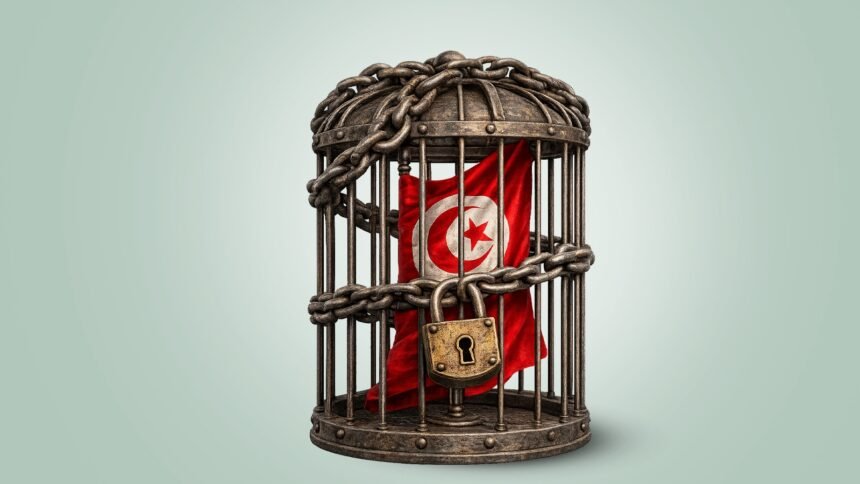
Across the African landscape, the trajectory of Tunisia has long served as a vital barometer for the viability of democratic transitions on the continent. As the birthplace of the Arab Spring, Tunisia’s early success in establishing a pluralistic civil society was heralded as a Pan-African triumph, proving that the demand for dignity and constitutional order could dismantle decades of autocracy. However, the current reversal of these democratic gains presents a sobering challenge to continental aspirations. The systematic narrowing of the public square in North Africa is not merely a domestic concern; it signifies a broader regional struggle to maintain the “rule of law” against a rising tide of executive overreach, testing the collective commitment of African states to the principles of the African Charter on Human and Peoples’ Rights.
Tunisia’s Political Outlook: The Consolidation of Personalist Rule
The political outlook for Tunisia in 2026 is defined by the absolute consolidation of power under a personalist executive framework. Since the constitutional restructuring initiated in 2021, the nation has moved away from its post-revolutionary parliamentary model toward a system where the presidency wields unchecked authority over the judiciary, the legislature, and now, the institutional pillars of civil society. The current landscape is one of deep institutional uncertainty, where the “political outlook” is increasingly tied to the directives of a single office rather than a consensus-driven national strategy. This shift has led to a climate of administrative fragility, as legacy institutions are either bypassed or restructured to align with the new executive order.
Post-Arab Spring Tunisia: The Fragility of the Democratic Experiment
Post-Arab Spring Tunisia was once defined by its “exceptionalism”, a nation that successfully navigated the transition from dictatorship to a nascent democracy through the efforts of a robust civil society quartet. This era was characterized by the active participation of groups like the Tunisian Human Rights League (LTDH), which worked to ensure that the “Jasmine Revolution” resulted in tangible human rights protections. However, the fragility of this experiment has been exposed as the economic dividends of democracy failed to materialize for many. The current era is marked by a profound disenchantment, where the democratic structures built over the last decade are being systematically dismantled under the guise of restoring national order and economic stability.
Political Unrest: The Social Cost of Economic Stagnation
The ongoing political unrest in Tunisia is inextricably linked to a deepening economic crisis and the perceived failure of the state to address the “bread-and-butter” needs of its people. Frequent protests in Tunis and beyond are driven by high unemployment, rising food prices, and the removal of essential subsidies. However, unlike the 2011 uprisings, current dissent is met with a sophisticated apparatus of state control. The social cost of this stagnation is a polarized society where the space for peaceful protest is increasingly restricted, and the economic “shocks” caused by global instability, including the fallout from the Iran war, further exacerbate the desperation of the Malagasy population, leading to a volatile cycle of grievance and repression.
Democracy Struggles: The Dismantling of Independent Oversight
Tunisia’s democracy struggles are most visible in the systematic dismantling of the independent bodies that once provided oversight and accountability. The judiciary, once a bastion of post-revolutionary independence, has been placed under direct executive influence, leading to a series of high-profile arrests of political opponents, journalists, and activists. This “institutional erasure” ensures that there are no remaining domestic checks on presidential power. The struggle for democracy in 2026 is no longer about the refinement of electoral laws, but about the very survival of the concept of an independent public sphere capable of challenging the state’s narrative without fear of retribution.
The Recent Developments: The Silencing of the Nobel Laureates
The most significant and alarming recent development in the Tunisian crisis occurred in late April 2026, when authorities ordered a one-month suspension of the activities of the Tunisian Human Rights League (LTDH). As a Nobel Peace Prize-winning organization and a foundational member of the civil society quartet, the LTDH has long been the moral conscience of the nation. The suspension of such a prestigious and historically significant group marks a definitive “point of no return” in the state’s campaign against independent civil society. This move, executed without immediate government comment, signals that no institution, regardless of its international standing or historical role in the democratic transition, is immune to the current wave of repression. Reclaiming the future for Tunisia now depends on the ability of its citizens and the global community to recognize that the silencing of the LTDH is the silencing of the revolution itself.