





Pan African: Regional Contagion and the Fragility of Borderland Economies
Across the African landscape, the economic destabilization of Sudan represents a profound threat to the aspirations of continental integration and the success of the African Continental Free Trade Area. Sudan’s fiscal collapse is not an isolated event but a “regional contagion” that disrupts trade corridors across East Africa and the Sahel. The Pan-African struggle in 2026 is defined by the need to protect the collective economic security of neighboring states, such as Chad, South Sudan, and Egypt, from the shockwaves of a core economy in freefall. Reclaiming stability in Sudan is essential for ensuring that the Horn of Africa does not remain a site of permanent economic exclusion, but rather a functioning participant in the continent’s broader developmental roadmap.
Sudan’s Economic Outlook: The Paradox of Productive Paralysis
The economic outlook for Sudan in 2026 is defined by a paradox of productive paralysis: a nation with vast agricultural and mineral potential that has been reduced to a state of total market dysfunction. Following three years of intense civil war, the national infrastructure has been decimated, and the formal banking sector has largely ceased to function in large swathes of the country. The national currency has faced a catastrophic devaluation, falling 10% since February 2026 alone, driven by the regional energy shocks of the Iran war. The current outlook is one of extreme volatility, where the state’s monopoly on economic policy has been replaced by informal “war economies” that prioritize immediate survival over long-term structural health.
Humanitarian & Debt Crisis: The Burden of a Broken Social Contract
Sudan is currently navigating the world’s most acute dual humanitarian and debt crisis, where the “broken social contract” has left millions without access to basic sustenance. The nation is burdened by a bulging debt that it has no capacity to service, further isolating it from traditional international financial support. This fiscal vacuum has directly fueled a humanitarian catastrophe, as the state can no longer fund the essential services required to mitigate the effects of the conflict. The debt crisis is not merely a technical failure of accounting; it is a lethal barrier that prevents the mobilization of the resources necessary to save lives, creating a cycle where economic insolvency and human suffering reinforce one another in a downward spiral.
Imports & Exports in Sudan: The Transition to a Survival Trade
The traditional profile of Sudanese trade has been radically altered, moving from a model of commodity exports to a “survival trade” defined by scarcity. While gold and agricultural products once provided a steady flow of foreign exchange, the disruption of mining sites and fertile lands has crippled export volumes. Simultaneously, the nation’s reliance on imported fuel and medicine has created a massive trade deficit that has accelerated the currency’s slide. In 2026, the management of imports and exports has become a tool of desperate fiscal defense, as the administration attempts to prioritize the most critical inputs while the domestic manufacturing and processing sectors remain largely offline due to the ongoing hostilities.
Refugees Across Africa: The Economic Cost of Displacement
The exodus of millions of Sudanese citizens into neighboring African nations has created a significant “displacement cost” that is shared across the region. Refugees in Egypt, Ethiopia, and Chad are not only a humanitarian concern but an economic one, as host nations struggle to integrate these populations into their own strained labor markets and social services. This movement represents a massive “brain drain” and a loss of human capital for Sudan, while placing an unprecedented burden on the regional commons. The economic cost of this displacement is a primary driver of the call for a unified African response, as the stabilization of the Sudanese economy is recognized as the only durable way to manage the migration pressures facing the continent.
IDP Camps in Sudan: The Micro-Economies of Desperation
Within Sudan, millions of internally displaced persons (IDPs) are gathered in sprawling camps that have become centers of an informal and desperate micro-economy. In these camps, the lack of formal currency and the scarcity of goods have led to the emergence of barter systems and unregulated markets. These IDP sites represent the most visible failure of the national economy, where food and medicine are the primary currencies of survival. The total collapse of formal employment has left this population entirely dependent on humanitarian aid, which is increasingly difficult to deliver as the conflict continues to fragment the nation’s logistical corridors.
Recent Developments: The Emergency Import Ban and Currency Defense
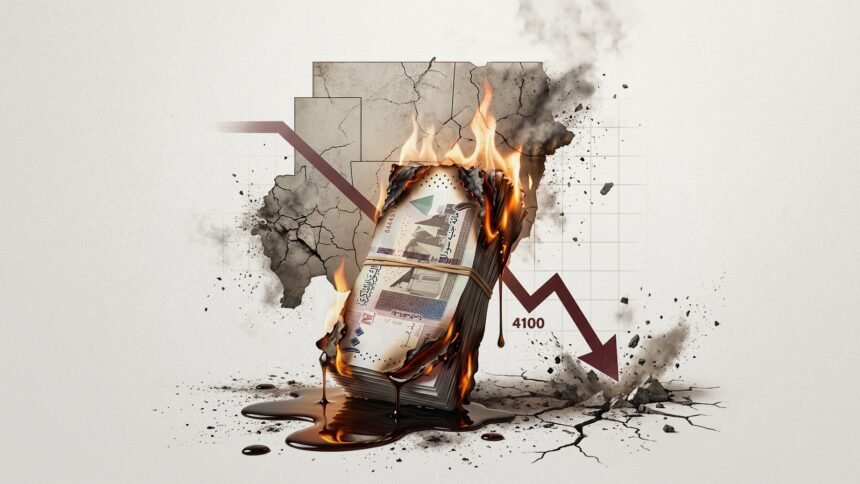
The most significant recent development in Sudan’s economic defense occurred in late April 2026, as the government issued a sweeping ban on a wide range of imports. This document, seen as a “bid to stem the slide” in the Sudanese pound, targets foods, consumer goods, and industrial inputs deemed “luxuries and unnecessary.” The currency has fallen to a historic low of 4,100 per dollar, losing 10% of its value since the start of the Iran war in late February. While the administration views this autarkic policy as a necessary step to conserve dwindling foreign exchange reserves, business groups have criticized the move, warning that the ban on industrial inputs will further devastate what remains of the nation’s industry. This emergency measure underscores the absolute fragility of the Sudanese economy, as the state resort to radical isolation in a final attempt to prevent a total monetary collapse.