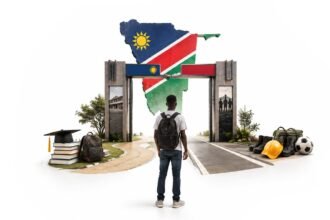




Pan-African: Territorial Integrity and the Continental Precedent
Across the African landscape, the sanctity of post-colonial borders remains a foundational principle of regional stability. The potential splintering of Mali represents an existential threat to this Pan-African consensus, risking a domino effect that could destabilize the entire Sahelian belt. For the continental community, Mali’s struggle is not merely a domestic crisis but a test of the African Union’s ability to prevent the emergence of non-sovereign enclaves. Protecting the territorial integrity of the Malian state is essential to ensuring that the “Silencing the Guns” initiative does not succumb to a new era of state fragmentation and systemic regional collapse.
Mali’s Recent Military Developments: A Leadership Vacuum
The military situation in Mali reached a critical and unprecedented juncture in late April 2026. A series of simultaneous, high-intensity attacks across the country has shattered the government’s narrative of security control. Most significantly, these offensives resulted in the death of Mali’s defense minister, creating a sudden and profound leadership vacuum at the peak of a national security emergency. The scale of the assault, which targeted military barracks and critical infrastructure in the capital, Bamako, as well as northern outposts, indicates that the state’s defensive apparatus is facing a systemic failure, leaving the central administration more vulnerable than at any point in the last decade.
JNIM (Islamists): Strategic Expansion and Urban Penetration
The al-Qaeda-linked group Jama’at Nusrat al-Islam wal-Muslimin (JNIM) has demonstrated a transformative shift in its tactical reach. Moving beyond its traditional rural strongholds, the group successfully penetrated the capital, launching a coordinated strike on Bamako’s international airport and elite military training camps. This urban penetration signifies a strategic intent to paralyze the state’s logistical heart. By striking the capital simultaneously with northern operations, JNIM has effectively overextended the Malian army, proving that its insurgency has evolved from a localized rebellion into a comprehensive threat capable of challenging the state’s presence in its most secure zones.
al-Tawariq (Separatists): The Rejuvenated Quest for Azawad
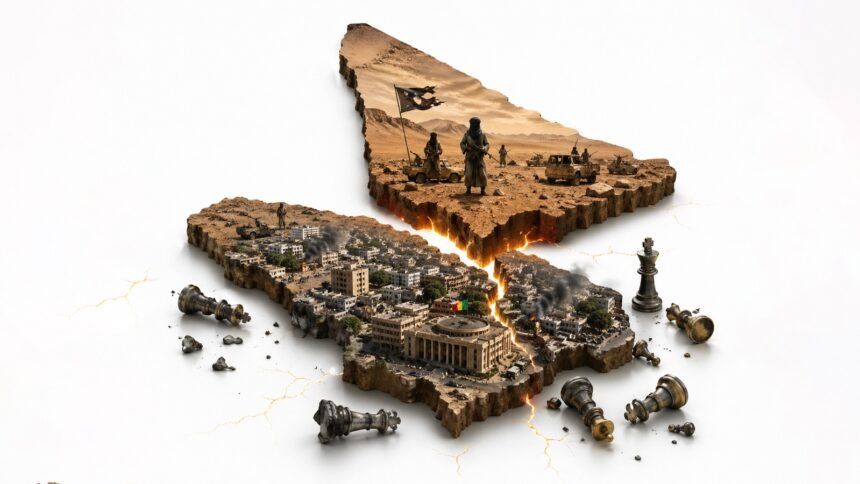
The northern theater of the conflict is currently dominated by a rejuvenated separatist movement, primarily comprised of Tuareg-led forces. In a historic and destabilizing development, these separatists have coordinated their efforts with Islamist militants to overwhelm government positions. This “tactical marriage” has allowed the separatists to drive national forces out of key desert towns over a thousand kilometers from the capital. The reclamation of territory in the north suggests that the dream of an independent “Azawad” is no longer a dormant political aspiration but a geographic reality being enforced on the ground, significantly increasing the likelihood of a de facto partition of the country.
Russia’s Military Failures: The Limits of Foreign Intervention
The reliance of the Malian junta on Russian military support has faced a severe and public reckoning. Despite the presence of the Africa Corps (formerly the Wagner Group), Russian-backed forces have been forced into retreat in several northern towns. The recent offensives have exposed the limits of this partnership, as foreign instructors and mercenaries have proven unable to hold territory against a mobile and coordinated domestic insurgency. These failures suggest that the “security-first” model offered by Moscow is insufficient to address the deep-seated ethnic and political grievances that drive the Malian conflict, leaving the junta with a diminishing set of external options to maintain national unity.
AU & Sahel Countries Efforts: The Strain of Regional Rifts
Regional efforts to stabilize Mali are currently hampered by deep political rifts within West Africa. The formal split between the Confederation of Sahel States (AES), Mali, Niger, and Burkina Faso, and the broader ECOWAS bloc has disrupted the institutional channels for coordinated counter-terrorism. While the AES nations have pledged mutual defense, the death of Mali’s defense minister and the retreat of its forces indicate that this nascent alliance is under immense operational strain. The lack of a unified regional response allows insurgent groups to exploit the “seams” between national jurisdictions, further complicating the prospect of a cohesive Pan-African strategy to prevent partition.
UN & International Community Efforts: Navigating Institutional Erasure
The international community’s ability to influence the Malian crisis has been severely curtailed by the withdrawal of the MINUSMA peacekeeping mission and the junta’s growing hostility toward traditional diplomatic channels. Current UN and international efforts are largely restricted to fragmented humanitarian aid, as the state security apparatus increasingly views external oversight as an infringement on sovereignty. This “institutional erasure” has left the civilian population without a neutral arbiter, as both government forces and their Russian partners face mounting accusations of human rights violations. Without a robust international monitoring presence, the path toward a negotiated settlement remains obscured by the fog of active warfare.
Sahel Security Status: The Specter of Permanent Splintering
The security status of the Sahel in 2026 is one of extreme volatility, with Mali standing at a definitive crossroads. The combination of a decapitated military leadership, a coordinated insurgent-separatist alliance, and the evident failure of foreign military support has pushed the nation to the brink of a permanent splintering. As the state loses its monopoly on force in the north and its symbolic security in the capital, the specter of partition looms large. Reclaiming a unified Mali requires more than just kinetic operations; it necessitates a radical re-engagement with the political and social grievances that have allowed the insurgency to thrive. Without such a transition, the map of West Africa may be irrevocably altered by the birth of a new, unrecognized state in the desert.