





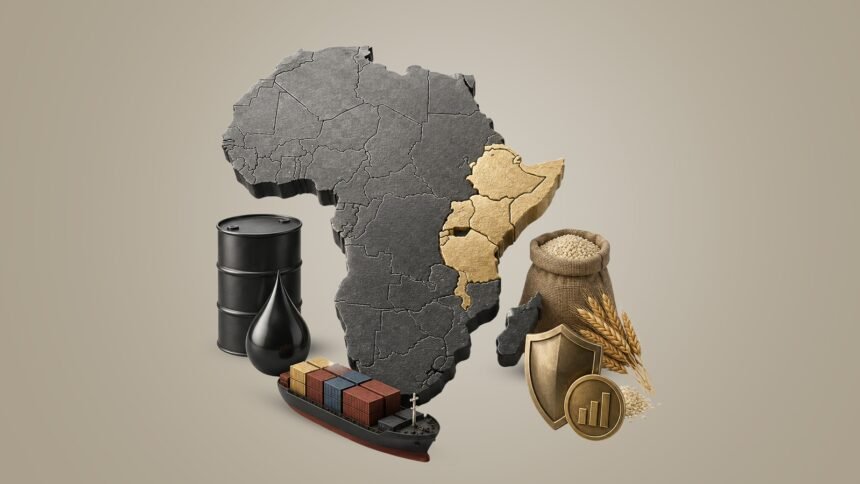
The Pan-African Imperative: Structural Vulnerabilities and Fiscal Shields
Across the African landscape, the contemporary configuration of macroeconomic governance is facing severe headwinds as external geopolitical conflicts spill over into regional trade channels. Structural dependencies on imported volatile commodities routinely test the pan-African ideal of financial independence and sustained economic growth. When global energy nodes fracture, peripheral economic systems are forced to design immediate fiscal insulation mechanisms to safeguard domestic markets. Reclaiming the continent’s economic path requires an aggressive transition away from external inputs toward localized, self-sustaining manufacturing and processing networks, ensuring that regional development plans are permanently insulated from foreign geopolitical shocks.
East Africa’s Macroeconomic Outlook: Severe Headwinds and Growth Reductions
High cost pressures and a critical tightening of global trade flows define the aggregate financial outlook for East Africa in mid-2026. Because the region’s internal economies run on fiscal calendars stretching from July to June, the legislative presentation of the 2026/27 national budgets across Kenya, Uganda, Tanzania, Rwanda, and Ethiopia serves as a vital indicator of regional financial health. The vulnerability of the entire trade corridor to international conflict has prompted the African Development Bank to cut the region’s annual growth forecast by 0.5 percentage points. International macro-strategists are watching these developments closely, warning that foreign investor confidence depends entirely on whether local treasuries can implement realistic revenue targets and genuine fiscal tightening to manage domestic volatility.
The Geopolitical Trigger: Energy Realignment and Transatlantic Shockwaves
The dominant driver of this regional economic slowdown is the ongoing conflict involving the United States, Israel, and Iran, which has sent severe shockwaves through global energy distribution nodes. This Middle Eastern war has directly weighed on East Africa’s baseline productivity by driving up global crude oil prices, distorting shipping logistics, and creating a prolonged fuel shock. For local transport systems, this external disruption has led to an immediate contraction in liquid fuel availability, forcing local distribution depots to navigate intense supply bottlenecks. The persistence of this international energy crisis imposes a continuous tax on domestic production, underscoring that localized growth targets remain deeply tied to the stability of distant geopolitical corridors.
Structural Rebalancing: Navigating Oil Inputs and Emerging Trade Channels
The uneven impact of the global energy shock has forced a stark division between resource-dependent inputs and alternative non-oil opportunities across the region. On one front, countries like Kenya and Uganda are experiencing a contraction in industrial output due to rising oil and raw-material costs. Conversely, Tanzania’s planning ministry has identified major geopolitical opportunities emerging from the Gulf conflict. Tanzanian authorities are moving to position their deep-water maritime infrastructure to capture high-volume transshipment services for global freight vessels that can no longer safely enter Middle Eastern ports. Furthermore, Maputo and Dodoma are leveraging this regional instability to attract international energy conglomerates seeking to redirect capital away from the volatile Gulf region into stable East African natural gas production.
Supply Chain Disruptions: Agricultural Input Inflation and Food Security Threats
Beyond the immediate transport fuel crisis, the geopolitical conflict poses a direct threat to regional food security by disrupting vital agricultural supply chains. East African agricultural cultivation is highly vulnerable to international trade shocks due to its heavy structural reliance on imported chemical fertilizers. The blockage of global manufacturing centers and key shipping lanes has driven up the prices of imported agricultural inputs, limiting local fertilizer distribution channels. This input inflation threatens to depress domestic crop yields, worsen structural food insecurity, and increase the cost of basic nutrition for millions of households, emphasizing the critical need for regional manufacturing alternatives to protect the agricultural sector.
Fiscal Adjustments: Mitigating Inflation and Sovereign Debt Pressures
Managing these concurrent shocks requires finance ministries to implement exceptionally delicate budget adjustments to control domestic inflation and keep public debt in check. In Uganda, economists warn that the fuel price shock will strain government spending plans and depress the local currency, requiring immediate buffers to mitigate the shock and handle the intense demand for foreign exchange. In Kenya, the region’s largest economy, Finance Minister John Mbadi faces the complex challenge of narrowing a wide fiscal deficit, projected at 5.4% of GDP for the upcoming year, down from 6.4%, while navigating high sovereign debt repayments and intense public protests against high fuel taxes. Despite President William Ruto’s efforts to boost revenues through tougher tax enforcement, delayed funding to state agencies, and squeezed household incomes have created an absolute primary deficit, forcing markets to demand credible spending cuts to restore investor confidence.
Advanced Recovery Models: Reengineering Regional Integration
The way forward for East African economies requires a decisive transition away from reactive, ad-hoc budgeting toward an integrated, structurally resilient regional trade framework. Reclaiming the path to sustainable development depends on regional partners synchronizing their infrastructure investments, removing cross-border tariff barriers, and building joint energy storage reserves under the African Continental Free Trade Area. To insulate the corridor from future shocks, national planners must prioritize industrial diversification, shifting public finances toward domestic fertilizer processing and climate-resilient transport logistics. By combining disciplined fiscal management with a unified commitment to infrastructure integration, East African states can transition from a position of systemic vulnerability into a self-determining, robust anchor of continental economic stability.