




The International Organization of La Francophonie (OIF) postponed the election of its next Secretary-General at the 20th Francophonie Summit in Phnom Penh, Cambodia, after member states failed to agree on a successor to Louise Mushikiwabo on November 26.
Louise Mushikiwabo, who has led the organization since 2018, will remain in office for another year after member states failed to agree on her successor. The election, which was expected to determine the leader for the 2027–2030 term, was deferred for 12 months, giving members more time to resolve their differences.
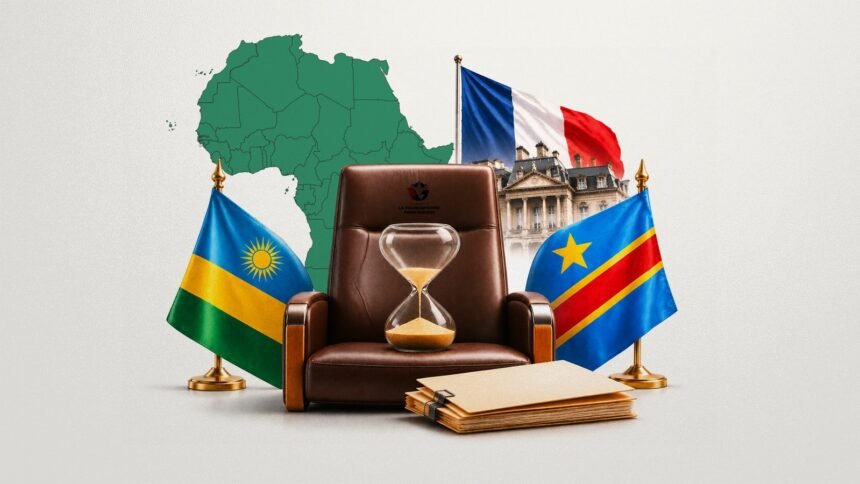
The deadlock came after weeks of disagreement over the candidates, with Rwanda and the Democratic Republic of Congo (DRC) taking opposing positions. But the contest also drew in France, Canada and other members, raising questions about the influence of major contributors and the organization’s ability to reach consensus across its five continents.
The summit brought together delegations from 81 of the OIF’s 90 member states and governments. The organization has 53 full members, five associate members and 32 observers. Its membership stretches across Africa, Europe, the Americas, Asia and the Pacific.
Four candidates had initially entered the race: Mushikiwabo, former Mauritanian minister Coumba Bâ, former Romanian Prime Minister Dacian Cioloș and Juliana Amato Lumumba of the DRC.
The African Union had endorsed the three African candidates, giving member states the option of supporting Mushikiwabo, Lumumba or Bâ. Romania’s Cioloș was the only candidate from outside the continent.
The DRC later withdrew Lumumba’s candidacy and backed Cioloș, saying it wanted to help build consensus around a candidate capable of uniting members.
Kinshasa had opposed Mushikiwabo’s bid for a third term and threatened to leave the organization if she was re-elected. The Congolese government accuses Rwanda of supporting the M23 armed group in eastern DRC, an allegation Kigali denies.
The DRC’s potential departure carried particular weight. According to OIF figures cited by AFP, the country has about 57.3 million French speakers, making it the second-largest French-speaking country after France. Losing such a member would have significant consequences for the organization’s reach and standing.
The dispute also placed the African Union’s position under scrutiny. Although it endorsed three African candidates, it did not settle on one continental candidate. African members therefore entered the contest without a single nominee. At the same time, the DRC’s decision to back a Romanian candidate exposed differences over whether regional representation or a compromise candidate should take priority.
France’s involvement in the negotiations became another point of contention.
President Emmanuel Macron called for unity and warned against internal divisions, saying the organization needed consensus to preserve its strength. His intervention followed reports that he had asked Rwanda to withdraw Mushikiwabo’s candidacy. Rwanda said it rejected the request, arguing that no country should dictate another member’s choice of candidate.
Macron’s office said France had suggested that both the Rwandan and Congolese candidates step aside to make way for a compromise.
The episode revived questions about France’s influence in an organization that includes many former French colonies but is no longer limited to countries with colonial ties to France.
France is the OIF’s largest financial contributor, while Canada is also among its major donors. Canada’s Prime Minister Mark Carney attended the summit, and the country has emphasized the need for consensus in the leadership process.
For some members, the issue was not simply which candidate should lead the organization, but how much influence its largest contributors should have over decisions that formally belong to all full members.
The OIF’s rules provide for consensus in selecting its Secretary-General, with a vote available when agreement cannot be reached. The failure to settle the contest in Phnom Penh showed how difficult that process can become when national and regional interests collide.
The Sahel Withdrawals and the Question of Membership
The leadership dispute came as the OIF was already dealing with the departure of three African members.
Burkina Faso, Mali and Niger withdrew from the organization in 2025 after their membership was suspended following military coups in the three countries.
Their exits followed growing tensions with France and a wider shift in the foreign policies of the military-led governments. Their departure raised questions about the OIF’s relationship with governments that have moved away from traditional partnerships with Paris.
The threat of a DRC withdrawal therefore carried implications beyond the dispute with Rwanda. It raised the prospect of another major African member leaving an organization that relies on its global membership to promote French-language cooperation, diplomacy and cultural exchange.
Although the OIF is not an African institution, the continent has a substantial place in its membership and French-speaking population. Developments involving African members consequently have a significant bearing on its future.
Cambodia’s Hosting Brings Another Set of Questions
The summit also placed Cambodia under international scrutiny over human rights and political freedoms.
Ahead of the meeting, exiled Cambodian opposition figure Sam Rainsy criticized the decision to host the gathering in Phnom Penh, arguing that the country’s political record was inconsistent with the OIF’s stated values. UN human rights officials also urged delegates to raise concerns about people detained for exercising fundamental freedoms.
Cambodia’s government rejected the criticism, while French officials said they would raise human rights and rule-of-law concerns during the visit.
The criticism presented the organization with a challenge beyond its leadership contest: how to promote democracy, human rights and the rule of law consistently across a membership whose governments have different political systems and records.
Cambodia, which hosted the summit for only the second time in Asia after Vietnam in 1997, sought to use the gathering to strengthen links between the Francophone world and Southeast Asia.
Its proposed Phnom Penh Appeal focused on protecting cultural heritage and promoting cultural diversity, while other summit documents addressed peace, crisis prevention, recovery and cooperation.
What the Outcome Means for Africa
The summit’s postponement leaves the OIF with a year to resolve its leadership question. Still, the disagreements in Phnom Penh point to a wider challenge: maintaining a common agenda among members whose political interests and international partnerships do not always align.
African countries, the organization remains a platform through which they can engage with partners in Europe, the Americas and Asia on education, trade, culture, technology and diplomacy. Its influence, however, depends partly on whether members can use that platform to advance shared interests despite their differences.
The summit also showed that Africa’s numerical and linguistic weight does not automatically translate into a common political position. The African Union’s endorsement of three candidates, followed by competing national choices, illustrated the difficulty of building a unified continental approach within a wider international organization.
Mushikiwabo’s one-year extension has postponed the immediate leadership decision, but it has not resolved the disagreements behind it. The next year will test whether the OIF can find a successor acceptable to its members while addressing concerns over its unity, influence and role in a changing international order.