





The Pan-African Paradigm of Federal Authority and Regional Self-Determination
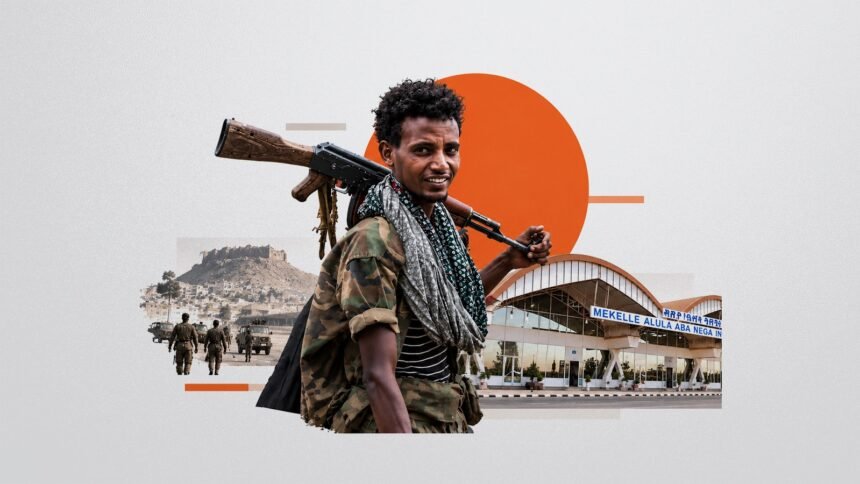
Between the morning of September 23, when Tigrayan fighters seized the airport in Mekelle, and the weekend of October 3, when federal troops and allied militia retook the regional capital, barely ten days elapsed. That compression of time is itself the story: an entire political order, painstakingly negotiated in Pretoria in 2022, has been tested, bent and perhaps broken within a single fortnight. For a continent that has invested heavily in the principle that constitutional bargains, not battlefield outcomes, should settle questions of belonging, the fall of Mekelle poses a stark paradigm question. Who guarantees a settlement when the guarantor institutions are themselves peripheral to the fighting? The African Union urged restraint, yet restraint is a thin instrument against drones, militias and rival capitals. Reclaiming African agency over African conflicts requires more than appeals; it demands enforcement architecture that has so far remained largely aspirational.
A Quick Counterattack and a Contested Capital
Pro-government forces announced on Sunday that they controlled Mekelle, with the Tigray Peace Forces, a pro-government militia, declaring the city theirs in a social media post. A source close to that militia said its fighters entered the city center on Saturday afternoon, followed by the Ethiopian military. The Tigray People’s Liberation Front, which leads the opposition alliance, confirmed it had retreated and said the regional government would be temporarily relocated and operate from elsewhere. A humanitarian source and a resident, both speaking anonymously, corroborated that government forces and their allies now hold the city. The speed of the federal advance reflects an asymmetric balance of capability, one in which Addis Ababa has expanded its drone production since the previous war and enjoys a decisive military advantage over a regional force that launched its own offensive on September 23.
Airport as Symbol and Infrastructure
The airport at Mekelle, named for Alula Aba Nega, became the first prize of the new confrontation. Tigrayan fighters took it on September 23, prompting Ethiopian Airlines to suspend flights to Mekelle and to the Tigrayan cities of Axum and Shire. Federal forces were reported by residents on Saturday to have recovered it, although details of how it changed hands remained unclear because of severe disruptions to internet and cellphone networks. An Ethiopian general, speaking without attribution, said the military was in full control of the facility. Control of an airport is never merely logistical. It governs the flow of aid, the movement of officials and the visibility of a region to the outside world, and its loss compounds the informational blackout that already shrouds Tigray, making independent verification of casualties and abuses extraordinarily difficult.
The Unfinished Business of Pretoria
The Pretoria Peace Agreement ended the 2020 to 2022 war and sustained an uneasy calm until clashes resumed in late 2025. Since then, the federal government has launched drone strikes in Tigray and massed troops along the regional border, while rights groups have accused the TPLF of forced recruitment as it prepared for renewed conflict. Around one million people remain displaced from the earlier war, and many provisions of the settlement remain unimplemented. This is the institutional core of the crisis: a peace framework whose political, humanitarian and security clauses were never fully executed becomes a ceasefire in name only. The TPLF, which governed all of Ethiopia from 1991 to 2018 before being sidelined under Prime Minister Abiy Ahmed, now finds its structural position inverted, its regional government in exile within its own homeland.
Regional Contagion and the Eritrean and Egyptian Shadows
The war’s regional matrix is as consequential as its local trajectory. Addis Ababa severed diplomatic ties with Eritrea last week, accusing it of backing the opposition alliance alongside Sudan and Egypt, and Asmara responded by cutting relations in turn. Eritrea and Sudan deny the allegation, and Egypt’s foreign minister, Badr Abdelatty, told Reuters that his country is not party to what he called Ethiopia’s domestic crisis and that it has nothing to do with Cairo. Yet he also described the dispute over Ethiopia’s Nile dam as an existential question, a matter of life or death for 110 million people. As Egypt’s president met his Eritrean and Somali counterparts, with Sudan’s army chief expected, the contours of a rival alignment became visible. Analysts warn that the fighting, the worst escalation since the earlier civil war, could widen into a regional conflict.
Reclaiming the Peace: Sovereignty Beyond the Battlefield
Taking a capital is not the same as securing a settlement, and history in the Horn counsels caution about equating territorial control with political legitimacy. A Tigrayan government operating from elsewhere, a militia allied to Addis Ababa claiming the city center, and a population fearing looting amid uncertainty together describe a vacuum rather than a victory. Genuine structural sovereignty for Ethiopia would mean an inclusive federal compact that its constituent peoples can trust, enforced by institutions that outlast any single offensive. The continental task is equally clear. If the African Union and regional bodies wish to reclaim ownership of peace in the Horn, they must move from statements of concern to mediation backed by monitoring, humanitarian access and credible consequences. Otherwise, the architecture of Pretoria will be remembered as a pause rather than an end.