




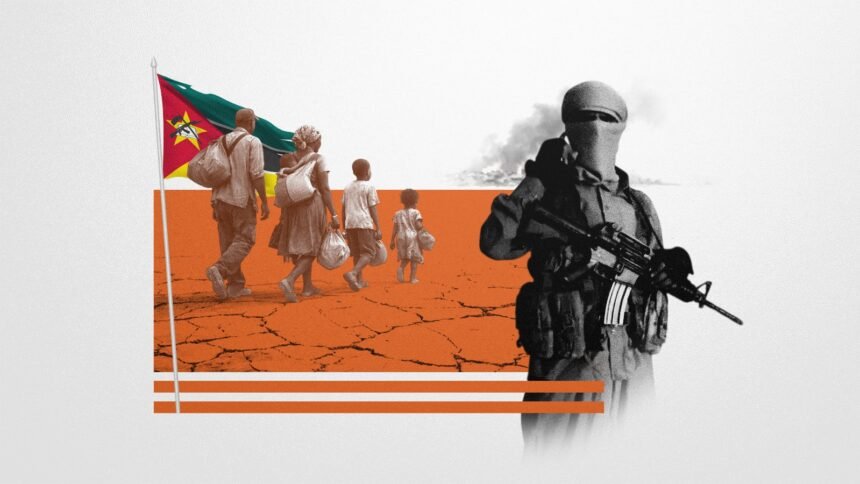
In Mozambique’s northern Cabo Delgado province, the Islamic State’s affiliate—known locally as Ahlu Sunnah Wa-Jamo—has unleashed a relentless insurgency since October 2017, displacing over 1 million people and claiming thousands of lives amid escalating attacks on civilians. From initial strikes in Mocimboa da Praia to 2025’s surge, displacing 300,000 since July, the group’s expansion exploits ethnic tensions, resource wealth, and governance voids, blending jihadist ideology with banditry. This analysis situates Mozambique’s plight within Africa’s broader ISIS battles, from Nigerian school abductions to Sahelian sieges, underscoring how foreign interventions falter while local communities endure. As Rwandan forces struggle and aid dwindles, robust countermeasures are imperative to stem the tide.
Pan African Frontlines: Mozambique’s Jihad in Continental Context
Mozambique’s ISIS insurgency reverberates across Pan-African frontlines, where the group’s Sahelian and West African franchises amplify a continental crisis displacing millions. In Cabo Delgado, the 2017 Mocimboa da Praia assault—killing dozens and torching homes—marked ISIS’s formal entry, with militants pledging allegiance in 2019 to expand territorial grabs. By 2025, violence surges: over 300 incidents since January, beheading civilians and razing villages, displacing 300,000 since July, amid dwindling foreign aid, overshadowed by the Ukraine and Gaza conflicts. This mirrors Nigeria’s Papiri school raid—315 abducted, 230 freed in December—where ISWAP hybrids with bandits, or Mali’s JNIM blockades starving Bamako.
Pan-African solidarity strains: AU condemnations urge unity, yet ECOWAS fractures post-coups leave Mozambique isolated. Rwandan deployments since 2021 reclaim Palma but fail to quell root grievances—youth unemployment at 40 percent, Fulani marginalization fueling recruitment. Continental parallels abound: Central African Republic’s Wagner-guarded massacres echo Mozambique’s mineral predation, where ISIS taxes ruby mines for $50 million annually. Frontlines demand convergence: AU-led intelligence hubs fusing Mozambican scouts with Nigerian drones, transforming jihad’s advance into collective resistance.
Mozambique’s Militant Maze: ISIS’s Northern Enclave
Mozambique’s militant maze, carved by ISIS-Mozambique since 2017, entangles Cabo Delgado in a web of ideology and exploitation, where initial Ansar al-Sunna roots—protesting government neglect—evolved into full ISIS affiliation by 2019. Mocimboa’s capture in 2020 enabled caliphate-style governance: sharia courts, forced conversions, and beheadings, displacing 800,000 by 2021. Reclaimed by Rwandan-Mozambican forces in 2021, resurgence in 2025—300,000 newly uprooted—stems from aid shortfalls and military overstretch, with insurgents raiding Macomia and Chiure, killing 200 civilians in November alone.
This enclave exploits resources: gas projects worth $20 billion in Palma draw attacks, while ruby smuggling funds arms from Tanzania. Ethnic layers compound: Makonde Christians clash with Mwani Muslims, mirroring Biafra’s 1970 divides. 2025’s civilian toll—1,200 dead—highlights the maze’s lethality: women enslaved, children recruited as porters. Mozambique’s response—FRELIMO’s “zero tolerance”—deploys 5,000 troops, yet corruption siphons 30 percent of aid, leaving villages vulnerable. Maze navigation requires untangling: community dialogues, healing rifts, and economic nets lifting 60 percent of the population out of poverty.
ISIS’s African Ascendancy: Mozambique’s Jihadist Surge
ISIS’s ascendancy in Mozambique surges through adaptive tactics, transforming local grievances into global jihad since pledging bay’ah in 2019. From 2017’s 50 fighters to 2025’s 1,500, the group raids coastal towns, beheading aid workers and torching schools, claiming 4,000 lives overall. 2025’s expansion—spreading into Nampula province—exploits Rwandan redeployments, with attacks doubling to 150 per quarter. This mirrors Nigerian ISWAP’s school sieges or Sahel ISSP’s mine extortions, where ISIS’s dark-web propaganda—AI-crafted videos glorifying Gaza—radicalizes 20 percent of youth.
Surge’s fuel: mineral wealth, with ISIS taxing artisanal gold for $100 million, funding RPGs from Libyan markets. Protection rackets ensnare communities: pay zakat or face execution. Ascendancy defies counter-efforts: SAMIM’s 2024 withdrawal leaves vacuums, while Rwandan guards secure Palma’s LNG but neglect interiors. Mozambique’s jihad demands recalibration: hybrid forces blending kinetics with deradicalization, curbing ISIS’s continental climb.
Counter-Insurgency Challenges: Mozambique’s Stalled Strategies
Mozambique’s counter-insurgency faces stalled strategies, in which FADM’s 10,000 troops and Rwanda’s 2,500 yield tactical gains but strategic stalemates against ISIS’s guerrilla agility. Palma’s 2021 recapture halted gas halts, yet 2025 offensives—raiding Chiure and displacing 50,000—expose overstretch: corruption diverts 20 percent of budgets, while ethnic biases alienate Mwani recruits. Rwandan effectiveness wanes: redeployments to the Congo leave gaps, mirroring France’s 2022 exit from Barkhane in Mali, which empowered JNIM.
Challenges amplify: aid dips 40 percent amid donor fatigue, starving rehabilitation for 1 million IDPs. Pan-African parallels: Nigeria’s Super Tucano strikes reclaim Borno but fail against hybrids, while the Ivory Coast’s U.S. drone bid tracks threats. Mozambique’s pivot: the “Northern Resilience” plan—€200 million for 2025—allocates funds to community militias and agro-hubs, reducing recruitment by 25 percent in pilots. Yet, without AU financing, the strategies remain stalled; intelligence fusion along the Tanzanian border is required to transform challenges into containment.
Counter-Terror Contours: Global Gaps in Mozambique’s Fight
Counter-terror contours in Mozambique reveal global gaps, where ISIS’s online lures—Telegram fatwas inspiring Sydney lone wolves—sustain African franchises amid aid voids. FRELIMO’s “total war” deploys drones over Cabo Delgado, yet 2025 attacks surge 50 percent, claiming 1,500 lives as SAMIM exits. Rwandan guards secure Eni-TotalEnergies’ $20 billion LNG, but rural neglect fuels radicalization: youth, 70 percent unemployed, join for $50 monthly stipends.
Contours contrast Sahel: Mali’s Wagner prioritizes mines, leaving Bamako besieged, while Nigeria’s Papiri rescues—230 freed in December—highlight hybrid perils. Global interventions falter: U.S. sanctions on ISIS-Mozambique yield rhetoric, not resources. Mozambique’s fight demands contour refinement: AU cyber patrols dismantling 5,000 channels, fused with local imams’ counter-narratives, bridging gaps for enduring peace.
Protection Pillars: Shielding Mozambique’s Displaced Millions
Mozambique’s protection pillars crumble under ISIS’s onslaught, where 2025 displacements—300,000 since July—swell IDP camps to 1.2 million, many uprooted thrice amid aid shortfalls. Cabo Delgado’s villages, razed in November raids killing 300, expose gaps: women face enslavement, and children are recruited as porters. Rwandan perimeters shield Palma’s expatriates, yet the interiors lack protection: 80 percent of roads are impassable, hindering aid convoys.
Pillars of reconstruction: government’s “Resettlement Villages”—housing 200,000 with boreholes—reduce vulnerability by 40 percent, while interfaith councils in Pemba heal Makonde-Mwani rifts. Pan-African extensions: AU’s AMISOM-inspired task forces mandate the provision of escorts for 500,000 refugees. Protection endures through equity: mineral revenues are devolved to local communities, transforming pillars from fragile shelters into resilient bastions.
Radicalization Realms: ISIS’s Digital Dominion in Mozambique
ISIS’s radicalization realms in Mozambique thrive digitally, where dark-web servers and AI videos—glorifying caliphate revivals—lure 30 percent of youth amid Gaza outrage. Cabo Delgado’s mosques echo fatwas, recruiting via Telegram groups with 10,000 members, blending poverty promises with jihad calls. 2025’s surge—1,000 new fighters—exploits this: displaced adolescents, idle in camps, radicalize faster than deradicalization can keep pace.
Realms intersect hybrids: bandits arm ISIS for school raids, mirroring Nigeria’s Papiri. Countering demands realm reclamation: AU hubs monitor 8,000 channels, fused with community elders’ narratives. Mozambique’s dominion breaks through education: vocational hubs training 5,000, transforming realms from recruitment pits to renewal paths. Africa’s radicalization battle persists, but Mozambique’s resolve heralds dawn.


