






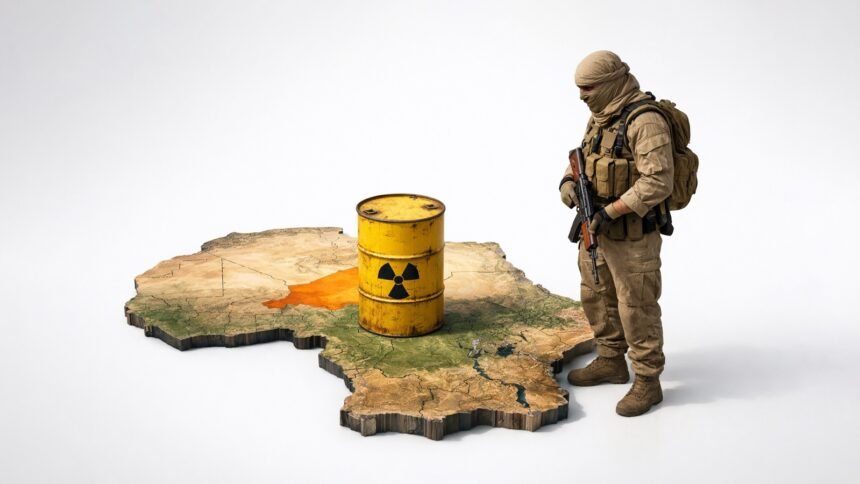
Niger’s uranium sector, a cornerstone of its economy contributing up to 70 percent of export revenues, faces existential threats from Islamic State affiliates and rebel insurgencies, as evidenced by the January 29, 2026, assault on Niamey airport targeting a 1,000-tonne yellowcake stockpile. This attack, claimed by Islamic State in the Sahel Province (ISSP), underscores how jihadist incursions disrupt mining operations, deter investors, and entangle the resource in geopolitical rivalries. Amid the 2023 junta coup’s nationalization of French-operated mines and ongoing lawsuits, rebels’ resource predation exacerbates trade instability, demanding robust countermeasures to safeguard this vital asset.
Pan African Uranium Perils: Sahel’s Radioactive Ripples
Niger’s uranium perils ripple across Pan-African landscapes, where jihadist predations on mineral wealth threaten continental supply chains and economic sovereignty. The Niamey assault, militants using drones and heavy arms to breach perimeters and ignite aircraft near the uranium depot, highlights ISSP’s tactical evolution, blending ideological strikes with resource grabs in a region where 2025 violence displaced over 500,000. This mirrors Mozambique’s ISIS raids on ruby mines yielding $50 million annually for arms, or Mali’s JNIM extortions from gold sites funding sieges that starve Bamako.
Perils extend to trade: Niger’s seizure of 1,000 tonnes of yellowcake from Orano in late 2025, valued at $100 million, remains unsold amid buyer hesitancy stemming from security risks and IAEA compliance hurdles. Pan-African responses falter: AU condemnations urge unity, yet ECOWAS sanctions against junta leaders isolate Niger, pushing it toward Russian pacts that prioritize extraction over protection. Uranium’s perils demand continental safeguards: joint AU patrols securing trans-Sahel convoys, lest jihad’s radioactive grasp disrupts global nuclear fuels and African development.
Niger’s Nuclear Nightmares: Rebel Raids on Resource Riches
Niger’s nuclear nightmares intensify with rebel raids transforming uranium sites into insurgent battlegrounds, where ISSP’s Niamey incursion exposed vulnerabilities in a sector employing 2,000 and generating $800 million yearly. The attack, motorcycle-borne fighters penetrating Base Aérienne 101 to target the yellowcake stockpile, damaged commercial planes but spared the uranium, per junta reports. Yet scattered evidence, such as seized motorcycles, signals an intent to seize or destroy assets.
Nightmares trace to post-coup chaos: the 2023 putsch nationalized Somair and Somaid mines, ousting Orano and prompting lawsuits that freeze exports. Rebels exploit this: ISSP’s Tillabéri raids in September 2025 killed 120, including mine workers, while the 2024 Arlit ambushes halted production for weeks, costing $50 million. Nightmares’ roots: remote northern mines like Arlit, 1,500 km from Niamey, lack defenses amid 60 percent poverty, fueling local recruitment. Niger’s countermeasures, junta deployments, and Russian guards yield tactical repulses but alienate communities, perpetuating nightmares through reprisals.
Uranium Mining & Trade Turbulence: Jihad’s Economic Eclipse
Uranium mining and trade in Niger descend into turbulence under jihad’s economic eclipse, where ISSP raids disrupt operations and deter global buyers, slashing exports 30 percent since 2023. Arlit’s open-pit mines, which produce 2,000 tonnes annually for nuclear reactors, face recurrent shutdowns: the Niamey assault’s stockpile targeting echoes 2025’s convoy hijackings, which seized 200 tonnes for ransom, forcing diversions to insecure routes.
Turbulence’s trade impacts: the seized yellowcake, intended for sale to Russia or China, remains under IAEA scrutiny and is subject to lawsuits by Orano, with buyers wary of contamination risks from rebel-held zones. Eclipse extends to livelihoods: 5,000 artisanal miners in Agadez face extortion, while global prices, $80 per pound in 2026, evade Niger’s grasp. Mining’s vulnerabilities: French-era contracts favored Paris, leaving infrastructure outdated; post-nationalization, jihad fills the void, taxing sites for $10 million annually. Turbulence demands stabilization: fortified convoys and diversified markets to eclipse jihad’s stranglehold.
Counter-Terrorism Clashes: Defending Niger’s Depleted Assets
Counter-terrorism clashes in Niger intensify to defend depleted uranium assets, where junta-led ops, bolstered by Russian Wagner since 2023, repel raids but struggle against ISSP’s hybrid agility. The Niamey repulse, swift cordons neutralizing militants sans casualties, highlights tactical gains, yet 2025’s Tillabéri massacres killing 120 expose gaps in mine perimeters.
Clashes’ complexities: Wagner’s 500 guards prioritize extraction over locals, committing excesses that alienate Fulani and boost ISSP recruitment, mirroring Mali’s Moura atrocities. Niger’s efforts, 5,000 troops in northern patrols, yield recoveries such as seized drones, but overstretch diverts resources from urban threats. Clashes demand escalation: anti-drone jammers and community militias to clash effectively, protecting assets while addressing grievances that jihad exploits.
Russia vs. France Rivalries: Uranium’s Geopolitical Gambit
Russia-France rivalries have turned Niger’s uranium into a geopolitical gambit, as the junta’s post-2023 pivot from Orano to Moscow disrupts trade and invites jihadist opportunism. France’s Barkhane exit (2022) ceded influence, with nationalization seizing 1,000 tonnes and prompting lawsuits that freeze sales, while Russia eyes the yellowcake for Rosatom reactors, offering arms for access.
Rivalries’ fallout: Wagner’s mine guards enable ISSP raids by neglecting communities, as in Arlit’s 2025 ambushes, halting production. France’s sanctions strain economies, pushing Niger toward AES isolation. Gambit’s stakes: global nuclear supply, Niger’s 5 percent share, waver amid disruptions. Rivalries require resolution: Pan-African arbitration mediating contracts, balancing influences to secure uranium without fueling jihad’s gambit.
Political Chaos Catalysts: Insurgency’s Uranium Undercurrent
Political chaos in Niger catalyzes the insurgency’s uranium undercurrent, where the 2023 coup’s resource grabs, nationalizing mines amid elite purges, create voids that jihad fills. The Niamey assault’s stockpile targeting exploits chaos: junta repression detains opposition, alienating Tuareg and Fulani who join ISSP for “protection,” surging 2025 attacks 40 percent.
Catalysts’ chain: pre-coup corruption favored France, breeding resentment; post-putsch, chaos halts exports, costing $300 million yearly and swelling poverty to 60 percent. Undercurrent flows in trade: unsold yellowcake risks black-market diversion to rebels. Chaos’s cure: inclusive dialogues bridging junta-civilian divides, devolving mine revenues to local communities, and catalyzing stability amid undercurrents of unrest.


