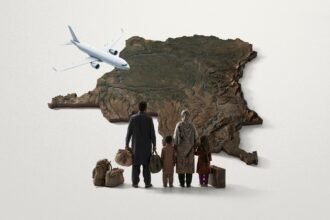





The tragic retrieval of 18 migrant corpses and the salvation of over 90 individuals from a vessel that overturned west of Tripoli illuminates the unyielding dangers embedded in Africa’s irregular migration pathways across North Africa. This event, reported by local responders in Sabratha, highlights the precarious odyssey undertaken by multitudes originating from sub-Saharan nations, as makeshift watercraft succumb to the Mediterranean’s treacherous swells. Since the 2011 collapse of centralized authority following the NATO-supported overthrow of Muammar Gaddafi, Libya has metamorphosed from a regional economic magnet into a fractured nexus of transit hazards, exacerbating Africa’s broader migration quandaries shaped by intersecting violence, deprivation, and geopolitical strains. In 2025 alone, the Central Mediterranean route—predominantly departing from Libyan shores—has witnessed over 1,300 recorded fatalities or disappearances, underscoring a lethality rate that persists amid fluctuating departure volumes. Libya now harbors an estimated 850,000 migrants, many ensnared in limbo, as smuggling networks capitalize on the anarchy to propel human cargo northward, often with devastating consequences.
Pan-African Flux: Libya as Continental Crossroads
Within the expansive Pan-African narrative, human mobility has historically embodied quests for solidarity and prosperity, yet Libya’s post-2011 disintegration has warped this vision into a perilous labyrinth of survival. Before the upheaval, Libya’s hydrocarbon riches attracted a diverse influx of African laborers, weaving intricate social fabrics from Sahelian traders to East African workers, under a regime that maintained rudimentary border regimes. The ensuing power vacuum shattered these controls, positioning Libya as the epicenter of irregular outflows toward Europe, drawing from remote enclaves in the Sahel, the Horn of Africa, and West Africa. This role mirrors profound continental divides: colonial-era development disparities stifle legitimate intra-African labor mobility protocols, such as those envisioned in the African Union’s free movement agenda, compelling masses to traverse unregulated deserts. Syndicates, intertwined with tribal militias and opportunistic warlords, exploit this governance chasm, commodifying dreams into high-stakes gambles. From a Pan-African perspective, this phenomenon transcends individual flight; it signals an urgent plea for balanced continental cohesion, where stalled integration pacts like the African Continental Free Trade Area fail to channel aspirations productively, rendering Libya a symptomatic crossroads of unfulfilled unity and escalating migratory pressures that bind the continent’s disparate fates.
Irregular Currents: Smuggling’s Shadow Economy in Libya
The torrent of irregular immigration coursing through Libya manifests as a thriving subterranean economy predicated on exploitation, where rudimentary seafaring ventures supplant any vestiges of orderly passage. The dissolution of state cohesion post-revolution spawned vast smuggling conglomerates that monetize despair through tiered fees for transit, often extracting payments from migrants upon entry at waypoints like Zawiya or Misrata. These networks, comprising local fixers, vehicle operators, and boat handlers, generate billions in illicit revenue annually, sustaining fragmented militias that dominate coastal enclaves and perpetuate the disorder. Migrants, frequently accruing debts to handlers en route, endure shakedowns, arbitrary detentions, and violent reprisals, with failed attempts recycling individuals into abusive holding facilities. Drawing from extensive field assessments, such as those interviewing thousands across Libya in early 2025, these circuits reveal a self-reinforcing loop: youthful demographics from origin countries, facing dim prospects, fuel demand, while return flows from intercepted voyages bolster the syndicates’ resilience. Libya’s evolution from labor haven to hazard-laden thoroughfare illustrates how irregularity’s fiscal incentives eclipse humanitarian imperatives, embedding smuggling as an entrenched fixture that deters neither aspirants nor profiteers, despite intermittent crackdowns.
Conflict’s Ripple: Displacement from Sahelian Storms
Escalating hostilities in the Sahel and Sudan cascade displacement northward into Libya, fusing localized insurgencies with expansive migratory surges. Persistent jihadist campaigns in Mali, Niger, Burkina Faso, and the Lake Chad basin—exacerbated by coups and ethnic clashes—have uprooted millions, with over 2.6 million displaced in the Liptako-Gourma corridor alone by mid-decade. These upheavals, characterized by razed settlements and eroded authority, spawn onward movements: initial asylum-seekers evolve into transit hopefuls, navigating vast dune expanses via ancient caravan trails repurposed for evasion. Sudan’s civil strife, spilling refugees westward, amplifies this influx, as families flee aerial bombardments and famine toward Libya’s porous frontiers. Internally, Libya’s rival factions—pitted between Tripoli’s fragile government and eastern strongholds—offer negligible sanctuary, instead harboring armed brokers who thrive on the mayhem. This ripple effect embodies conflict’s amplification of migration: origin-state implosions propel chains of relocation, overwhelming Libya’s splintered apparatus, which lacks unified capacity to manage or mitigate the human deluge, thereby entrenching the nation as both victim and vector in Africa’s interlocking security crises.
Economic Desolation: Sub-Saharan Impetus for Northward Drift
Underpinning the overt tumult of warfare lies profound economic stagnation across sub-Saharan realms, where chronic indigence and surplus youth propel the northward imperative. Nations grappling with volatile commodity dependence, such as Nigeria’s oil volatility or Ethiopia’s agrarian strains, exhibit graduate unemployment hovering near 50%, emblematic of unfulfilled independence-era pledges and demographic pressures outpacing job creation. Climate adversities, including desert encroachment and erratic monsoons, compound resource scarcities, eroding livelihoods in pastoral and farming belts. The allure of European remittances—totaling billions across the continent—beckons, yet the Saharan traverse demands prohibitive outlays for guides, bribes, and vessels, trapping many in debt servitude upon arrival in Libya. This impetus frames irregular migration as a rational, albeit ruinous, calculus amid developmental inertia: Africa’s growth paradoxes, where urban booms mask rural hollowing, channel human capital toward illusory horizons. Libya’s volatility intensifies this dynamic, transmuting economic refugees into commodified transients, whose exodus hemorrhages potential from origin societies, perpetuating a vicious cycle that demands structural reforms beyond mere containment.
Displacement’s Security Entanglement: Libya’s Volatile Nexus
In Libya, the fusion of displacement and security breeds a hazardous convergence, wherein migratory streams collide with endemic armament and ideological perils. Smuggling proceeds arm irregular forces, eroding distinctions between traffickers and militants, with occasional synergies involving Sahel-linked extremists who prey on transit vulnerabilities for recruitment or ransom. Coastal militias, wielding de facto sovereignty, derive fiscal vitality from passage tolls, sustaining patronage webs that thwart national reconciliation. Detained migrants, warehoused in unofficial camps, become pawns in power plays—bartered for leverage or radicalized amid isolation. This entanglement elevates migration from a welfare issue to an existential threat: unchecked inflows erode state legitimacy, foster cross-border spillovers, and invite foreign meddling, as evidenced by mercenary influxes tied to transit corridors. Comprehensive securitization thus necessitates transcending patrols to dismantle root enablers, recognizing how Libya’s ungoverned spaces amplify continental instabilities into tangible risks for stability across North and sub-Saharan divides.
Border Fortifications: EU-African Pacts and Libyan Frontiers
Initiatives to reinforce frontiers weave a complex of extraterritorial mandates and strained African autonomies, with Libya central to European containment architectures. EU-brokered memoranda funnel resources to Libyan coast guards for interception ops, aiming to preempt launches via bolstered naval assets, though outcomes breed refoulement horrors: repatriated arrivals confront torture and enslavement in origin-like traps, contravening global safeguards. Parallel engagements with Tunisia extend this model, embedding African ports in upstream barriers amid sovereignty erosions. While curbing gross tallies—evident in moderated Italian arrivals—such pacts ignite ethical reckonings: Brussels subsidizes fractious proxies susceptible to corruption, inadvertently empowering abusers. Pan-African critiques decry these as neo-imperial overlays, sidelining endogenous solutions for proximate fixes, positioning Libya’s borders as flashpoints where continental ambitions grate against outsourced policing, perpetuating a paradigm that prioritizes deterrence over durable equity.
Global Concord: UN-AU Harmonies Amid Libyan Turmoil
United Nations and African Union collaborations aim to alleviate Libya’s migratory vortex through repatriation schemes, protection frameworks, and origin-focused stabilization efforts, yet confront entrenched barriers. Renewed IOM-AU partnerships in 2025 emphasize governance enhancements, promoting mobility as a growth catalyst while curbing trafficking via five-year anti-smuggling blueprints. Operational returns have airlifted thousands with skill-building aids, complemented by advocacy against camp atrocities—extortion, beatings, and medical neglect. Synergies target upstream resilience, infusing development into Sahel hotspots and climate-vulnerable zones, and fostering legal conduits such as seasonal worker visas. Within Libya, joint missions navigate factional mazes, delivering aid at landings and lobbying for humane processing. Yet, disparities abound: aid volumes trail exponential needs, rendering interventions symptomatic amid political impasses, as AU-UN visions of integrated migration clash with Libya’s balkanization, underscoring calls for amplified African-led diplomacy to harmonize relief with reform.
Persistent Torments: Human Toll and Systemic Snags
Libya’s irregular traverse inflicts a staggering human cost—submersion perils, incarcerations, and predations, compiling a grim chronicle of attrition. Incidents like the Surman capsizing epitomize oceanic gambles, with 2025’s Mediterranean toll surpassing 1,300 lost souls despite interdictions. Overland ordeals yield torture markets and coerced toil, scarring survivors with trauma that hampers reintegration. Repatriates, shuttled southward or looped domestically, battle stigma and destitution, breeding recidivism. Institutional deficits—unmonitored guards, factional impunity, absent judicial recourse—aggravate violations, ensnaring transients in interminable spirals. These ordeals transcend metrics, posing moral reckonings: where safeguards erode, Libya’s pathway devolves into the graveyard of aspirations, compelling paradigm shifts from episodic salvages to preemptive architectures that honor dignity amid flux.
Horizons of Hope: Forging Resilient Pathways Forward
Navigating Libya’s migratory deadlock hinges on holistic reinvention, melding African agency with judicious external factors. Primacy rests in origin interventions—bolstering Sahel accords, catalyzing sub-Saharan enterprises, and fortifying agro-climatic buffers against environmental spurs. Continental mechanisms, amplifying AU visa regimes and labor compacts, might alleviate Libya’s burden, nurturing internal circuits rather than trans-Saharan perils. Revitalized Libyan unity, through inclusive pacts and professionalized frontiers, envisions regulated conduits sans overreliance on foreign proxies. Sustainable trajectories transcend punitive postures for developmental harmony, harnessing Africa’s demographic vigor toward an endogenous renaissance, recasting Libya from an entrapment hub into a pivotal junction in a unified Pan-African odyssey where mobility fuels progress rather than peril.