





Ubuntu’s Unbroken Circle: Pan-African Fortitude Amid Global Fragmentation
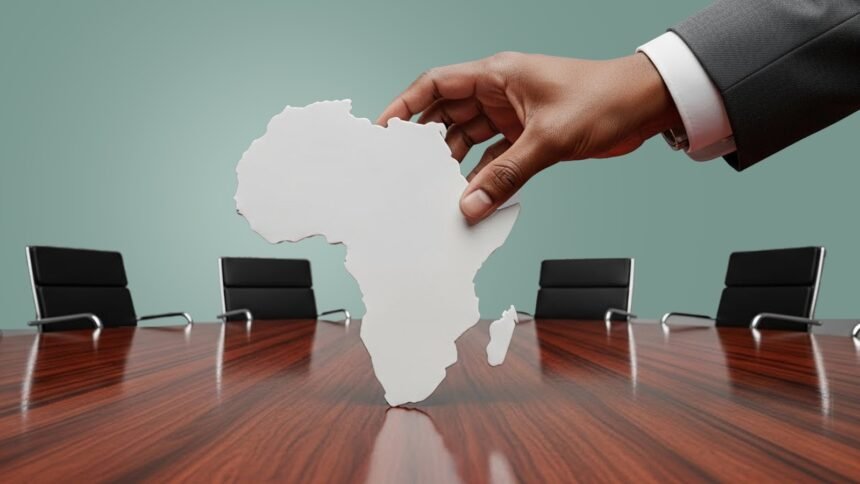
As the echoes of Johannesburg’s Nasrec Expo Centre fade into November’s golden haze, the 2025 G20 Summit stands as a testament to Africa’s enduring spirit of ubuntu—collective humanity that thrives even when chairs stand empty. South Africa’s historic hosting from November 22-23, the first on African soil, wove a tapestry of solidarity under the banner of “Solidarity, Equality, Sustainability,” amplifying the African Union’s voice for 1.4 billion people across 55 nations. This was no mere gathering of 19 economies plus the European Union; it was a continental assertion, budgeted at a lean R691 million ($38 million), that positioned Africa not as a peripheral player but as the architect of the next chapter of global finance. The summit’s four pillars—economic growth and employment, sustainable finance, energy transitions, and health-food security—interlaced with the African Continental Free Trade Area’s (AfCFTA) burgeoning promise, projecting a 52% surge in intra-African trade by 2032. Yet, the circle fractured under the weight of exclusion. The United States, once the G20’s gravitational center, dispatched only a chargé d’affaires for the ceremonial handover, boycotting substantive talks over persistent claims of “white Afrikaner slaughter”—narratives repeatedly debunked by data showing farm murder rates lower than urban averages. President Cyril Ramaphosa’s measured defiance, declaring “boycott politics never works,” resonated across the Global South, from Brazil’s Amazonian delegates to India’s bustling sherpas. In this unbroken circle, pan-African fortitude emerges not despite division but because of it: BRICS alliances deepen, UN-AU synergies in Lomé’s debt forums strengthen, and Johannesburg’s declaration—adopted sans American veto—charts a multipolar path where Africa’s $1.1 trillion debt burden becomes a catalyst for sovereignty, not subjugation.
Nasrec’s Defiant Accord: G20 Legacy Beyond the Empty Chair
The Johannesburg G20’s aftermath reveals a forum transformed, its Nasrec halls birthing agreements that outlasted the boycott’s chill. Despite the United States’ absence—where Vice President JD Vance was initially expected before the snub—the summit produced a Leaders’ Declaration that confronted the world’s most pressing fissures. At its core lay the “Johannesburg Debt Compact,” a five-pillar framework forged by South Africa’s African Expert Panel under Trevor Manuel and Ngozi Okonjo-Iweala: automatic 24-month debt service suspensions for distressed nations, mandatory creditor parity across public and private lenders, an IMF Resilience Trust funded by rechanneled Special Drawing Rights, $100 billion in debt-for-climate and nature swaps by 2035, and a Pan-African Credit Rating Agency to dismantle the 300-500 basis point “Africa premium” in global markets. This accord, echoing the 2005 Gleneagles cancellation’s $100 billion relief but with enforceable mechanisms, promises $150-200 billion in fiscal space over the decade, potentially halving sub-Saharan debt-to-GDP ratios and redirecting $20 billion annually from interest payments to SDG investments like education and health.
The Think 20 (T20) process, spanning five task forces and culminating in a Social Summit, enriched this legacy with data-driven blueprints: inequality as a core G20 metric, hybrid debt relief for clusters of vulnerable economies, and green bond mobilizations aligned with AfCFTA’s industrialization drive. Geopolitical voids—Russia’s proxy attendance due to ICC warrants, Mexico’s presidential absence, China’s vice-premier delegation—did not paralyze progress; instead, the “G20 million” ethos, embracing 42 partner nations and regional bodies, ensured polycentric momentum. The handover ceremony itself became symbolic theater: Ramaphosa, refusing to hand over the presidency directly to the U.S. chargé d’affaires, routed presidential symbols through Pretoria’s foreign ministry to the American embassy, honoring protocol while underscoring dignity. This defiance drew immediate reprisal—Trump’s November 26 declaration barring South Africa from the 2026 Miami summit—but Nasrec’s accord endures, embedding $5.8 trillion in pre-2030 climate finance gaps and tariff mitigation strategies into multilateral DNA. In its wake, the G20 emerges leaner, more equitable: Africa’s inaugural host proving that empty chairs birth fuller, more resilient tables.
Rainbow’s Resolute Stand: South Africa’s Diplomatic Mastery in Isolation
South Africa’s post-G20 trajectory embodies the rainbow nation’s alchemy of restraint and resolve, transforming isolation into instrumental agency. President Ramaphosa’s administration, steering a R691 million summit amid 76% debt-to-GDP strains and 95-tonne gold output, reframed U.S. boycott as a self-inflicted wound, with spokesperson Vincent Magwenya’s X post declaring no handover “to a chargé d’affaires.” This principled stand—coupled with ongoing talks for “more than just diplomatic acceptance”—preserved national dignity while securing BRICS endorsements from Narendra Modi and Luiz Inácio Lula da Silva. Domestically, Nasrec catalyzed tangible wins: Afreximbank’s $20 billion callable capital pledge for infrastructure, green bond issuances targeting $50 billion by 2030, and health-food security pacts addressing 38 nations where debt service eclipses social spending.
Economically, the summit spotlighted diversification imperatives: Harmony’s Qala Shallows project promising 150,000 ounces annually at sub-$900/oz costs, and Rand Refinery’s continental off-take agreements positioning Johannesburg as Africa’s gold trading hub. Yet challenges persist—Transnet port backlogs shaving 0.8% off GDP, 68% youth unemployment fueling social fault lines—but Ramaphosa’s steady hand pivots outward: AU sherpas negotiating line-by-line declaration language, T20 intellectuals benchmarking relief against human development indices. Continentally, Pretoria emerges as a Global South lodestar, its rainbow stand galvanizing Ghana’s gold board reforms and Tanzania’s investor-friendly policies into shared prosperity narratives. In this resolute arc, South Africa’s isolation transmutes into influence: ubuntu’s quiet power outshining boycott’s bluster, forging pathways where exclusion yields exponential inclusion.
Potomac’s Punitive Tide: U.S. Boldness and the Deepening Bilateral Abyss
From the Potomac’s corridors, U.S. boldness surges as a tidal wave of reprisal, cresting in President Trump’s November 26 ultimatum: “South Africa will NOT be receiving an invitation to the 2026 G20 in Miami.” This escalation—framed as punishment for Ramaphosa’s “refusal” to hand over directly to a low-level diplomat—compounds a litany of fractures: the initial complete boycott justified by “white genocide” myths, February’s USAID evisceration, March’s ambassador expulsion, and May’s White House ambush where Trump brandished fabricated farmer atrocity images. The directive to “stop all payments and subsidies” forthwith severs AGOA’s $10-12 billion lifeline, set to expire unrenewed in September 2025, devastating Lesotho’s textiles and Kenya’s apparel sectors while denting South Africa’s $3.8 billion gold exports indirectly through chilled investment.
This punitive tide ripples globally: Washington’s 16.5% IMF voting share and de facto veto lose potency without Johannesburg’s endorsement, ceding debt architecture to BRICS alternatives like the New Development Bank’s $47 billion African commitments. Trump’s “Liberation Day” tariffs—104% on Chinese goods, threatening third-country proxies—curb Beijing’s commodity appetite, slashing Angola’s copper revenues 15% and inflating African Eurobond yields to 9.8%. Yet the tide turns against its source: U.S. isolation amplifies multipolarity, with Xi Jinping’s zero-tariff pacts for 33 African states and Lula’s troika solidarity filling voids. Ramaphosa’s profuse reset overtures—met with unyielding barbs—underscore a nadir in relations unseen since 1994, where affirmative action disputes entwine with ICJ Gaza stances. In this abyss, Potomac’s boldness unmasks strategic myopia: exclusion as self-sabotage, hastening Africa’s eastward pivot and BRICS’ ascendance in global finance’s reconfiguration.
Debt’s Emancipated Horizon: G20 Compact’s Enduring Fiscal Liberation
Johannesburg’s Debt Compact illuminates debt’s emancipated horizon, shattering Africa’s $89 billion annual servitude with structural reforms that endure boycott’s shadow. For 25 nations in distress—where Zambia’s 1,138-day restructuring odyssey symbolizes multilateral torpor—the accord mandates automatic standstills, retroactive collective action clauses, and private creditor inclusion at 43% of the stock, potentially unlocking $150 billion in space akin to HIPC’s growth-spurring windfalls. South Africa’s panel fuses T20 analytics—quantifying how interest payments eclipse education in 38 countries—with UN-AU Lomé blueprints, birthing an IMF trust from idle SDRs and $100 billion swaps tethering relief to climate resilience.
Trials remain: opacity in commercial loans thwarts transparency, U.S. subsidy axes deepen 75% GDP liabilities, and Trump’s Miami snub fragments Common Framework consensus. Yet BRICS salves proliferate—China’s infrastructure lending, India’s technical aid—while AfDB’s ADF-17 replenishment eyes $47 billion for sovereign buffers. Economically, the horizon gleams: 10-point reductions in debt-to-GDP, 5% growth accelerations, $20 billion redirected to the SDGs. In this emancipation, debt evolves from predator to partner—Johannesburg’s compact ensuring Africa’s fiscal dawn rises independently of Northern tempests.
Veldt’s Renewed Vitality: Economic Outlook Amid Adversity’s Forge
November 2025’s veldt sketches South Africa’s economic outlook in resilient vitality: IMF-projected 1.1% growth from 0.5%, bolstering the OECD’s 1.8% medium-term trajectory, fortified by renewables curbing load-shedding, and SARB’s 50-basis-point easing. The Rand’s 4.7% dollar appreciation, February’s FATF delisting, and gold’s $3,540/oz hedge bolster reserves, yet headwinds howl: port congestion’s 0.8% GDP drag, 32.1% unemployment, and Trump’s AGOA demise imperiling diversification. G20’s bounty counters: AfCFTA’s trade boom mobilizing $50 billion in green bonds, Harmony’s shallow-revival mines, and AI-driven 6% GDP up, lifted by 2035, demanding skills revolutions.
BRICS inflows—$20 billion from Afreximbank alone—offset subsidy losses, while Johannesburg’s declaration embeds tariff shields against U.S.-China crossfire. In this forge, adversity yields strength: a veldt where debt relief fuels vitality, positioning South Africa as Africa’s economic vanguard through 2030.
Compass of Kinship: Foreign Policy’s Multipolar Recalibration
South Africa’s foreign policy compass, redirected by G20 exclusion, charts a kinship of multipolar recalibration. Trump’s Miami ban—retaliation for protocol fidelity—accelerates drifts from Washington toward BRICS hearths: Modi’s climate pacts, Xi’s trade corridors, Lula’s developmental solidarity. Gaza’s ICJ docket and land reform’s equity arc, once bilateral irritants, now galvanize Global South unity, with AU’s G20 perch embedding $5.8 trillion NDC imperatives. Challenges—Putin’s warrant shadows, European hesitations—yield to gains: zero-tariff access expanding, NDB infrastructure surging. This compass realigns Ubuntu with agency: from Potomac isolation to Delhi-Delhi dialogues, kinship forges broader horizons.
Mosaic’s Unified Glow: Inclusion’s Triumph Over Division
The mosaic of the G20 aftermath glows with inclusion’s triumph, piecing Johannesburg’s polycentric vision into an unbreakable whole. AU’s 2023 induction shattered elitism, its 1.4 billion mandate embedding inequality metrics and Pan-African agencies into global ledgers. Trump’s exclusion fractures facade but fortifies core: Debt Compact’s passage, AfCFTA synergies, green transitions unchained. In this unified glow, division dissolves—Africa’s mosaic not merely enduring, but illuminating multilateralism’s future with ubuntu’s radiant mandate.


