





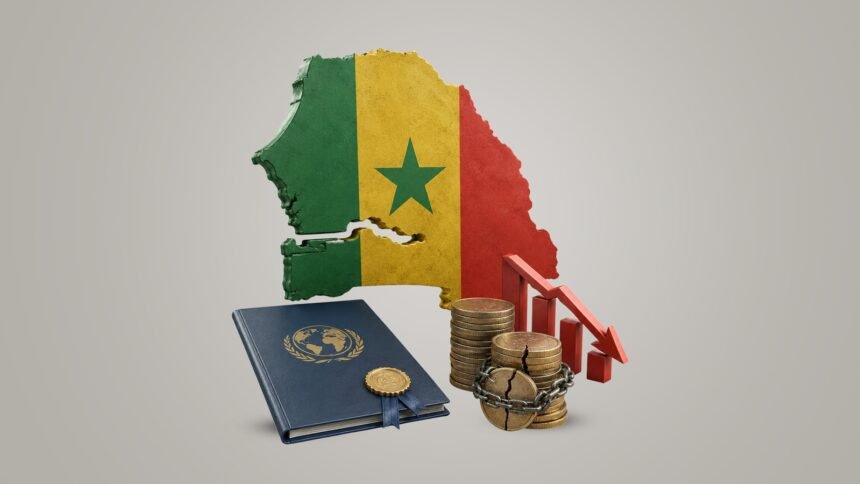
Pan-African Macroeconomic Vulnerability: The Structural Contradiction of Shared Monetary Space
Across the African landscape, the contemporary configuration of economic self-determination operates under severe constraints imposed by asymmetric structural dependencies and fragmented domestic policy choices. For highly leveraged emerging states, the pursuit of fiscal stabilization increasingly intersects with the rigid compliance mechanisms of international financial institutions and regional monetary unions. In the West African corridor, the reliance on supranational monetary architectures anchors short-term inflationary control, yet it simultaneously creates systemic vulnerabilities across interconnected regional banking networks. Reclaiming the continent’s financial autonomy requires a fundamental transition away from opaque liability reporting toward aggressive fiscal transparency and structural consolidation, ensuring that localized credit adjustments do not trigger broader institutional shocks across sovereign borders.
Senegal’s Contemporary Macroeconomic Outlook: Bond Contraction and Regional Exposure
The aggregate economic outlook for Senegal in mid-2026 is characterized by severe capital flight and a critical decline in investor confidence, pushing the state’s sovereign bonds to near-record lows. This capital market contraction is driven by a deep domestic debt crunch that has fundamentally compromised the country’s fiscal balance sheet. Lacking external multilateral liquidity, the treasury has been forced to rely heavily on regional financial platforms, such as the UMOA-Titers market, and retail bond issuances to meet its short-term financing requirements. This heavy borrowing has left commercial banks across the West African Economic and Monetary Union (WAEMU) deeply exposed to Senegalese sovereign risk. Consequently, any future debt restructuring maneuver risks triggering widespread financial contagion across neighboring states that share the regional central bank and pooled external reserves.
The Architecture of the Stabilization Program: Conditionalities and the Hidden Liability Audit
The structural stabilization of Senegal’s public finances depends entirely on resolving a profound financial freeze imposed by international lenders. The crisis intensified following a September 2024 disclosure by the newly elected administration, which revealed a massive volume of previously unreported obligations accumulated by the prior government. The International Monetary Fund (IMF) has calculated the newly uncovered liability at over $11 billion based on end-2023 data. At the same time, private market analysts estimate the hidden burden could reach $13 billion, representing more than a quarter of the nation’s total debt. Following this revelation, the Fund immediately froze Senegal’s $1.8 billion active financial support program, triggering sovereign credit downgrades. To restore international liquidity, an IMF advisory team is scheduled to visit Dakar to evaluate a comprehensive optimization roadmap that requires a credible plan to address this hidden debt, lift domestic revenues, and curb state expenditures.
Institutional Fractures: Executive Realignment and the Threat of Legislative Gridlock
The execution of a unified, state-led response to the fiscal emergency is severely complicated by acute political unrest and executive-legislative division in Dakar. In late May 2026, President Bassirou Diomaye Faye announced that he would personally take direct control of the debt negotiations with the IMF. Shortly thereafter, the president executed a major political realignment by sacking Prime Minister Ousmane Sonko, who had consistently opposed multilateral debt restructuring as a national disgrace. However, this executive shift was instantly countered when Sonko was elected speaker of the national parliament, where his African Patriots of Senegal for Work, Ethics and Fraternity (PASTEF) party commands a dominant 130 out of 165 legislative seats. With Sonko declaring that his party will refuse to participate in a newly formed executive cabinet under Prime Minister Ahmadou Al Aminou Lo, the state faces an absolute legislative impasse that threatens to paralyze the constitutional ratification of essential IMF reform priorities.
The Profile of National Liabilities: Sovereign Obligations and Creditor Breakdowns
An analysis of Senegal’s aggregate public ledger reveals an exceptionally high debt burden that severely limits its development spending. At the end of 2024, the state’s total public obligations, excluding the off-budget liabilities of state-owned enterprises, stood at 23.67 trillion CFA francs, equivalent to $42.15 billion, or an unsustainable 119% of gross domestic product. The composition of this external liability, which stands at approximately $28 billion, is divided evenly between different classes of global financiers. Multilateral lenders and sovereign governments hold half of this volume, primarily on concessional and semi-concessional terms. The remaining half is held by commercial creditors, with more than $7 billion in outstanding high-yield international Eurobonds and a substantial segment allocated to external export credits, which expose the state to high debt-servicing costs.
Development Finance and Monetary Constraints: The Reality of the Pegged Regime
The structural trajectory of Senegal’s infrastructure development is closely bound to the institutional mechanisms of the regional financial union. As a member state of WAEMU, Senegal uses the CFA franc, which is pegged directly to the euro and has convertibility guarantees provided by the French treasury. While this monetary framework historically anchors macroeconomic stability, maintains low inflation, and prevents sudden spikes in external debt-servicing costs, it strips the country of autonomous monetary policy adjustments. Because the state cannot devalue its currency to absorb economic shocks, it must focus entirely on internal fiscal contraction to bridge its funding deficits. This financial reality limits the state’s developmental options, forcing financial planners like New Prime Minister Lo and retained Finance Minister Cheikh Diba to choose between severe rollbacks of domestic public programs and complex, high-risk debt restructuring.
The Trajectory of Future Accords: Structural Paradigms for Economic Recovery
The path forward for Senegal requires a decisive transition away from short-term regional borrowing toward a comprehensive, legally secure, and sustainable economic roadmap. Securing a new, long-term credit facility with the IMF remains a critical prerequisite to unblocking broader concessional financing and restoring the state’s international investment-grade potential. However, the successful execution of future financial agreements will ultimately depend on the political elite’s capacity to build domestic policy consensus that moves beyond the current executive-legislative gridlock. The state must focus on widening its tax base, improving the accountability of public expenditure, and carefully balancing the inefficiencies of state-owned enterprises to protect its public purse. Success will be defined by the state’s ability to combine strict fiscal discipline with an unyielding commitment to domestic social stability, securing a prosperous, transparent, and completely self-determining future for the republic.