


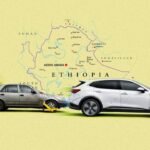




Pan-African Aspirations Entangled in Inland Isolation
Across Africa, the continent’s unity and progress have long been envisioned through Pan-African ideals of shared destiny and collective advancement. Yet, a persistent geographical divide undermines these aspirations: the plight of landlocked nations. Deprived of direct access to the seas, these countries grapple with structural vulnerabilities that extend beyond mere logistics, often igniting tensions and conflicts. This phenomenon positions landlocked status not as a passive trait but as a dynamic catalyst for discord, where economic imperatives clash with sovereign boundaries. In the broader Pan-African framework, such isolation challenges the ethos of solidarity, as inland states seek maritime outlets through neighboring territories, sometimes escalating into outright confrontations. Historical legacies of colonial border demarcations exacerbate these divides, fragmenting ethnic and economic ties while fostering dependencies that breed resentment. As Africa advances toward integration through frameworks such as the African Continental Free Trade Area (AfCFTA), the landlocked dilemma underscores the need for equitable resource sharing, reminding us that true Pan-Africanism must bridge not only minds but also maps.
Inland Titans: Profiling Africa’s Foremost Landlocked Powers
Africa hosts sixteen landlocked countries, a disproportionate share of the global total, each contending with the burdens of geographic enclosure. Among these, the most prominent by scale reveal the magnitude of the issue. Ethiopia is the continent’s most populous landlocked nation, home to over 130 million people, with a vast territory spanning diverse highlands and valleys yet severed from oceanic trade routes. Chad claims the title of the largest by area, encompassing over 1.2 million square kilometers of arid expanses and lakeside frontiers, while Niger follows closely with its expansive Sahelian landscapes. Mali, another giant, navigates the challenges of its desert-dominated interior, and Uganda, with its fertile equatorial heartland, ranks high in population density. These titans exemplify how size amplifies the landlocked curse: larger populations demand robust trade volumes, yet isolation inflates costs and stifles growth. Smaller counterparts such as Burundi and Eswatini face similar fates on a smaller scale, their economies tethered to the goodwill of coastal neighbors. In this mosaic, landlocked giants embody Africa’s internal contrasts—resource-rich yet access-poor—highlighting how geography shapes national trajectories and fuels quests for external linkages.
Currents of Contention: Maritime Deprivation as a Spark for African Wars
The absence of sea access has historically transformed economic frustrations into violent eruptions across Africa. Landlocked status, inherited from arbitrary colonial partitions, often sows seeds of conflict by creating dependencies that erode sovereignty and ignite territorial ambitions. The Eritrean-Ethiopian War of 1998-2000, rooted in border disputes but deepened by Ethiopia’s sudden landlocking post-Eritrean independence, exemplifies this dynamic, claiming tens of thousands of lives amid stalled peace efforts. Similarly, tensions in the Great Lakes region, involving landlocked Burundi and Rwanda, have become intertwined with broader civil strife, with access routes through Tanzania or Uganda serving as flashpoints for proxy battles. In West Africa, Mali’s inland position has compounded insurgencies, as rebel groups exploit transit vulnerabilities to challenge state control. The Central African Republic’s isolation has fueled chronic instability, with militias contesting riverine and road corridors as lifelines to the sea. These episodes reveal a pattern: landlocked-induced wars often manifest as hybrid conflicts, blending resource rivalries with ethnic grievances, where the quest for ports or corridors escalates from diplomacy to devastation. Such strife not only hampers development but perpetuates cycles of poverty, underscoring maritime deprivation’s role as a silent instigator in Africa’s turbulent history.
Charting Alliances: Maritime Pacts Bridging Africa’s Inland Divides
In response to landlocked predicaments, African states have entered into maritime agreements to mitigate isolation through cooperative frameworks. These pacts, often bilateral or regional, grant inland states transit rights and port access, fostering interdependence while safeguarding sovereignty. The African Maritime Transport Charter, revised under the African Union, promotes harmonized policies to ensure seamless access, emphasizing collaboration between landlocked and coastal states. Ethiopia’s arrangements with Djibouti exemplify this, providing dedicated port facilities in exchange for economic ties, though not without strains over fees and control. Uganda’s accords with Kenya secure corridors to Mombasa, blending infrastructure investments with trade protocols. Broader initiatives, such as the United Nations Convention on the Law of the Sea (UNCLOS), affirm landlocked states’ rights to marine resources and transit freedoms, thereby inspiring African adaptations, including the AfCFTA’s protocols for streamlined customs. Yet, these agreements face hurdles in enforcement, with power imbalances occasionally leading to renegotiations or disputes. By weaving maritime alliances into the fabric of continental unity, Africa aims to transform potential rivalries into shared prosperity, ensuring that inland states partake in the blue economy without compromising coastal integrity.
Anchors of Exchange: Africa’s Leading Ports as Trade Lifelines
Africa’s maritime gateways serve as vital conduits for global commerce, particularly for landlocked nations reliant on them for import-export vitality. The continent’s top ports, ranked by cargo throughput, embody this critical role. Durban in South Africa is a major port, handling millions of tons annually through its advanced container terminals and serving as a hub for southern African trade. Tanger Med in Morocco follows, with its strategic Mediterranean position facilitating transshipment and linking North Africa to Europe. Lagos, Nigeria, with its bustling Apapa complex, manages substantial volumes of oil and consumer goods, supporting West African economies. Mombasa in Kenya acts as East Africa’s powerhouse, channeling goods to landlocked Uganda and beyond via rail and road networks. Djibouti Port rounds out the elite, location, a vantage point crucial for Sub-Saharan Africa’s massive trade needs. These ports not only process cargo but also symbolize economic resilience, with investments in expansion to accommodate growing demand. For landlocked countries, these represent both opportunities and vulnerabilities—efficient operations lower costs, but bottlenecks or geopolitical shifts can exacerbate isolation, underscoring the need for diversified access points in Africa’s trade architecture.
Collaborative Currents: AU and UN Endeavors in Maritime Equity
The African Union (AU) and the United Nations (UN) have mobilized concerted efforts to address landlockedness, framing these challenges within broader development agendas. The Vienna Programme of Action for Landlocked Developing Countries, endorsed by the UN, prioritizes infrastructure upgrades, trade facilitation, and partnerships to reduce transit barriers. In Africa, this aligns with the AU’s Agenda 2063, which advocates for integrated transport corridors and digital connectivity to unlock inland potentials. Joint initiatives, such as the Programme for Infrastructure Development in Africa, fund rail and road projects that link landlocked states, such as Zambia, to ports in Angola or Tanzania. The AfCFTA further amplifies these by harmonizing tariffs and customs procedures, aiming to reduce trade costs by up to 50 percent. Challenges persist, including funding shortfalls and insufficient political will, but successes such as improved border efficiency within the East African Community demonstrate progress. Through these endeavors, the AU and UN foster a narrative of transformation, repositioning landlocked nations as “land-linked” hubs within a connected continent, where collective action mitigates geographic disadvantages and paves the way for sustainable growth.
Waves of Adversity: Persistent Challenges and Emerging Horizons
Landlocked African countries face multifaceted challenges that extend into uncertain futures, in which climate shifts and geopolitical realignments amplify vulnerabilities. High transit costs, often doubling those of coastal peers, erode competitiveness, while dependency on neighbors invites exploitation through arbitrary fees or blockades. Infrastructure deficits—aging roads, unreliable rails—compound delays, stifling trade and investment. Maritime security threats, from piracy in the Gulf of Guinea to tensions in the Red Sea, indirectly burden inland states by disrupting supply chains. Looking ahead, opportunities arise from technological advances: digital platforms for customs clearance and renewable energy corridors could circumvent traditional hurdles. Regional blocs such as the Southern African Development Community envision multimodal networks that integrate air and inland waterways. Yet escalating resource conflicts pose risks, necessitating diplomacy to avert crises. The future hinges on inclusive policies that prioritize equity, transforming landlocked status from a liability into a catalyst for innovation, in which Africa’s inland powers drive continental resilience through adaptive strategies and a unified vision.
Sovereign Tides: Ethiopia-Eritrea Tensions as a Maritime Security Paradigm
The Ethiopia-Eritrea dynamic epitomizes how landlocked imperatives intersect with national security and trade imperatives in Africa. Historically, Ethiopia’s access to the Red Sea via Eritrean ports was seamless until Eritrea’s 1993 independence, leaving Ethiopia landlocked and reliant on Djibouti. This shift precipitated the 1998-2000 border war, ostensibly over Badme but profoundly linked to port access disputes, resulting in massive casualties and economic ruin. The 2018 peace accord under Prime Minister Abiy Ahmed briefly thawed relations, promising joint development, yet underlying frictions persist. Ethiopia’s burgeoning population and economy demand diversified sea outlets, leading to controversial agreements such as the 2024 Somaliland memorandum, which Eritrea views as encroaching on regional stability. Eritrean accusations of Ethiopian aggression, coupled with Abiy’s assertions of historical maritime rights, heighten naval security concerns and increase the risk of proxy conflicts amid volatility in the Horn of Africa. Trade disruptions from these tensions inflate costs, while national security narratives frame access as existential. This case underscores broader themes: without mutually agreed maritime arrangements, landlocked ambitions can destabilize regions, necessitating Pan-African mediation to secure equitable pathways that balance sovereignty with shared prosperity.
In conclusion, Africa’s landlocked saga reveals geography’s profound imprint on conflict and cooperation. By addressing these through innovative pacts and unified efforts, the continent can move toward a future in which inland isolation yields to interconnected triumph, embodying the true spirit of Pan-African resilience.


