





The Pan-African Paradigm of Institutional Memory and Party Accountability
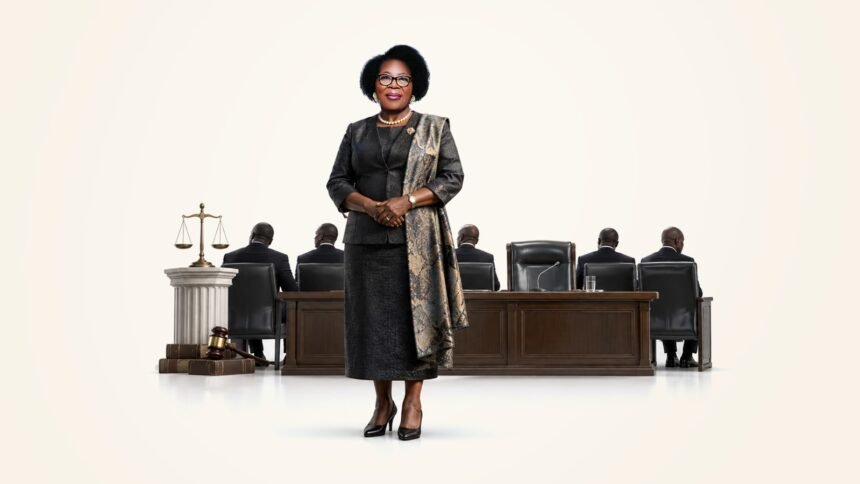
How many people greeted Jane Ansah when she walked into the hall as Malawi’s newly announced vice-presidential candidate? By her own account, almost none. The retired Supreme Court of Appeal judge and former electoral commission chairperson, the same official who once annulled President Peter Mutharika’s own disputed 2019 re-election, has now confirmed publicly what had long been rumored: that the Democratic Progressive Party she was chosen to help lead into government has spent the past year systematically shutting her out. The episode is a pointed illustration of a recurring continental pattern, in which figures drawn into governing coalitions for the institutional credibility they carry are subsequently starved of the access and authority that would let them exercise it. Ansah’s willingness to speak on record about her marginalization reframes what might otherwise read as internal party gossip into a genuine test of whether African ruling parties can absorb independent institutional figures without neutralizing the very qualities that made them attractive appointments in the first place.
An Unlikely Running Mate, Never Fully Embraced
Mutharika named Ansah his surprise running mate on 25 July 2025, ahead of the DPP’s ticket for the 16 September general election, a selection that stunned observers given that she held no position on the party’s national executive committee and had built her public profile as an independent arbiter of Malawian democracy rather than a partisan operator. That outsider status, Ansah now says, has defined her entire tenure. “I am really aware that there are factions,” she told Zodiak Broadcasting Station in an explosive interview, describing herself in stark terms: “I can just speak for myself that I have been sidelined.” The admission carries particular weight coming from a figure whose entire prior career rested on institutional neutrality. This background made her simultaneously an asset to the ticket’s credibility and, apparently, a target for a party apparatus unaccustomed to sharing power with outsiders.
From the Announcement Hall to the Airport Lounge
Ansah traced her marginalization back to the very moment of her selection. “The President was happy and gave reasons why he chose me,” she recalled, but the reception from the party rank and file was immediate and cold. The exclusion escalated from there: she says she was deliberately kept away from Mutharika’s victory address after the election, told by an unnamed party figure not to attend even as “everybody else was there.” Her account extended to logistics as mundane as they were, being barred from proceeding through the airport alongside the presidential delegation, left instead to sit in the lounge. Taken individually, each incident might read as a minor slight; taken together, they describe a pattern of deliberate, sustained exclusion from the basic rituals of political inclusion that typically accompany high office.
A Widening Breakdown at the Center of Power
Ansah’s public remarks arrive amid mounting evidence of a broader institutional breakdown within Malawi’s executive, including her separate, earlier accusations against Chief Secretary Dr Justin Saidi, whom she claims has blocked her from cabinet meetings and withheld documents essential to her role. She has stated she intends to pursue these grievances “procedurally,” notably declining so far to escalate the dispute directly to the president himself. This choice suggests either institutional caution or a recognition that confrontation could further weaken an already precarious position within the party. The dynamic raises a structural question with implications well beyond Malawi: whether a party’s willingness to recruit outside credibility for electoral purposes translates into any genuine redistribution of internal power once that credibility has served its purpose at the ballot box.
Reclaiming Institutional Trust Beyond the Ballot
Ansah’s predicament illustrates a broader continental challenge in how ruling parties absorb, or fail to absorb, figures whose value lies precisely in their independence from partisan machinery. A vice-president who once presided over the very institution charged with certifying elections now finds herself unable to secure basic institutional access within the government she helps lead, a contradiction that undermines public confidence in both the party and the electoral system she formerly oversaw. For Malawi’s democracy to mature beyond personality-driven factionalism, parties will need to develop structures capable of genuinely integrating, rather than merely displaying, the institutional credibility they seek out at election time. Ansah’s decision to go public, whatever its political cost to her personally, forces that reckoning into the open, a necessary, if uncomfortable, step toward a political culture where legitimacy is not simply borrowed for a campaign season and then quietly withdrawn.