



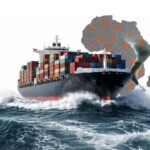



Pan-African Flux: The Continental Odyssey of Desperation
Africa’s northern littoral has long been a crossroads of human aspiration and peril, where the Sahara’s unforgiving dunes meet the Mediterranean’s treacherous embrace. For over a decade, Libya has served as the continent’s most volatile transit hub. In this fractured arena, sub-Saharan migrants, fleeing war, poverty, and climate collapse, converge in search of European shores. In 2025, this perilous passage claimed another moral casualty: three leading civil rescue organizations severed all operational ties with the Libyan Coast Guard, citing systemic complicity in torture, extortion, and pushbacks that violate the most basic tenets of human dignity. The decision, announced on November 7, underscores a deepening crisis that binds North African border regimes to the fates of millions across the continent.
The numbers are staggering yet numbingly familiar. Since 2014, over 1.2 million people have attempted the central Mediterranean route, with Libya absorbing the majority. In the first ten months of 2025 alone, 68,000 individuals were intercepted at sea and returned to Libyan soil—where detention centers, warehouses of human misery, hold upwards of 20,000 souls in conditions that UN investigators have branded “crimes against humanity.” These are not mere statistics; they are Eritrean teachers, Nigerian mechanics, Sudanese farmers—each propelled by forces that radiate from the continent’s core instabilities. The Horn of Africa’s endless conflicts, the Sahel’s jihadist insurgencies, and West Africa’s economic strangulation converge in Tripoli’s smuggling bazaars, where passage to Europe is bartered for $1,000–$5,000 per head.
This Pan-African dimension is critical. Libya’s chaos is not an isolated North African anomaly but a downstream consequence of continental fractures. The 2011 NATO intervention that toppled Muammar Gaddafi dismantled the state without rebuilding it, leaving a vacuum that armed militias, tribal networks, and transnational smugglers rushed to fill. Today, the country’s 6.8 million population hosts an estimated 700,000 migrants—12% of its demographic weight—creating a pressure cooker where local resentments fuel exploitation. The civil rescue groups’ withdrawal is thus a continental indictment: Europe’s outsourcing of border control to a predatory Libyan apparatus has transformed a shared African tragedy into a subsidized industry of suffering.
Libyan Labyrinth: Detention, Death, and the Architecture of Cruelty
Libya’s refugee landscape is a dystopian mosaic of official complicity and criminal enterprise. The country’s two rival governments—the UN-recognized Government of National Accord in Tripoli and the Libyan National Army in the east—both rely on the same detention infrastructure to assert sovereignty. Over 34 official centers, supplemented by countless clandestine warehouses, operate under the Ministry of Interior’s nominal oversight. Yet control is illusory: militias affiliated with the Coast Guard routinely divert intercepted migrants to private facilities, where ransom demands of $500–$2,000 per person are extracted through beatings, electrocution, and sexual violence.
The November 7 rupture exposes this machinery in stark relief. Civil rescue vessels operating under flags of necessity maintained radio coordination with the Libyan Coast Guard to ensure safe handovers of distressed migrants. That protocol collapsed when evidence mounted of systematic abuse: intercepted boats returned to Libya vanished into militia-controlled hangars; survivors recounted being sold between detention sites like commodities; and EU-funded patrol boats were filmed firing on overcrowded dinghies. The breaking point came with an October 2025 incident in which 120 migrants, including 28 children, were forcibly disembarked at Tripoli port and immediately transferred to Al-Mabani detention center, where 11 bodies were later discovered bearing signs of torture.
This is not chaos but choreography. The Libyan Coastguard, rebuilt with €455 million in EU support since 2017, functions as both border enforcer and smuggling facilitator. Officers demand bribes to release detainees; commanders lease warehouse space to traffickers; and fuel subsidies intended for rescues are siphoned into private speedboat fleets. The result is a perverse incentive structure: the more migrants intercepted, the greater the revenue from EU contracts, detention fees, and ransom cycles. In 2025, Libya’s maritime interceptions generated an estimated €120 million in direct and indirect income for state-aligned militias—dwarfing the country’s $80 million fisheries sector.
Refugee Requiem: The Human Toll of Fortress Europe’s Proxy
The refugees ensnared in this system are Africa’s most vulnerable diaspora. Over 60% originate from the continent’s conflict zones: Eritrea’s indefinite military service, Somalia’s al-Shabaab tyranny, Sudan’s RSF massacres. Another 25% hail from West Africa’s economic dead ends—Nigeria’s 33% youth unemployment, Ghana’s collapsing cocoa prices. Their journeys begin with $500 bus tickets from Agadez to Sabha, traverse 1,500 kilometers of desert where robbery and rape are routine, and culminate in Tripoli’s “connection houses”—brothels-cum-prisons where final payments are extracted.
Death stalks every stage. The Sahara claims 1,200 lives annually through dehydration and abandonment; the Mediterranean, despite reduced departures, maintains a 1-in-40 mortality rate—higher than the 2015 peak. In Libya, detention center fires, medical neglect, and guard brutality add thousands more. A single 2025 incident in Zuwara saw 43 migrants suffocate in a sealed truck; another in Kufra recorded 28 executions by traffickers over unpaid debts. Women face particular horrors: 85% of female detainees report sexual violence, with pregnancy used as leverage for ransom acceleration.
The civil rescue groups’ withdrawal leaves a void that commercial vessels increasingly refuse to fill. Under international maritime law, masters are obligated to render assistance, but Libyan threats of arrest and EU pressure to avoid coordination have created a deterrence effect. In September 2025, three cargo ships ignored distress calls citing “operational constraints,” resulting in 180 confirmed deaths. The Mediterranean has thus become a liquid graveyard where legal obligations dissolve in the face of political expediency.
Organized Shadows: Smuggling Syndicates and the Criminal-State Nexus
Libya’s refugee crisis is big business, structured with corporate efficiency. Smuggling networks operate as franchised cartels, with Tripoli-based “travel agencies” coordinating desert convoys, coastal departures, and European reception. A single successful crossing generates $3 million in revenue, with profits laundered through Libya’s hawala system and invested in Benghazi real estate or Tunisian date farms. The supply chain is sophisticated: GPS-tracked convoys, satellite phones for weather windows, and rubber dinghies imported from China via Malta.
Militia involvement is total. The Stability Support Apparatus, ostensibly a counter-terrorism unit, moonlights as Tripoli’s premier smuggling broker. Its commander, Abdul Rauf Kara, was sanctioned by the UN in 2023 for human trafficking, yet continues to receive EU training delegations. In the east, Khalifa Haftar’s sons oversee parallel networks, using airfields in Kufra to fly migrants directly from Khartoum. This criminal-state fusion ensures impunity: of 420 smuggling cases documented by Libyan courts since 2018, only 11 resulted in convictions—and those involved low-level drivers, never financiers.
The trade’s resilience is structural. EU funding, intended to professionalize the Coast Guard, instead subsidizes the ecosystem: patrol boats are used for smuggling runs under cover of darkness; training centers double as recruitment hubs for traffickers. The November withdrawal by civil groups has paradoxically strengthened this nexus—fewer independent vessels mean more migrants funneled into Libyan returns, generating higher interception bonuses and detention profits.
Counter-Terrorism Conundrums: When Border Security Breeds Extremism
Libya’s refugee industrial complex intersects dangerously with counter-terrorism priorities. The same militias tasked with migration control are often the most radicalized. In Sabratha, the al-Wadi brigade—responsible for 40% of 2024 interceptions—pledges allegiance to Islamic State remnants while pocketing EU funds. Detainees in their facilities report forced recruitment into labor battalions supporting IS oil smuggling. This convergence is not coincidental: the financial desperation created by detention economies makes migrants prime targets for extremist indoctrination.
The Sahel-to-Sahara corridor amplifies the threat. Boko Haram affiliates in northern Niger traffic weapons southward in exchange for migrant transport northward, creating a two-way pipeline of violence. In Kufra, Sudanese Janjaweed factions use refugee convoys to infiltrate Libyan territory, establishing training camps under the guise of “transit protection.” The UN has documented 14 such camps since 2023, with 2,800 fighters rotating through.
European counter-terrorism aid thus faces a cruel paradox: €90 million allocated for Libyan border security in 2025 primarily benefits the same actors facilitating extremist mobility. The civil rescue groups’ departure removes a critical early-warning system—NGO vessels were often the first to report suspicious militia movements. Without their presence, the Mediterranean becomes not just a refugee graveyard but a covert highway for jihadist infiltration.
Border Bastions: The Futility and Morality of Outsourced Control
The EU’s Libya strategy—€6 billion invested since 2015 in training, equipment, and development aid—rests on a foundational fiction: that a modular coastguard can be insulated from the militia ecosystem it serves. The November 7 rupture demolishes this premise. Civil rescue organizations, having coordinated 1,200 rescues and saved 42,000 lives since 2016, cited three non-negotiable violations: the use of live fire against migrant boats, the systematic transfer of rescued persons to torture sites, and the refusal to establish safe disembarkation protocols.
Alternative models exist but remain politically radioactive. The 2018 Malta Declaration’s promise of voluntary returns processed through UNHCR has facilitated only 3,800 repatriations annually—less than 6% of interceptions. Regional disembarkation platforms in Tunisia and Egypt foundered on host-country refusals to accept non-nationals. The EU’s newest gambit—€1 billion in budget support tied to migration benchmarks—risks repeating the Libyan error on a continental scale.
The border control paradigm is thus locked in a death spiral: increased funding strengthens abusive actors, prompting civil society withdrawal, which in turn necessitates more funding to fill the vacuum. Libya’s 2025 interception rate of 92%—up from 68% in 2022—reflects not success but escalation: more boats launched, more deaths at sea, more profits for militias. The civil rescue groups’ stand is therefore not just operational but existential—a refusal to legitimise a system that has commodified African desperation.
Horizon’s Call: Toward a Pan-African Refugee Compact
Libya’s refugee abyss demands a paradigm shift from containment to continental responsibility. Four imperatives emerge.
First, African-led processing: The AU must operationalize the 2018 Global Compact’s regional hubs, establishing UNHCR-administered centers in Niger and Chad with EU funding but African oversight. These would process asylum claims before Mediterranean departure, reducing smuggling incentives.
Second, economic substitution: €500 million in EU development aid should target migrant-sending communities—Eritrea’s agricultural cooperatives, Nigeria’s vocational centers—creating pull-back factors stronger than Europe’s gravitational pull.
Third, accountability mechanisms: An AU-EU joint monitoring mission, with a mandate to inspect all Libyan detention facilities and publish unedited findings quarterly, could deter the worst abuses without requiring regime change.
Fourth, maritime reorientation: Civil rescue vessels should be granted EU flagship status and be guaranteed safe port access in Italy and Malta, restoring the humanitarian space that Libyan coordination destroyed.
The civil groups’ withdrawal is not a defeat but a clarion call. Libya’s broken bargain exposes the moral bankruptcy of outsourced cruelty. Only by centering African agency—through AU mediation, ECOWAS-Arab League dialogue, and Pan-African investment in origin economies—can the continent transform its refugee tragedy into a narrative of shared renewal. The Mediterranean need not be a moat; it can yet become a bridge, if Europe and Africa choose solidarity over subcontracted suffering.


