





Solidarity’s Spectrum: Pan-African Debt Dynamics in Flux
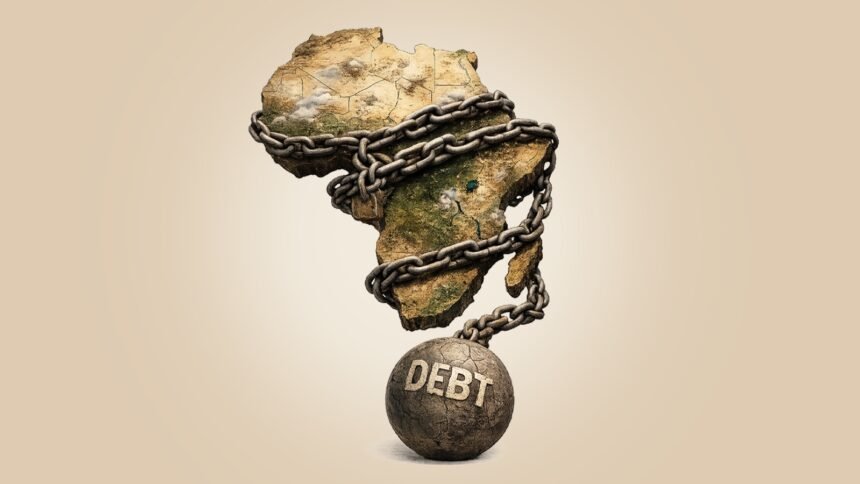
Africa’s debt dynamics flow through a spectrum of solidarity and strain, where East Africa’s high-growth hubs like Kenya and Ethiopia confront acute vulnerabilities amid a continent-wide $90-95 billion external repayment wall in 2026. This pan-African prism reveals shared burdens: sub-Saharan liabilities amount to $707 billion, devouring 15% of revenues, eclipsing health in 38 nations, and diverting $89-101 billion from the SDGs. East’s 5.8% surge contrasts with North’s 4.1% dip and West’s 4.4% moderation, yet 40% of regional nations teeter on distress, with Ethiopia’s $28.9 billion stock, Uganda’s $20 billion, and Kenya’s $80 billion nexus with climate shocks spiking food insecurity for 120 million. Solidarity’s currents: AfCFTA’s $650 billion uplift by 2043 harmonizes trade; BRICS inflows counter U.S. tariffs’ 0.8% GDP dent; G20 Compact unlocks $150 billion in swaps. Yet, flux intensifies: creditor opacity (43% private) prolongs restructurings, Zambia’s odyssey echoes Kenya’s IMF impasse. In this spectrum, East Africa’s saga embodies ubuntu’s burden: debt’s drag on prosperity demands collective currents for resilient flux.
Sahara to Savanna Strains: East Africa’s Debt Crisis Unveiled
East Africa’s debt crisis unveils strains from Sahara’s arid edges to savanna’s fertile expanses, where Kenya’s $80 billion liabilities, 70% GDP, exemplify regional perils amid 5.8% 2026 growth. Crisis’s contours: Ethiopia’s $28.9 billion (100%+ exports) fuels bondholder disputes, Uganda’s $20 billion strains infrastructure ambitions, Tanzania’s $46 billion navigates mid-tier stability. Strains deepen with global shocks: U.S.-China tariffs dent commodity flows, Gaza spillovers spike, and Egypt’s $27 billion dues (one-third continental) rise. North-South nexus: 4.1% dip reflects tourism slumps, yet East’s resilience, Kenya’s 5.5% projection, masks faultlines: 9.8% yields (triple G7) inflate service burdens, diverting 20% revenues from SDGs. Relief’s remedies teeter: IMF’s stalled Kenya talks, Ethiopia’s $3.4 billion facility condition on reforms. Yet strains yield to strategic strands: AfDB’s $47 billion green bonds, Pan-African agencies slash premiums. In Sahara-savanna strains, crisis unveils urgency: East’s high-growth veil conceals solvency’s sinews, demanding a mended nexus for resilient ridges.
Rift Valley Resilience: Kenya’s Economic Outlook in Relief’s Realm
Kenya’s economic outlook resiliently hovers in the Rift Valley’s realm, projecting 5.5% 2026 GDP amid easing embrace and debt’s guarded drag. GDP at $140.87 billion leads EAC, per capita at $2,600, stagnant amid a 54 million populace; outlook: IMF-World Bank converge at 4.9% 2026-2027, driven by services (tourism-remittances), industry recovery, and AfCFTA 52% surge by 2032. Inflation’s 5.2% guard: below 7.5% cap, enabling CBR’s ninth cut to 8.75%, boosting 6.4% credit. Sectors step: agriculture 22% GDP rebounds, finance resilient, and manufacturing 8%. Guarded by headwinds: climate hazards spiking insecurity, U.S. tariffs curbing exports, Gaza spillovers. Relief’s ripple: $2.25 billion Eurobonds ease maturities, securitisation funds development sans IMF factoring. Future horizons: 5.6% in 2027, AI uplifts, yet 43.8% poverty demands inclusive growth, transforming the outlook from guarded to gallant amid Rift’s nurturing realm.
Engagement’s Elusive Edge: IMF Visit & Kenya Lending Prospects
IMF visits elusive edge, sharpening Kenya’s lending prospects, with March 2026’s technical talks, sans deal yield, pivoting on fiscal credibility amid high debt distress. Visit’s vista: Washington team concludes without programme, as Finance Minister John Mbadi affirms: “No, it’s very far from it,” framing engagement as technical, not deal-driven. Prospects’ pivot: previous $3.6 billion ended April 2025; new request unfactored into budget; securitisation of revenues initially curbed accord, yet $2.25 billion Eurobonds bridge gaps. Edge’s tensions: IMF queries debt sustainability, fiscal anchors, and a 5.3% deficit in 2026, while Kenya guards against austerity, rejecting pessimistic outlooks. Lending’s likelihood: post-visit follow-ups to eye programme by mid-2026, conditioned on reforms, revenue hikes, and SOE efficiency. Yet elusive amid global fragmentation and reform fatigue. In engagement’s edge, IMF-Kenya prospects teeter: technical talks sharpen paths to elusive pacts, edging toward fiscal fortitude.
Sahara’s Sustained Stride: Development in Debt’s Determined Dawn
Development’s determined dawn strides across East Africa’s Sahara-savanna expanse, where Kenya’s 5.5% growth unlocks inclusive arcs amid debt’s dawn. Stride’s synergy: Vision 2030’s pillars deepen access (84.8% formal), countering 43.8% poverty via easing credit catalyst, 6.4% expansion spurs SMEs, and agriculture productivity (41% rise). Dawn’s dual: debt’s 70% of GDP diverts 20% of revenues, yet IMF prospects, $2.25 billion in bonds, free space for health (18.3%) and education. Development deepens: tourism remittances rebound, industry harnesses reforms for FDI. Yet strides’ strains: climate shocks, inequality, demand for flexible safeguards, vocational boosts, and yuan swaps. Future sustained: AfCFTA lifts exports, AI 6% uplift (2035), eroding Gini disparities. In Sahara’s stride, development’s dawn, ubuntu-infused, reform-driven, harvests prosperity, illuminating determined paths to equitable expanse.


