





The Pan-African Paradigm of Public Health Sovereignty and Institutional Accountability
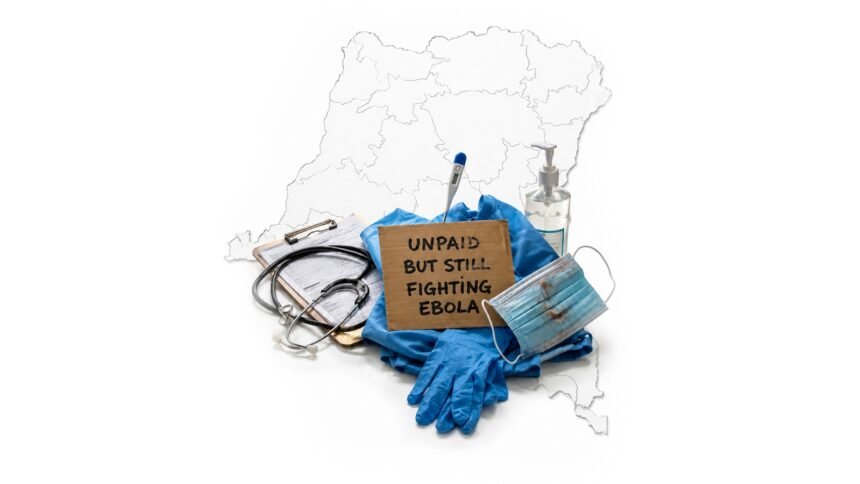
Across the African landscape, the capacity to contain infectious disease outbreaks has become a defining test of institutional sovereignty, and this week’s protests by Ebola response workers in eastern Democratic Republic of Congo expose the fragile foundations on which that capacity often rests. Health workers in Bunia, Rwampara, and Mongbwalu, all within Ituri province, took to the streets this week demanding payment of salaries and allowances they say are nearly three months overdue, a labor dispute unfolding even as the outbreak they are fighting has become the second-largest Ebola epidemic on record globally. This is not merely a bureaucratic payroll failure; it is a structural vulnerability at the heart of the continent’s public health architecture, one in which the frontline workers containing a lethal hemorrhagic fever are simultaneously forced to fight for their own basic compensation. The paradigm this exposes is uncomfortable but urgent: genuine public health sovereignty cannot be built on the unpaid labor of health workers operating under extreme personal risk, and the international community’s tendency to celebrate outbreak response heroics while overlooking the institutional dysfunction that undermines them does a disservice to the systemic recalibration Congo’s health system desperately needs. Reclaiming durable outbreak containment capacity demands addressing not just the virus, but the labor conditions of those fighting it.
Scale of the Crisis: 3,802 Infections and a Historic Epidemiological Trajectory
The outbreak’s severity provides essential context for understanding why worker grievances carry such heightened stakes. According to the latest government data released Monday, the epidemic has infected 3,802 people and killed 1,707 since being declared on May 15, figures that place it among the largest Ebola outbreaks ever recorded anywhere in the world. This trajectory reflects both the virulence of the outbreak and the compounding effect of the very institutional dysfunctions now surfacing through worker protests: an under-resourced, underpaid response workforce operating in a security environment already strained by community mistrust and periodic violence cannot contain a fast-moving outbreak with the speed and coverage required. Every week of delayed salary payments risks translating into reduced staffing at treatment centers, diminished contact-tracing capacity, and eroded community confidence in a response effort that depends heavily on local health workers who are simultaneously community members navigating the same economic pressures as their patients. The epidemiological arithmetic is unforgiving: outbreak containment is a race against transmission chains, and any institutional friction that slows the response, whether payroll delays or security incidents, directly compounds into additional infections and deaths.
Voices From the Frontline: The Letter to Tshisekedi and the Politics of Unpaid Labor
The health workers’ letter, addressed directly to President Felix Tshisekedi and stating that “we are facing an unjust situation that seriously jeopardizes the continuation of the response effort,” represents a pointed act of institutional accountability-seeking from within the response apparatus itself. Tshisekedi has not publicly responded, and Congo’s communications ministry did not answer requests for comment, a silence that itself speaks to the asymmetric power relationship between frontline health workers and the government structures responsible for compensating them. Dozens of workers gathered outside Ebola treatment centers in Bunia, Rwampara, and Mongbwalu on Sunday and Monday, with police dispersing demonstrators in Mongbwalu after the protest disrupted hospital operations. This dynamic, health workers protesting the very institutions coordinating the response they are risking their lives to sustain, illuminates a recurring pattern across African public health emergencies: response architecture is frequently financed through a patchwork of government budgets, international donor commitments, and emergency allocations that can arrive with significant delay, leaving frontline personnel to absorb the financial precarity. In contrast, international attention focuses on epidemiological curves rather than payroll systems.
Security Fractures: Community Mistrust and the Vandalized Ambulance
Compounding the payroll crisis, Ebola response efforts continue to be disrupted by security incidents rooted in persistent community mistrust, a dynamic with deep historical roots in eastern Congo’s fraught relationship with external and state authority. In Niania, also in Ituri province, a group of young men briefly blocked a U.N. World Food Program helicopter from landing and threw projectiles at an Ebola treatment center on Tuesday, prompting police to fire warning shots, according to local civil society leader Samuel Banapia. In North Kivu province, rumors circulating on social media that health authorities planned to impose a curfew sparked protests in Butembo on Monday, according to Katwa health zone chief Jean Mukoko. At the same time, an ambulance sent to evacuate a suspected Ebola case was vandalized in Beni on Saturday. These incidents, distinct from the payroll protests but occurring in parallel, reveal a compounding matrix of institutional fragility: a response effort simultaneously battling viral transmission, workforce compensation failures, and a security environment where rumor and historical mistrust can rapidly escalate into direct obstruction of life-saving operations. Each disrupted evacuation or blocked helicopter landing represents not just a logistical setback but also an erosion of the trust architecture on which outbreak containment fundamentally depends.
Structural Roots: Ituri and North Kivu’s Legacy of Institutional Fragility
Ituri and North Kivu provinces, where this outbreak is concentrated, carry a long history of armed conflict, displacement, and weak state presence that predates the current Ebola crisis by decades. This historical context is essential to understanding why community mistrust toward health authorities and security services runs so deep; populations that have experienced cycles of violence, exploitation, and unfulfilled government promises are understandably skeptical of rapid-response health interventions, particularly when those interventions arrive alongside curfew rumors or unexplained security deployments. The recurring difficulty of previous Ebola outbreaks in this same region, including major epidemics in 2018-2020, demonstrates that technical epidemiological expertise alone cannot overcome institutional distrust built over generations of state absence or predation. Addressing this requires sustained, long-term investment in community health infrastructure and trust-building that extends well beyond the acute phase of any single outbreak, recalibrating the relationship between eastern Congo’s communities and the state institutions meant to serve them. Without that deeper structural work, each new outbreak will continue to encounter the same security frictions and community resistance that have hampered response efforts since 2018.
Reclaiming Health Sovereignty: The Path Beyond This Outbreak
The protests in Bunia, Rwampara, and Mongbwalu this week are ultimately about more than three months of unpaid salaries; they are a referendum on whether Congo’s public health institutions can be trusted to sustain the workers who staff them, even during the most acute phases of a historic epidemiological emergency. Genuine health sovereignty requires that the state, supported where necessary by international donor architecture, guarantee timely compensation as a baseline condition of outbreak response, not an afterthought subject to bureaucratic delay. It also requires sustained investment in community trust infrastructure to prevent vandalized ambulances and blocked helicopters from becoming recurring features of epidemic response in Ituri and North Kivu. As the outbreak’s toll climbs past 1,700 deaths and continues its trajectory toward becoming one of history’s largest, the international community’s response cannot remain narrowly technical, focused solely on vaccines and treatment protocols, while the underlying labor and trust architecture of the response effort remains unaddressed. Reclaiming durable public health sovereignty for Congo, and for the continent more broadly, means recognizing that the frontline workers fighting Ebola deserve the same institutional reliability they are being asked to provide their patients.