





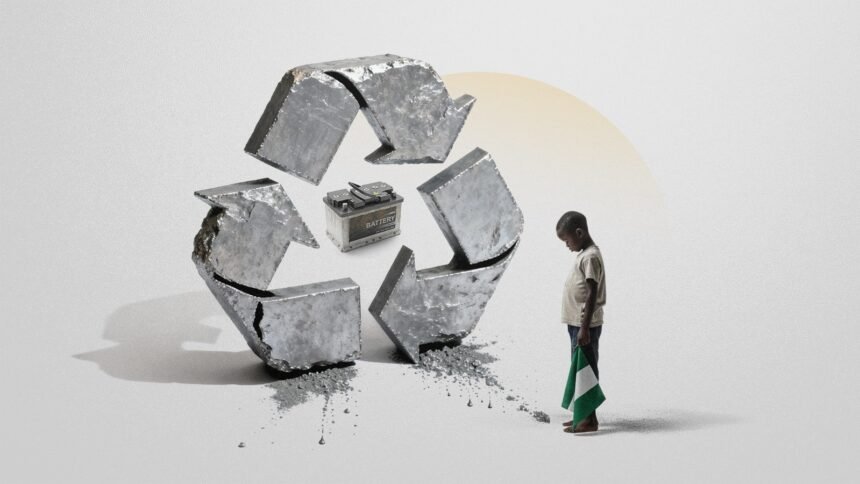
Pan-African Roots: Tracing the Toxic Trail of Lead
Across Africa, lead has long been a double-edged sword, embodying both economic promise and environmental peril. The continent’s engagement with lead recycling emerged in the late 20th century, driven by global demand for affordable secondary lead, primarily from used automotive batteries. Informal recycling operations sprouted in urban peripheries, where discarded batteries from Europe and North America found new life—or rather, inflicted new harm. Early incidents, such as the devastating child fatalities in Senegalese communities from unregulated smelting, highlighted the human cost of this trade. In Nigeria, the epicenter of Africa’s lead recycling boom, this history intertwines with colonial legacies of resource extraction, evolving into a modern saga of industrialization without safeguards. As the continent’s largest economy, Nigeria’s factories in towns like Ogijo have become emblematic of a Pan-African struggle, where the pursuit of sustainability abroad poisons local soils and souls.
Nigerian Heartland: Forging Lead Amid Fragile Lives
Nigeria is Africa’s leading producer and recycler of lead, outpacing neighboring countries such as Ghana, Cameroon, and Tunisia in output and exports. With an industry valued in the billions, the nation processes vast quantities of used lead-acid batteries, supplying recycled ingots to global automotive giants. Yet, this dominance comes at a steep price. In Ogijo, an industrial enclave near Lagos, factories have churned out lead for decades, their emissions blanketing homes, schools, and farms in toxic dust. Recent closures of several plants, including True Metals, underscore the crisis: blood tests revealed that seven in ten residents suffer from lead poisoning, with half the children exhibiting levels linked to irreversible cognitive impairment. This Nigerian nexus reveals a pattern replicated across the continent, in which recycling hubs promise jobs but deliver disease, as workers inhale fumes without protection and communities grapple with contaminated water sources.
Environmental Echoes: Scars on Soil and Spirit
The environmental toll of lead recycling reverberates through Africa’s landscapes, transforming fertile grounds into barren wastelands. Lead, a neurotoxin with no safe exposure threshold, leaches into soils at concentrations hundreds of times above permissible limits, as seen in Ogijo, where levels reached 186 times the hazard threshold. This contamination disrupts ecosystems, poisoning wildlife, crops, and groundwater, while airborne particles contribute to respiratory ailments and biodiversity loss. In Nigeria, the interplay of industrial emissions and urban sprawl amplifies these impacts, with black soot coating household surfaces and triggering seizures, memory loss, and developmental delays among the young. Pan-African studies from Kenya to Mozambique echo this devastation, showing how unregulated smelting erodes soil fertility and burdens healthcare systems, costing economies up to four percent of GDP through lost productivity and lifelong disabilities.
Recycling Realms: Practices and Perils in the Continent’s Core
Recycling practices in Africa often straddle the line between ingenuity and peril, with Nigeria exemplifying the dominance of the informal sector. Over 70 percent of battery recycling in West Africa occurs outside formal channels, where batteries are manually crushed, acids are dumped untreated, and lead is smelted in open-air furnaces. In Ogijo’s shuttered factories, such methods have led to widespread exposure, as workers—often without masks or ventilation—extract lead for export to U.S. car manufacturers. While formal operations exist, they are outnumbered by backyard setups driven by poverty and lax oversight. This Pan-African reality contrasts with global narratives of “green” recycling, revealing how tightened regulations in wealthier nations shift the burden southward, turning African towns into sacrifice zones for international supply chains.
Protection Pillars: Policies Shaping a Safer Horizon
African nations have implemented a patchwork of policies to curb the menace of lead, though enforcement remains a formidable challenge. Nigeria’s National Environmental Standards and Regulations Enforcement Agency mandates safe handling, yet violations persist, as evidenced by the recent Ogijo shutdowns and calls for export bans. Continent-wide, South Africa’s lead-in-paint regulations and Ethiopia’s emerging standards signal progress, while the African Union’s Continental Circular Economy Action Plan promotes resource reuse and pollution control. United Nations initiatives, including partnerships with environmental groups, advocate for sound recycling infrastructure, with an emphasis on child protection and community relocation. In Nigeria, aggressive campaigns—such as blood testing for 500 residents and soil sampling—represent a bold step toward accountability, urging a Pan-African framework that prioritizes health over haste.
Unity’s Umbrella: African Union and Global Guardianship
The African Union and United Nations have emerged as vital guardians in the fight against lead pollution, fostering collaborative efforts to reclaim contaminated futures. The AU’s 2024-2034 Circular Economy Action Plan envisions a continent in which waste becomes wealth without harm, targeting 50 percent recycling rates in cities while addressing hazardous trades. UN Environment Programme interventions, inspired by tragedies in Senegal and Nigeria, provide technical aid for cleaner technologies and awareness campaigns. In Ogijo, these global echoes manifest in joint investigations with local authorities, highlighting the need for Pan-African solidarity. Such efforts underscore a collective resolve to protect vulnerable populations and to integrate lead mitigation into broader agendas for public health and sustainable development.
Challenges’ Chains: Binding Progress in the Recycling Realm
Africa’s lead recycling sector grapples with entrenched challenges that perpetuate its toxic cycle. Informal operations, fueled by economic desperation, evade regulations, leading to unchecked emissions and worker exploitation. In Nigeria, factories such as those in Ogijo operate with minimal oversight and resist certification programs amid industry lobbying. Pan-African hurdles include inadequate infrastructure, corruption, and the allure of foreign investment that prioritizes profit over protection. Climate factors exacerbate issues: rising temperatures intensify dust dispersion, while poverty compels communities to tolerate hazards to maintain meager livelihoods. These chains impede progress, demanding systemic reforms to break the pattern of relocation—from Nigeria to emerging hubs such as the Ivory Coast—without resolution.
Forward Frontiers: Envisioning Protected Pathways for Lead
Looking ahead, Africa’s lead recycling landscape holds potential for transformation, with Nigeria’s Ogijo crisis catalyzing change. Investments in cleaner technologies, such as enclosed smelters and acid-neutralization systems, could improve standards, creating jobs while safeguarding health. Pan-African prospects include expanding certification lists for ethical suppliers, reducing reliance on informal supply chains, and integrating lead into mineral-sourcing policies. The continent’s battery market, projected to reach $3.5 billion by 2031, presents opportunities for sustainable models that incorporate renewable energy storage with safe practices. In Nigeria, ongoing audits and community relocations signal optimism, paving pathways toward a protected future in which recycling renews rather than degrades.