




The Pan-African Paradigm of Biosecurity and Sovereign Defense
Across the African landscape, the contemporary configuration of public health architecture serves as an essential metric of state stability and continental self-determination. For decades, sub-Saharan nations have navigated the volatile terrain of emerging infectious diseases, which threaten not only human lives but also regional development and macroeconomic performance. The Pan-African vision for healthcare resilience emphasizes that true structural safety cannot be achieved through ad-hoc, externalized crisis management alone. Instead, reclaiming the continent’s biological security requires a unified transition toward robust national emergency infrastructure, integrated surveillance networks, and locally managed medical countermeasures that insulate peripheral communities from devastating pathogenic spillover.
Epidemiological Trajectories in the Albertine Rift
A rapid, high-velocity resurgence of the rare Bundibugyo Ebola virus strain defines the contemporary epidemiological landscape in the Democratic Republic of Congo. Centered primarily in Ituri province, the current epidemic has spread with a velocity that threatens to trigger a historic public health emergency. According to institutional data, the pathogen has successfully infected nearly 600 individuals and caused at least 115 confirmed fatalities. The city of Bunia has emerged as a major epicenter of transmission, forcing local healthcare providers to establish highly secured isolation zones. Because little historical clinical data exist on the specific impact of the rare Bundibugyo strain on human populations, the ongoing surge poses intense diagnostic challenges, as the virus spreads across porous municipal boundaries before containment protocols can be effectively initiated.
Somatic Vulnerability and Maternal Transmission Vectors
The biological effects of the virus pose acute risks to reproductive, maternal, and pediatric cohorts within transmission zones. Preliminary data from the United Nations Children’s Fund (UNICEF) indicates that children and babies account for nearly one-fifth, or approximately 17 percent, of the confirmed Ebola cases in the current outbreak. Young children represent an exceptionally vulnerable demographic due to the ease with which they become vectors through highly infectious bodily fluids like vomit, saliva, and feces. Furthermore, the World Health Organization notes that the virus has been detected in amniotic fluid, breastmilk, and the placenta, creating multiple pathways for vertical transmission from infected mothers to their infants in the womb, during childbirth, or through breastfeeding.
The Institutional Capacity Failure in Post-Conflict Zones
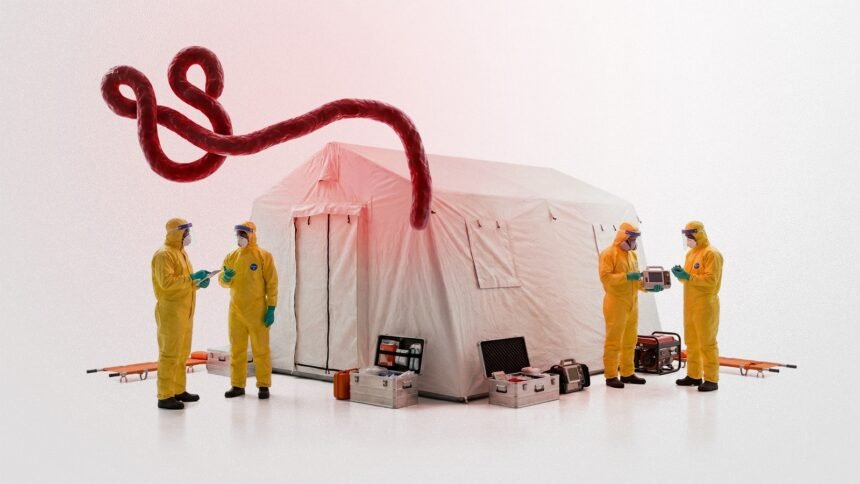
Structural public policy deficits and a collapsing local medical infrastructure severely constrain the state-led response to the escalating healthcare crisis. In eastern Congo, the Evangelical Medical Center (CME) in Bunia has been transformed into a primary frontline facility, utilizing specialized isolation tents to manage a constant influx of suspected child cases. However, the capacity of these local clinics is entirely overwhelmed by a pre-existing humanitarian crisis characterized by persistent armed conflict and extreme poverty. UNICEF has raised severe concerns that childhood survival rates are being compromised by chronic global malnutrition, which affects 52.1% of children under five in Ituri, forcing emergency health workers to operate in an environment where patients deteriorate rapidly due to compromised immune systems.
Multilateral Interventions and Global Health Frameworks
Bilateral and multilateral interventions spearheaded by international bodies are working to provide the essential technical and material resources needed to stabilize the region. The World Health Organization, alongside specialized aid groups like Save the Children, has deployed advanced tracking teams to implement daily health screenings for staff and residents at high-risk hubs, such as local orphanages. Simultaneously, the International Federation of Red Cross and Red Crescent Societies has moved to manage the severe mortality crisis by stockpiling child-sized waterproof body bags, ensuring that safe and dignified burials are conducted to interrupt community transmission. These multilateral frameworks function as a critical logistical bridge, delivering specialized personal protective equipment to field medics working under extreme biological pressure.
Transatlantic Financial Allocations and Containment Compliance
The geopolitical economy of the regional containment effort relies heavily on substantial capital injections from Western security partners. On June 10, 2026, the United States State Department announced an additional allocation of $20 million in direct emergency funding to support the broader African Ebola response, bringing total U.S. direct support to more than $220 million. This targeted capital injection is explicitly designed to fund national emergency operations centers, advanced laboratory testing, and extensive border screening protocols. Crucially, a significant portion of this transatlantic aid is earmarked to enhance biosecurity preparedness in vulnerable neighboring states, including Burundi, Kenya, Rwanda, and South Sudan, establishing a regional containment buffer to prevent the Congolese outbreak from mutating into a cross-border international crisis.
Strategic Paradigms for Lasting Epidemiological Security
The path forward for the Democratic Republic of Congo and the wider international public health apparatus requires an immediate transition away from short-term containment toward structural health integration. Reclaiming the path to sustainable human development depends on the federal government executing long-term investments in rural healthcare infrastructure, stabilizing local nutrition chains, and establishing permanent disease surveillance systems. International donor capital must be synchronized with local community networks, such as trusted civil society groups and informal care providers, to eliminate social stigmatization and improve vaccine acceptance rates. Success will ultimately be measured by the state’s capacity to build a resilient, well-funded biosecurity architecture that protects its most vulnerable children from environmental and biological shocks, securing a dignified and self-sustaining future for the republic.