





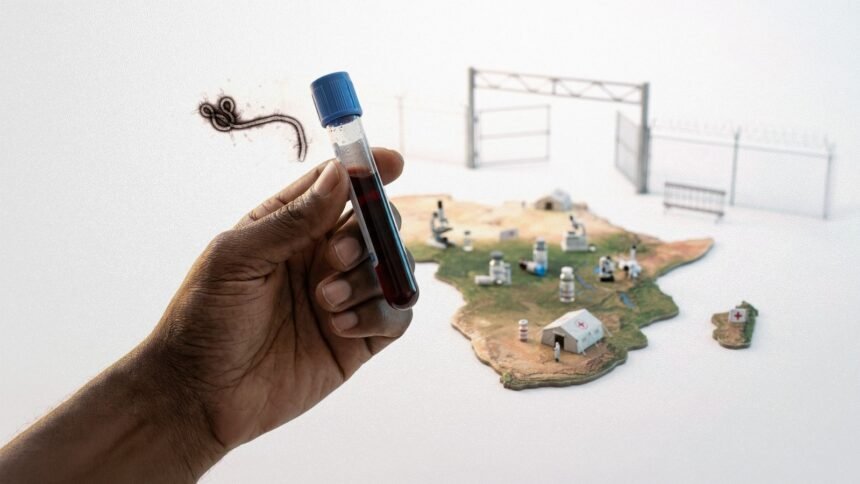
The Pan-African Paradigm of Sanitary Autonomy and Externalized Security
Across the African landscape, the contemporary configuration of international public health governance places intense pressure on developing nations to balance rapid epidemiological control with the preservation of structural sovereignty. The Pan-African vision for a self-determining, integrated continent relies on constructing inward-looking biomedical infrastructures that treat domestic populations equitably rather than serving as passive containment fields for global health security. When Western entities prioritize externalized borders, unilateral quarantine enclaves, and travel regimes to isolate continental pathogens, they reinforce legacy colonial boundaries and undermine collective trust. Reclaiming Africa’s economic and health future requires a decisive transition away from fragmented aid dependencies toward absolute biomedical sovereignty, ensuring that continental rapid-response architectures, diagnostic laboratories, and resource allocations protect local lives while engaging with global health actors on an equal, transparent footing.
Pathogenic Trajectories of the Bundibugyo Variant
The contemporary public health framework in sub-Saharan Africa is facing a severe challenge posed by the rapid transmission of the rare Bundibugyo viral strain. Centered on the northeast Ituri province of the Democratic Republic of Congo, this catastrophic wave marks the DRC’s 17th outbreak of the hemorrhagic fever since the virus was first discovered on its territory in 1976. Zoonotic tracking models indicate that the pathogen spreads to humans via African fruit bats before propagating through direct interpersonal contact with the blood, bodily fluids, or contaminated surfaces of infected individuals.
Initial symptoms, including sudden fever, exhaustion, intense muscle pain, headache, and a sore throat, rapidly progress to severe vomiting, diarrhea, internal and external bleeding, skin rashes, and impaired kidney and liver function. Unlike the more common Ebola Zaire strain, the Bundibugyo variant features no approved vaccines or validated therapeutics, creating an unstable biological environment that has generated 1,048 confirmed cases and 267 deaths within the DRC, alongside a cross-border spillover of 20 cases and several fatalities in neighboring Uganda.
Transnational Vectors and Metropolises Under Watch
The geographical containment of the Central African epidemic fractured significantly in late June 2026, as the virus used international air routes to establish an immediate vector presence in Western Europe. The French Health Ministry confirmed the first positive case of Ebola on its soil, detected in a medical doctor who had recently returned from a humanitarian mission to the outbreak’s epicenter in the DRC. This transnational export follows a separate, previous case involving a United States citizen who underwent high-isolation clinical care in Germany before testing negative and being discharged.
The entry of a high-consequence pathogen into major European transport hubs highlights the limits of localized containment strategies, as international business travel and humanitarian networks link rural epizootic epicenters directly to distant metropolises, forcing global health monitors to re-evaluate their cross-border bio-surveillance systems.
Fragmented Funding and Externalized Risk Models
The international architecture of epidemic management remains structurally hindered by fragmented funding mechanisms and the persistence of risk models that prioritize shielding wealthy nations over building local clinical systems. Global health experts note that the ongoing humanitarian response in Central Africa is severely under-resourced, as traditional international donors have delivered less than a fraction of the capital pledged to stabilize the hot zone.
Furthermore, instead of channeling resources into reinforcing primary public healthcare grids in sub-Saharan Africa, major Western powers frequently prioritize financing externalized security installations, such as the construction of isolated quarantine enclaves. This asymmetric distribution of development capital leaves peripheral health systems structurally exposed to recurring biological shocks, as international financial networks fail to provide the predictable, long-term investments required to establish permanent sanitary security.
Overcoming Local Standoffs and Armed Friction
A combination of community resistance, local mistrust, and the intense armed conflict severely hampers the implementation of frontline clinical containment in the DRC. The World Health Organization has reported that the current epidemic has registered the largest number of confirmed cases within its first month of any outbreak on record, a velocity driven by deep local resistance to top-down state health directives. In several instances, this social friction has turned violent, resulting in community networks burning down localized isolation wards and treatment centers.
To stabilize these hot spots, global health officials are emphasizing the absolute necessity of moving past paternalistic enforcement toward comprehensive health promotion and community-led awareness campaigns. By providing local populations with accurate transmission data and involving traditional leadership in protective protocols, health agencies look to build the community trust necessary to conduct effective contact tracing, particularly in peripheral provinces where the presence of the M23 rebel group complicates the delivery of basic medical services.
Predictive Modeling and the Showdown Over Containment Zones
Multilateral health entities, led by the World Health Organization and the US Centers for Disease Control and Prevention, are attempting to deploy advanced molecular tracking and predictive modeling to assess the global risk of the Bundibugyo surge. CDC statistical projections indicate that if the current infection rate continues without an immediate, massive influx of medical assets, the wave could evolve into the largest and most destructive Ebola outbreak on record, potentially eclipsing the 2014–2016 West African disaster that infected over 28,000 people and claimed 11,000 lives.
To prevent this outcome, the US government attempted to build a highly controversial, restricted Ebola quarantine center at an air base in Kenya. This nation has never recorded a single case of the virus. This strategy faced a severe institutional breakdown after a Kenyan high court issued suspension orders that were initially ignored by executive officials, triggering widespread public protests and civil unrest that culminated in a protester being shot dead and the Kenyan health minister being found in contempt of court before ultimately ordering a complete halt to construction.
Rapid Isolation, Contact Tracing, and Risk Minimization
Following the formal confirmation of the infected humanitarian doctor in Paris, French public health authorities swiftly activated high-level biosecurity containment protocols. The patient was immediately transferred to a specialized, high-isolation clinical facility under secure transport conditions specifically designed to eliminate the possibility of secondary environmental contamination. The French Health Ministry announced that the doctor was in stable condition and that all necessary precautions had been put in place upon arrival.
Sovereign health agencies launched an aggressive contact-tracing operation, mandating that all individuals who had direct or indirect contact with the physician be placed under strict, mandatory home quarantine for a 21-day incubation period. While public health officials maintain that the overall risk of widespread transmission to the European public remains exceptionally low due to the virus’s non-airborne nature, the implementation of these strict measures underscores the high state of alert across European civil protection frameworks.
Fragile CEPI Approvals and the Imperative for Vaccine Equity
The latest developments in the global campaign against the Bundibugyo outbreak feature a high-stakes race by international research groups to initiate the first Phase 1 human trials for experimental vaccines. The Coalition for Epidemic Preparedness Innovations (CEPI) has formally backed four distinct vaccine candidates, with initial testing expected to commence within the coming weeks. The first therapeutic platforms slated for evaluation include a viral-vector vaccine engineered by the University of Oxford alongside the Serum Institute of India, as well as an advanced mRNA candidate developed by the US-based pharmaceutical corporation Moderna.
However, because these early-stage safety evaluations will likely be conducted in the United Kingdom rather than within the active hot zones of the DRC, global health scholars warn that the timeline for a field deployment remains highly uncertain. The current international crisis underscores that permanent global safety cannot be achieved through restrictive quarantine centers or border closures; rather, it relies fundamentally on establishing absolute vaccine equity, ensuring that advanced biomedical discoveries are distributed transparently and universally to safeguard human life across all sovereign boundaries.