





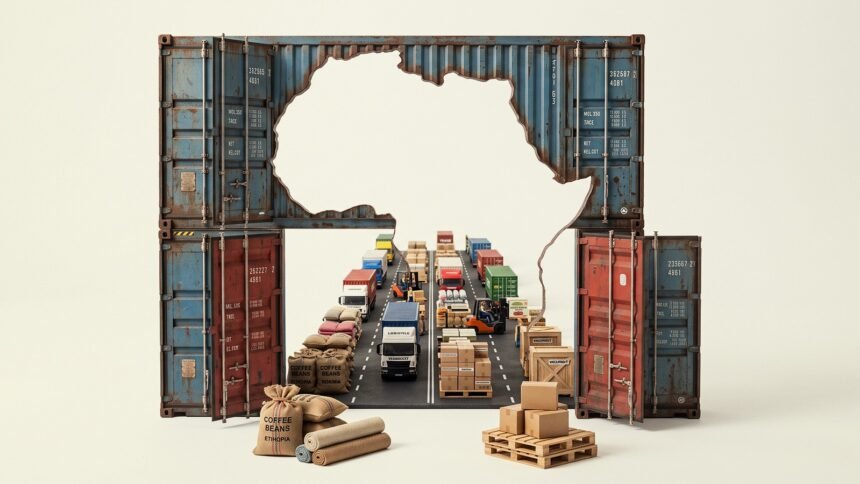
The African Continental Free Trade Area (AfCFTA) promises to create the world’s largest free trade area, connecting more than 1.4 billion people across 54 countries. Governments have spent years negotiating trade rules, reducing tariffs, and laying the foundations for a more integrated African market.
But one question receives far less attention: Are African businesses preparing for the customers that this market will bring?
Since the AfCFTA came into force in 2019, much of the conversation has rightly centered on policy. Discussions have focused on tariff liberalization, customs harmonization, rules of origin, trade protocols, and the political commitment needed to unlock intra-African trade.
These are important milestones. Yet trade agreements do not move goods across borders; businesses do.
The AfCFTA was never meant to be an end in itself. It was designed to create opportunities for African producers, manufacturers, farmers, exporters, and entrepreneurs to access markets that were previously difficult or expensive to reach.
Whether that opportunity translates into real economic transformation will depend on how prepared businesses are to operate beyond their national borders.
Across the continent, governments are gradually putting the necessary building blocks in place. Border procedures are improving, digital customs systems are expanding, regional payment platforms are being developed, and investment in transport corridors continues to grow.
Some countries have also introduced export promotion programs, simplified certification processes, and trade facilitation measures to support small businesses. Step by step, continental trade is becoming more practical.
But infrastructure alone does not create trade. It only enables it.
The next phase of the AfCFTA will be defined less by negotiation tables and more by boardroom decisions.
If Africa’s single market is to function in reality, businesses must begin shifting from a local orientation to a continental mindset.
That shift starts with production capacity. Many firms remain structured around domestic demand, yet AfCFTA opens access to markets that require consistency, scale, and reliability.
A supermarket chain in Ghana cannot source from Zambia unless producers can guarantee volume. Buyers in Côte d’Ivoire will not depend on Kenyan garments unless factories can deliver predictable quality. Retailers in Senegal will not switch to regional suppliers unless packaging, certification, and logistics meet international standards.
These are not distant scenarios; they are emerging-market realities.
For African firms to compete across borders, four core areas will determine success.
First is standards and quality assurance. Products entering regional markets must meet consistent safety, packaging, and regulatory requirements. Without certification and compliance systems, even competitive products will remain locked out.
Second is production scalability. Businesses must move from small-batch production models to systems that can absorb larger, cross-border orders without compromising quality.
Third is financial credibility. Strong financial records will increasingly determine access to credit, especially when businesses seek to expand operations to meet regional demand.
Fourth is logistics readiness. Efficient supply chains, warehousing systems, and cross-border transport partnerships will define whether businesses can actually deliver once contracts are secured.
Digital tools are already reshaping how African trade can work.
E-commerce platforms, mobile payments, digital marketing, and supply chain technologies are lowering barriers for small and medium enterprises. Businesses that once relied entirely on physical markets can now access buyers across regions with minimal entry costs.
Few African businesses will succeed in continental markets alone. Strategic partnerships between producers, logistics companies, exporters, financiers, and distributors will be essential.
Regional value chains will matter more than isolated expansion. A single company may produce, but networks will deliver.
The AfCFTA also presents a structural opportunity to accelerate Africa’s long-delayed industrialization.
For decades, the continent has exported raw materials while importing finished goods. A functioning single market changes that incentive structure.
Manufacturers will increasingly find it viable to process goods closer to production sites and sell across multiple African markets. That shift means more jobs, higher value retention, and stronger industrial ecosystems within the continent.
However, readiness alone is not enough. The real question is competitiveness.
Africa’s single market will not automatically favor African businesses. It will reward those who are prepared, efficient, and adaptable.
That means companies must start thinking beyond survival in domestic markets and begin positioning themselves for regional competition.
It also means governments and private-sector actors must work more closely together to ensure that trade facilitation is matched with business capability.
The success of the AfCFTA will not be measured by the number of protocols signed or meetings held.
It will be measured by practical outcomes, such as whether Nigerian manufacturers can reliably supply Namibia. Whether Ethiopian coffee reaches consumers in Algeria at scale. Whether Egyptian pharmaceuticals are accessible across East Africa. Whether Ivorian fashion finds customers in Botswana. Whether Rwandan technology services solve problems in Zambia.
That is when the AfCFTA will move from policy to reality. The solution is already clear: Africa does not lack markets. It lacks preparation.
Governments have largely opened the door. The private sector must now build the capacity to walk through it.
The solution lies in four clear shifts: stronger standards, scalable production, financial discipline, and regional partnerships supported by digital tools.
If those pieces come together, Africa’s single market will not just exist on paper; it will function in practice. The opportunity is already here. What remains is execution.