





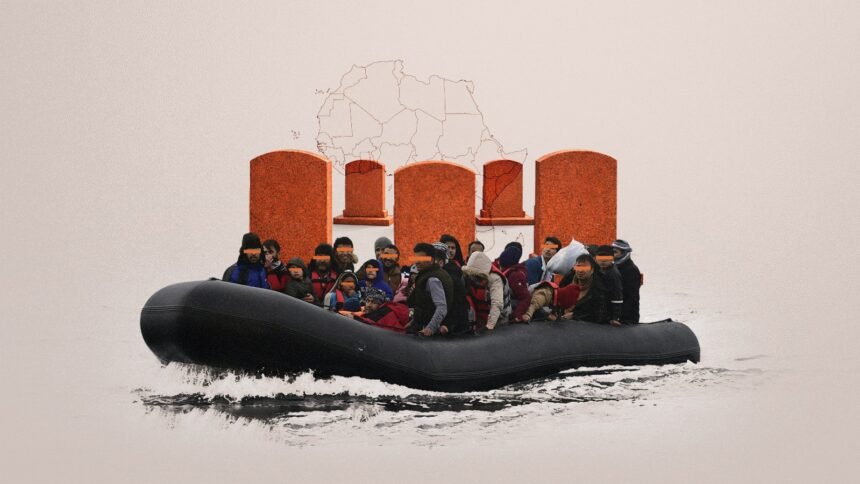
The year 2025 etched a grim ledger of human loss on the treacherous maritime corridors from Africa to Europe, with estimates surpassing 2,800 documented deaths and disappearances amid irregular crossings. This figure underscores the unrelenting peril of these routes despite declining arrival numbers. Reports from monitoring bodies paint a harrowing picture: while overall fatalities dipped from the previous year’s peaks, the shift toward more hazardous paths—driven by fortified borders and geopolitical maneuvers—amplified individual risks, claiming lives in overcrowded vessels succumbing to Atlantic swells or Mediterranean tempests, in Spain-bound attempts alone, over 3,090 souls perished by mid-December, including 192 women and 437 children, across 303 shipwrecks, many vanishing without trace. This toll, though lower than 2024’s staggering 10,457, reflects not diminished desperation but rerouted dangers, with the Atlantic passage to the Canary Islands remaining the deadliest, swallowing 1,906 lives in voyages spanning up to 12 days. Concurrently, Central Mediterranean traversals from Libya contributed to a broader tally of 1,745 regional fatalities, intertwining with Libya’s internal upheavals—like oil corruption scandals and a fatal military plane crash—to exacerbate vulnerabilities. These statistics illuminate a continental crisis in which economic atrophy, conflict spillovers, and policy fortifications converge, transforming aspirations into a lottery of survival that demands an urgent reevaluation of migratory safeguards.
Pan African Origins: Desperation’s Continental Roots
In the Pan-African expanse, the origins of 2025’s deadly drifts trace back to entrenched disparities that propel sub-Saharan multitudes toward Europe’s illusory sanctuaries, where origin-zone hardships manifest in lethal maritime gambles. Youth bulges in nations like Nigeria and Ethiopia, coupled with unemployment eclipsing 50 percent among graduates, fuse with climatic adversities—desertification eroding Sahelian livelihoods and erratic rains hollowing agrarian belts—to ignite northward imperatives. Sudan’s civil strife and Burkina Faso’s insurgencies uprooted millions, channeling secondary displacements through porous corridors into North African waypoints. This Pan-African mosaic of push factors—exacerbated by uneven post-colonial development—saw over 850,000 migrants ensnared in Libyan limbo, many recycling through abusive cycles before attempting sea crossings. The year’s fatalities, encompassing victims from 30 countries including Pakistan and Syria alongside West African majorities, highlight how continental fissures amplify risks: while arrivals to Europe dipped to around 150,000 from 2024’s highs, the rerouting to elongated paths like Guinea to Canaries (2,200 kilometers) or Algeria to Balearics elevated lethality, with smaller vessels (averaging 30 passengers) vanishing en masse, underscoring a desperate calculus where economic voids and conflict shadows bind Africa’s potential to Europe’s distant shores in chains of peril.
Africa-Europe Crossroads: Lethal Maritime Gauntlets
At the Africa-Europe crossroads, 2025’s crossings unfolded as lethal gauntlets, where fortified perimeters diverted flows into unforgiving seas, inflating death rates despite moderated volumes. The Western African Atlantic route to Spain’s Canary Islands, enduring up to 12 days of exposure, claimed 1,906 lives amid surging shipwrecks, as migrants evaded Mauritanian crackdowns funded by EU pacts. Meanwhile, the Algeria-Balearics corridor—emerging as a perilous alternative—doubled fatalities to 1,037, with boats disappearing in Mediterranean currents. Central Mediterranean paths from Libya added to the grim aggregate, with 1,745 regional deaths reflecting capsizings near Surman or Zawiya, often overloaded with sub-Saharans fleeing Sahelian storms. These crossroads’ dangers—amplified by inadequate rescue responses and vessel inadequacies—manifested in a 2025 tally where drowning predominated, claiming one in 120 on some segments, a rate rivaling historical peaks. Geopolitical entanglements, including Libya’s oil-fueled militia economies siphoning $20 billion in subsidies, sustained smuggling synergies that commodified lives, while a December plane crash decimating Tripoli’s military brass risked further anarchy, loosening controls over coastal launches and entrenching the crossroads as graveyards of hope.
Border Control Barriers: Fortifications’ Fatal Repercussions
Border control barriers erected across North Africa in 2025 inadvertently forged fatal repercussions, channeling migrants into obscurity while curbing arrivals but not aspirations. EU-Mauritania accords, injecting €210 million for patrols, slashed departures from Nouakchott hubs, yet reports of abuses—torture, rape—by authorities deterred overt paths, pushing ventures toward Guinea’s extended oceanic treks. In Libya, EU-backed coast guards intercepted thousands, yet corruption-riddled operations recycled returnees into militia extortion, with oil graft empowering factions to dominate borders. The impacts of these barriers were reflected in the statistics: Spain’s irregular entries plummeted to 35,935 from 60,311 in 2024, but shipwrecks rose to 303, with 70 vessels unaccounted for, as smaller ships evaded detection only to succumb to the elements. The fortifications’ paradox, enhanced policing yielding fewer crossings but higher per-capita risks, highlighted policy shortfalls: delays in mobilization and resource scarcity prolonged exposure, transforming barriers from deterrents into unwitting accomplices in a death toll that indicted outsourced controls for prioritizing containment over compassionate pathways.
Illegal Immigration Hazards: Perils of Clandestine Voyages
The hazards of illegal immigration in 2025’s Africa-Europe odysseys epitomized clandestine voyages’ perils, where makeshift crafts and shadowy networks exacted a disproportionate human cost amid rerouted desperations. Overloaded pirogues on Atlantic swells, carrying up to 300 souls from Senegalese or Mauritanian shores, often capsized in rough waters, contributing to the year’s 1,906 Canary fatalities. Eastern shifts to Balearics routes, with 30-person dinghies vanishing mid-journey, amplified invisibility: many of the 303 wrecks left no survivors to recount tales. In Libyan contexts, illegal passages intertwined with oil smuggling, where militia overlords—emboldened by $7 billion annual fuel heists—extracted ransoms before dispatching vessels, heightening overloads and abandonments. These hazards, claiming 437 children and 192 women in Spain attempts alone, reflected a broader lethality: one in 120 mortality on Mediterranean legs, driven by inadequate equipment and evasive tactics against patrols. The clandestine nature obscured accurate scales—underreported disappearances inflating estimates—demanding recognition of illegal immigration not as criminality but as a symptom of barred legal avenues, where perils multiply in the shadows of exclusion.
Human Trafficking Entanglements: Exploitation’s Deadly Webs
Human trafficking entanglements wove deadly webs through 2025’s migratory streams, where smugglers’ exploitations intersected with perilous routes to amplify fatalities from Africa to Europe. In Libyan hubs, traffickers—flush from oil corruption synergies—ensnared sub-Saharans in detention dens, exacting labor or ransoms before funneling them onto unseaworthy boats, contributing to the Central Mediterranean’s 1,745 toll. Mauritanian abuses, documented amid EU-funded controls, included systemic violations that propelled victims toward riskier departures, blending coercion with migration. These entanglements’ toll manifested in demographics: women’s exposure to gender-based violence en route, children’s recruitment into servitude, all culminating in drownings that claimed 136 minors at sea globally. The webs’ persistence—despite crackdowns—stemmed from geopolitical vacuums, like Libya’s post-crash military disarray, allowing traffickers to thrive on desperation from Sudanese conflicts or Malian insurgencies. Dismantling these entanglements requires viewing trafficking not as an isolated crime but as embedded in policy gaps, where exploitation’s profits eclipse human costs, perpetuating a cycle that demands holistic interventions to sever the deadly threads binding vulnerability to venture.
Human Rights Imperatives: Dignity Denied in Desperate Crossings
Human rights imperatives loomed large in 2025’s crossings, where dignity’s denial amid desperate pursuits underscored violations that inflated the death toll from African origins to European gates. Arbitrary detentions in Mauritanian facilities, rife with torture per watchdog accounts, flouted non-refoulement tenets, recycling migrants into lethal loops. In Libya, oil graft-fueled militias commodified lives in camps, with abuses—extortion, beatings—preceding fatal launches, echoing a “necropolitics” where far-right influences erode protections. The year’s imperatives surfaced in statistics: 3,090 Spain-bound deaths, including vulnerable groups, amid inadequate rescues—delays in mobilizations despite distress signals—breaching maritime obligations. Broader rights erosions, from denied asylum in fortified EU perimeters to ignored climate displacements in Sahel belts, framed the toll as an ethical indictment: where political will falters, lives extinguish, compelling Pan-African and global calls for rights-centered reforms that honor dignity over deterrence.
Protection Pathways: Forging Safer Continental Horizons
Forging protection pathways demands reimagining 2025’s deadly drifts as catalysts for safer horizons, where Pan-African solidarity and Africa-Europe compacts prioritize lives over barriers. Expanding legal conduits—seasonal visas, reintegration aids—could decompress irregular pressures, channeling Sahelian youth into endogenous opportunities rather than fatal seas. Dismantling trafficking-oil nexuses in Libya, through targeted sanctions on corrupt elites, might stabilize transit, reducing vulnerabilities post-internal upheavals. Enhanced rescue architectures—bolstered UN-AU collaborations for timely interventions—address response inadequacies, while origin investments in climate resilience mitigate pushes. These pathways envision a rebalanced dynamic: where 2025’s toll of over 2,800 serves as a turning point, fostering protections that transcend punitive postures, weaving Africa’s aspirations into equitable mobility that safeguards rather than sacrifices its people.


