






Rainbow Betrayed: Pan-African Youth as Eurasian Cannon Fodder
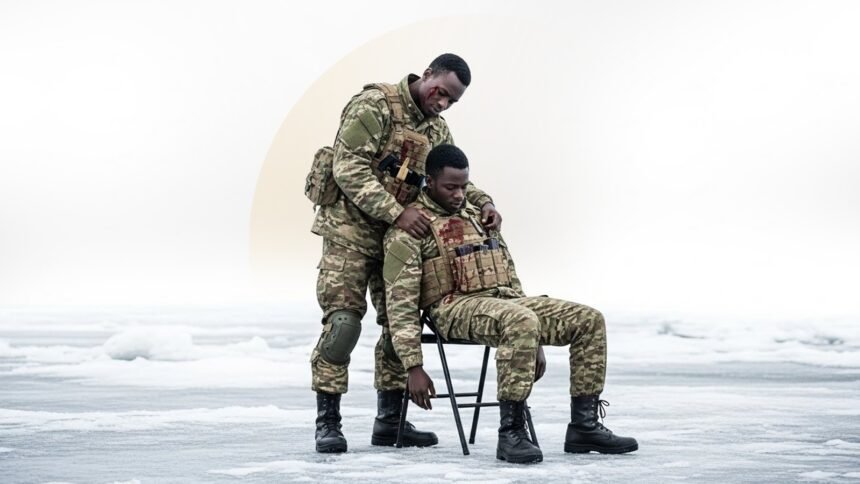
The spectacle of South African men—sons of Soweto, Durban townships, and rural KwaZulu homesteads—dying in the grey mud of Donetsk is one of the starkest indictments yet of the post-apartheid promise. In the final months of 2025, at least seventeen citizens, some bearing the surname Zuma, found themselves not in the bodyguard academies they were promised, but in the forward trenches of Russia’s 810th Naval Infantry Brigade, facing Ukrainian drones and cluster munitions. Their recruitment was not the work of shadowy global agencies alone; it was facilitated within South Africa itself, through political networks, family ties, and the desperate hope that a foreign passport might finally break the chains of 45 percent youth unemployment. This is no isolated scandal. It is the most visible symptom of a continent-wide trade in African bodies that now sustains Moscow’s attritional war in Ukraine while simultaneously deepening Russian military penetration across Africa—from the Sahel’s gold mines to the Red Sea’s strategic chokepoints.
From Freedom Park to Foxhole: The Journey of Seventeen Men
The story begins in the winter of 2025, when recruiters linked to South Africa’s uMkhonto weSizwe Party approached young men in KwaZulu-Natal and the Eastern Cape with an offer that sounded almost patriotic: a fully funded, year-long “elite security course” in Russia, followed by high-paying bodyguard work for prominent politicians. Monthly stipends of R35,000–R50,000, Russian citizenship within two years, and family relocation packages were promised. Seventeen men—mechanics, security guards, former SANDF reservists, and unemployed matriculants—boarded flights from OR Tambo in July and August, clutching contracts written entirely in Russian. By September, they were in Rostov-on-Don; by October, they were in the Donbas, issued Kalashnikovs, and told they were now members of the “Storm-Z” penal-assault units. Voice notes sent home are harrowing: “We sleep in water. There is no training. They say if we run, they will shoot us. Tell the president to bring us home.”
Their betrayal was not random. It was orchestrated through a chain that began with political insiders, passed through Dubai-based facilitators, and ended with Africa Corps officers who treat African recruits as expendable shock troops. The men are not classified as regular Russian soldiers; they fall into the grey zone of “volunteer foreign contingents,” denied the legal protections of the Geneva Convention and the repatriation rights that apply to recognised prisoners of war.
Mercenarism Rebranded: From Wagner’s Gold to Africa Corps’ Blood
The mutation is complete. Where the Wagner Group once bartered gold and diamonds for security services in Mali, Sudan, and the Central African Republic, its successor—the Russian Ministry of Defence’s Africa Corps—now barter African lives for battlefield manpower and strategic real estate. The same networks that extracted Sudanese gold in 2022–2024 are now extracting South African, Kenyan, Somali, and Congolese bodies in 2025. The business model has shifted from resource predation to human predation.
This shift coincides with Moscow’s most ambitious African play to date: Sudan’s October 2025 offer of a 25-year naval facility at Port Sudan. In exchange for advanced S-400 air defence systems and Su-35 fighters, Khartoum has granted Russia the right to base 300 troops and four warships—including nuclear-powered vessels—in the Red Sea. The port lies astride the Bab al-Mandab and the Suez route, giving Moscow the ability to monitor, and potentially interdict, 12 percent of global maritime trade. More immediately, it provides a warm-water logistics hub that dramatically shortens the supply line for rotating African fighters into Ukraine and for sustaining Russia’s growing constellation of African bases. A functioning Red Sea port turns the Africa Corps from a scattered expeditionary force into a genuine power-projection instrument—one that can move men and matériel from Port Sudan to Sevastopol in days rather than weeks.
The Political Pipeline: Dynasty, Desperation, and Disinformation
The South African case exposes how deeply the recruitment machinery has penetrated domestic politics. The involvement of Duduzile Zuma-Sambudla—daughter of the former president and a MK Party member of Parliament until her resignation in November 2025—reveals the toxic fusion of populist grievance, historical Soviet nostalgia, and raw opportunism. Public postings of “I Stand With Russia” from the Hermitage Museum were not mere performative solidarity; they were part of a broader narrative that portrayed Moscow as the true anti-imperial friend of Africa. When combined with the MK Party’s rhetoric of radical economic transformation, the promise of Russian training and citizenship resonated powerfully in communities that feel abandoned by the ANC’s neoliberal turn.
Yet the pipeline extends far beyond one family. Arrests in December 2025 of five additional recruiters—including a prominent Johannesburg radio host—uncovered WhatsApp groups, Telegram channels, and even a BRICS Journalists Association front that disseminated glossy videos of “African brothers” receiving heroic welcomes in Rostov. The same disinformation architecture that once amplified anti-French sentiment in the Sahel now targets South African youth with tailored messages: “The West keeps you poor. Russia gives you dignity, money, and a passport.”
Red Sea Gambit: How Port Sudan Supercharges the Human Trade
The strategic mathematics is brutal. A Russian-controlled Port Sudan transforms the entire recruitment ecosystem. Aircraft and ships departing the new base can deliver fresh cohorts of African fighters to Crimea or Rostov within 72 hours. Wounded or traumatised returnees can be rotated back to African soil without ever transiting hostile European airspace. Gold and uranium concessions granted under the October agreement provide the hard currency needed to keep the stipend promises flowing. Most importantly, the base gives Moscow permanent leverage over any African government that tries to shut down recruitment: threaten to withhold spare parts for the S-400 batteries defending Khartoum, and the human spigot reopens.
This is no longer a private activity. The Africa Corps operates under the Russian Ministry of Defence’s Main Directorate for Innovation. Contracts are stamped with official seals. Recruits are issued Russian military ID numbers. The era of Wagner’s “plausible deniability” is over; what remains is state-sanctioned predation wearing the thin veil of volunteerism.
Accountability Deferred: Law, Politics, and the Limits of Sovereignty
South Africa’s Regulation of Foreign Military Assistance Act of 1998 and the Prohibition of Mercenary Activities Act of 2006 are unequivocal: recruiting or fighting for a foreign power without government permission is a criminal offence carrying a maximum sentence of 15 years’ imprisonment. Yet enforcement has been glacial. The Hawks’ Directorate for Priority Crime Investigation opened a case only after the men’s families went public. Political sensitivity around the Zuma name, combined with South Africa’s studied neutrality in the Ukraine war and its BRICS obligations, has paralysed decisive action. As of December 2025, no senior political figure has been charged, and repatriation talks remain mired in Moscow’s demand that Pretoria first recognise the recruits as “legal combatants.”
The African Union’s 1977 Convention on Mercenarism and its repeated condemnations of private military companies have proved equally toothless. When the continental body most recently discussed Russian activities in October 2025, the agenda item was quietly dropped after lobbying from Sudan, Mali, and the Central African Republic—states now dependent on Moscow for regime survival.
Towards a Pan-African Reckoning: Breaking the Circuit of Blood and Gold
The circuit is now complete: African poverty → deceptive recruitment → Ukrainian trenches → Russian strategic gains → African bases and resource concessions → more recruitment. Breaking it demands more than moral outrage. It requires:
- Immediate continental emergency protocols for repatriation and prosecution of recruiters
- AU-level sanctions on any member state that hosts Russian facilities used to traffic citizens of other African countries
- Public exposure and freezing of the financial flows that pay the stipends
- Domestic youth employment programmes that can compete with the false allure of foreign passports
- A unified diplomatic stance that conditions all future Russia–Africa engagements on the cessation of human exports
Until that circuit is severed, the spectacle will repeat: another WhatsApp group, another promise of dignity, another flight from OR Tambo, another South African voice whispering from a Donbas dugout, pleading not to be forgotten. The rainbow nation that once inspired the world with its moral rebirth cannot allow its children to become the disposable infantry of a Eurasian empire. The time for Pan-African outrage is over; the time for Pan-African power has come.


