






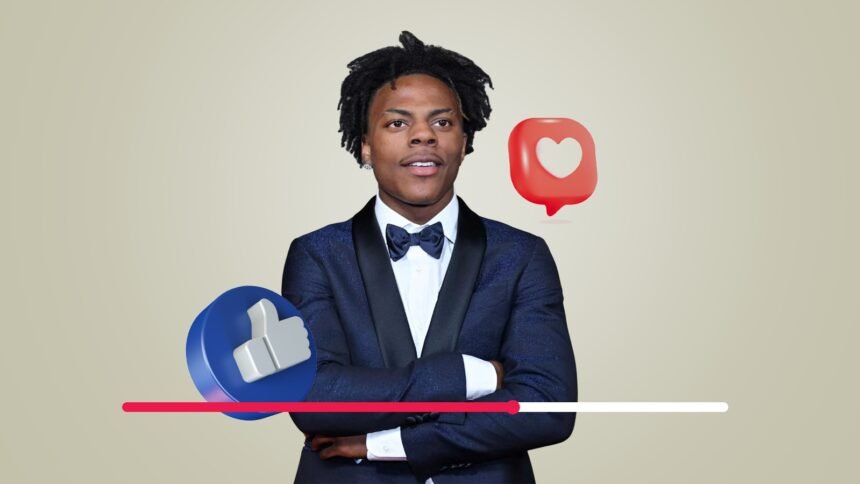
When American YouTube star and livestreamer IShowSpeed went live from Africa, the reaction was instant, loud and global. Clips from his streams spread rapidly across X, TikTok and Instagram, drawing millions of views and igniting conversations that went far beyond entertainment.
His journey included Angola, where the tour kicked off, followed by South Africa, Mozambique, Eswatini, Botswana, Zimbabwe and Zambia, before heading to East Africa, with high-profile stops in Kenya and Rwanda. Other countries featured in his itinerary or subsequent livestreams included Egypt, Ghana, Nigeria, Morocco, Senegal, Ethiopia, Namibia, Ivory Coast, Benin, Liberia and Algeria, collectively exposing millions of viewers to Africa’s geographic, cultural and social diversity beyond the stereotypes often portrayed in Western media.
For many viewers in the West, particularly in the United States, the livestreams offered something rarely seen in mainstream digital spaces: an unfiltered, everyday view of modern Africa.
IShowSpeed’s broadcasts showed busy streets, young people immersed in pop culture, strong connectivity, humour, fashion, music and a pace of life that sharply contrasted with long-standing stereotypes of Africa as uniformly poor, rural or dependent on aid. The shock expressed by many Western viewers online was revealing.
Comments such as “This doesn’t look like what we were taught,” “Why does Africa look more developed than I expected?” and “They never show us this side” flooded social media platforms. Among Black Americans especially, the moment triggered deeper reflection. Many questioned how a continent tied to their ancestry had been so poorly and narrowly represented in Western media and education.
For decades, Africa’s image in the West has been shaped largely by conflict footage, charity campaigns and crisis-driven narratives. While those realities exist, they are not the whole story. What IShowSpeed’s livestreams did differently was show Africa without mediation. No documentary voiceover, no charity framing, no political agenda, just daily life through the lens of a young influencer reacting in real time.
That authenticity mattered. Unlike traditional media, livestreams leave little room for editing or narrative control. Viewers watched spontaneous interactions with locals, shared jokes, public transport, nightlife and digital culture unfold live. In doing so, the streams challenged the idea that Africa is frozen in time or disconnected from global youth culture.
The response from Africans online was equally significant. Many welcomed the visibility, seeing the moment as long overdue. Others pointed out that it should not take validation from a Western influencer for Africa’s realities to be acknowledged. Still, there was broad agreement that the exposure mattered, particularly because of IShowSpeed’s massive young audience.
Cultural commentators noted that the moment highlighted a growing shift in how Africa is being seen globally, not through institutions, but through platforms driven by creators. Social media has increasingly allowed Africans to tell their own stories, but when those stories intersect with global influencers, their reach multiplies.
For Black Americans, the conversations took on an added layer. Some users described feeling a renewed curiosity about African countries, cultures and opportunities. Others spoke openly about how the streams disrupted narratives they had unconsciously absorbed, even within Black communities in the diaspora.
While a few viral livestreams cannot undo centuries of misrepresentation, they can open cracks in dominant narratives. IShowSpeed’s Africa streams did not provide a comprehensive picture of the continent, nor did they need to. Their power lay in showing normalcy, complexity and humanity, elements often missing from how Africa is portrayed abroad.
In an era where perception shapes policy, tourism, investment and identity, those moments mattered. They reminded Western audiences that Africa is not a monolith, not a myth and not a single story. It is lived, dynamic and present.
What followed on social media was not just surprise, but questioning, and in some cases, unlearning. For many viewers, that marked a starting point, an invitation to look again, more closely, and with fewer assumptions.


