






Pan African Echoes: Authoritarian Echoes in Democratic Reversals
Tunisia’s intensifying political divisions mirror a Pan-African continuum in which post-revolutionary optimism yields to entrenched executive dominance, amplified by economic stagnation and social fractures. As the sole Arab Spring survivor grapples with rival street mobilizations marking the revolution’s 15th anniversary, parallels emerge with continental hotspots: Tanzania’s electoral bloodshed, Madagascar’s coupvolution disillusionment, and the Ivory Coast’s contested incumbency. Global economic flux—characterized by subdued growth, persistent inflation, and inequality—exacerbates these tensions, transforming public grievances into polarized confrontations. Tunisia’s pro-regime rallies countering opposition outcry highlight how leaders frame dissent as betrayal, a tactic that resonates with Cameroon’s long-ruling repression and broader Sahel instability.
Tunisian Rivalries: Supporters Rally Against Perceived Traitors
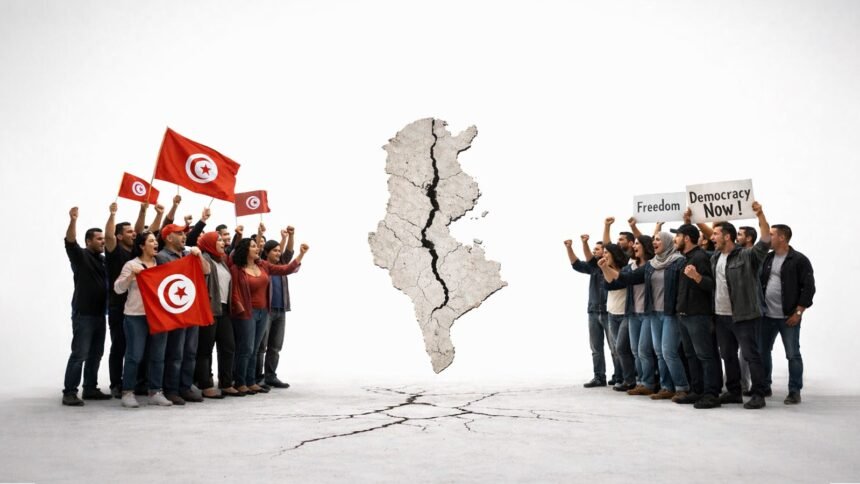
On December 17, 2025, central Tunis pulsed with contrasting energies as President Kais Saied’s loyalists assembled in force, brandishing national flags and voicing unwavering allegiance. Chanting “the people want Saied again” and pledging support for “leadership and sovereignty,” demonstrators hailed Saied’s anti-corruption drive while denouncing opponents as “traitors” and “colonial lackeys” intent on destabilization. One participant articulated the sentiment: rescuing Tunisia from internal saboteurs and foreign puppets. This mobilization, coinciding with the revolution’s anniversary, underscored a resilient base that credits Saied with confronting entrenched elites, even as critics decry his 2021 consolidation of power as an autocratic regression.
Political Unrest Escalation: Counter-Protests and Union Mobilization
Opposing voices have amplified in recent weeks, with mounting demonstrations challenging Saied’s rule amid accusations of judicial weaponization and police intimidation. Opposition coalitions, bridging secular and Islamist factions, staged unified actions days earlier, demanding the restoration of democracy and an end to one-person rule. The powerful Tunisian General Labour Union (UGTT) has escalated tensions by announcing a nationwide strike for January 21, 2026—the first significant action since Saied’s sweeping powers were assumed—protesting union restrictions, wage stagnation, and broader repression. These rival gatherings unfold amid shortages of essential goods, soaring prices, and deteriorating services, channeling widespread discontent into visible standoffs.
Democracy Struggles Persistence: Ongoing Repression and Bodily Defiance
Saied’s administration continues facing allegations of unprecedented suppression, targeting politicians, journalists, civil society, and activists through arrests and sham proceedings. Jailed leaders’ hunger strikes persist as acts of desperation, with figures like Jaouhar Ben Mbarek enduring alleged prison assaults and health decline, joined in solidarity by elders such as Rached Ghannouchi. Cross-ideological fasts signal unity against the erosion of freedom, transcending old divides. Civil society suspensions—for purported foreign funding—further constrict space, equating advocacy with a threat to sovereignty. Saied counters by portraying measures as purifying the nation of corrupt influences, a narrative that sustains his core support.
Protests Dynamics: Anniversary Divisions and Economic Catalysts
The December 17 rallies encapsulated deepening schisms on the Arab Spring’s milestone, once igniting continental democratic aspirations. Pro-Saied crowds celebrated continuity and anti-elite resolve, while implicit counter-narratives from recent opposition actions evoked lost revolutionary ideals. Economic hardships—high inflation, commodity shortages, faltering infrastructure—fuel both sides: regime supporters blame external and internal adversaries, opponents fault governance failures. This duality reflects how crises polarize societies, mobilizing loyalists to defend the status quo while galvanizing challengers to pursue systemic overhaul.
Gen Z Shadows: Youth Frustration in Polarized Landscape
Though less foregrounded than in Kenya’s tax revolts or Tanzania’s polling disruptions, Tunisia’s youthful demographic—facing entrenched unemployment and dim prospects—infuses unrest with undercurrents of generational discontent. Many in opposition-aligned protests and union calls embody this cohort’s stakes in renewal, rejecting inherited stagnation. Their digital coordination and street presence, though subdued by repression, echo the Pan-African youth vanguards’ demands for inclusion amid economic dimness that disproportionately burdens emerging generations.
Transitions Imperative: Pathways Amid Entrenched Divisions
Tunisia’s polarized trajectory poses profound questions for democratic transitions, in which incremental autocracy risks entrenchment without decisive mediation. Sustained union action, cross-factional opposition cohesion, and international pressure—linking aid to rights benchmarks—could pry openings for dialogue. Regional Maghreb frameworks and African Union engagement, though historically cautious, hold potential to facilitate inclusive reforms. As rival rallies illustrate, unresolved divisions threaten escalation; yet the revolution’s enduring spirit, evident in defiance against odds, suggests resilience capable of steering toward equitable renewal if harnessed constructively.


