





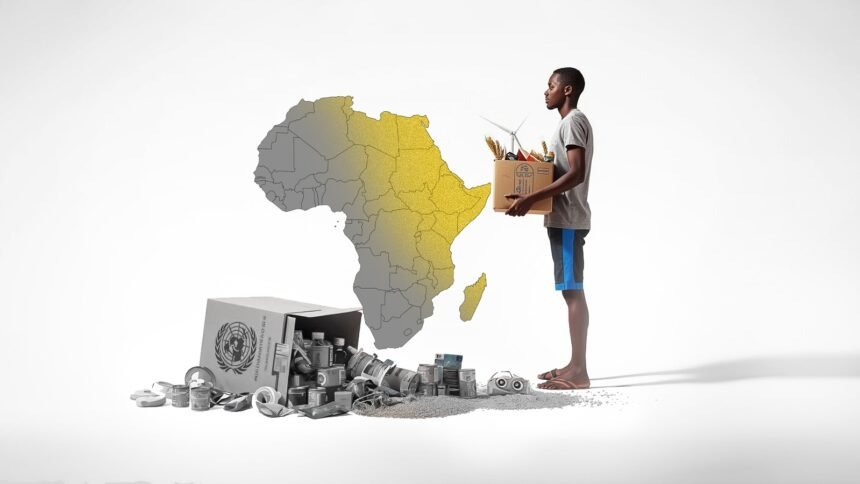
In the labyrinth of global inequities, the United Nations’ December 8, 2025, declaration slices through illusions of unending benevolence. Halving its 2026 humanitarian appeal to a core $23 billion for 87 million in dire straits—against a nominal $33 billion for 135 million—the UN confronts a cascade of donor retreats, geopolitical fissures, and crises that mock mere palliatives. This fiscal fracture, born of Western austerity and shifting alliances, exposes humanitarian aid’s fragility, particularly in Africa, where 239 million people face unmet needs. Yet herein lies opportunity: a compelled transition from reactive relief to proactive development, unleashing Pan-African potentials and severing cycles of dependency that have shadowed the continent since colonial sundown.
Pan-African Echoes: Humanitarian Legacies in UN Shadows
The UN’s humanitarian odyssey, forged in 1945’s ashes, has ballooned from modest postwar succor to a $50 billion behemoth by 2023, channeling lifelines amid famines, floods, and frays. In Africa, this apparatus amplified post-independence, surging from $2 billion in the 1980s to over $20 billion annually by 2020, as conflicts in Rwanda, Sierra Leone, and the Sahel intertwined with droughts and displacements. Yet this expansion, while averting immediate catastrophes, often perpetuated fragility: aid inflows, comprising up to 40% of some nations’ GDPs, fostered bureaucracies over self-sufficiency, with 34 million displaced by 2024—triple 2015’s tally—and disease outbreaks like cholera ravaging 1.2 million in Malawi alone.
The 2025 debacle underscores this: against a $47 billion plea, only $12 billion materialized, compelling midyear scalpel to $29 billion. As Tom Fletcher, UN humanitarian chief, lamented a “heartbreaking” report riddled with pain, the system’s overstretch—705 aid workers slain since 2024—reveals aid’s limits. Africa’s historically dominant share now faces a $10 billion chasm, where Sudan’s 33.7 million needy eclipse global peers. This history demands introspection: humanitarian flows, while noble, entrench emergencies; development investments, in contrast, could fortify infrastructures, yielding 7-10% GDP boosts per education dollar, per World Bank analyses.
UN Fractures: Aid Donors’ 2025-2026 Divergence
Donor landscapes, once anchors of UN appeals, now fracture under fiscal storms. In 2025, the United States led with $2.7 billion, trailed by the European Commission ($2.9 billion), Germany ($1.8 billion), the United Kingdom ($1.6 billion), and Sweden ($1.2 billion)—yet collective yields hit historic lows, with only 14% funding for some appeals. Projections for 2026 portend gloom: U.S. contributions plummet below 16%, as Trump’s “America First” rescinds billions; Europe’s ODA contracts 9-17%, with in-donor refugee costs bloating to 13% of totals, siphoning from afar crises.
This volatility, amplified by Ukraine’s $15 billion drain and migration pressures, leaves Africa’s hotspots—Sudan, DRC, Somalia—reeling. The UN’s “hyper-prioritized” tier, targeting 36% of needs, forsakes tens of millions, as Fletcher’s daily dialogues with Trump yield scant fruit. Private-sector bids, like UNHCR’s $1.5 billion in early pledges from Denmark, Germany, Japan, the Netherlands, and Norway, offer glimmers but underscore aid’s ephemerality. For Africa, this donor drift accelerates the imperative to pivot to development, where intra-continental trade via the AfCFTA could unlock $450 billion in gains by 2035, dwarfing aid’s fleeting fixes.
USAID Eclipse: Humanitarian Retrenchment’s American Core
The Trump administration’s assault on USAID epitomizes aid’s geopolitical peril. Initiating a 90-day review in January 2025, it morphed into the Rescissions Act, axing $9.4 billion in prior appropriations and dissolving the agency to a skeletal 294 staff—down from 14,000—with a mere 12 in Africa. This evisceration, framed as deficit-taming, halts $39.6 billion in assistance, projecting 14 million excess deaths by 2030, including 4.5 million children, as clinics shutter and silos empty.
Africa bears disproportionate scars: in Sudan, where 30 million face famine amid the world’s most significant displacement (13 million); DRC’s 28 million food-insecure amid M23 atrocities; Somalia’s 4.4 million hunger-plagued. USAID’s budget, once $65 billion per year, has been cut, leaving 95 million people without basics. Yet this rupture illuminates paths forward: reallocating remnants to Pan-African initiatives like solar grids or agro-tech, to address $300 billion in adaptation needs, could preempt crises, fostering resilience over relief and aligning with Agenda 2063’s self-reliance ethos.
EU Contractions: Aid’s Erosion in Humanitarian Tides
Europe’s austerity mirrors America’s, but with a fortress ethos. The UK’s ODA plunge to 0.3% of GNI by 2027, Germany’s 27% bilateral trim and 53% humanitarian slash, and the Netherlands’ and Sweden’s defense reallocations—totaling €2 billion from NDICI—signal inward turns. ODA to African fragile states fell 8.6% in 2024, with 2025-2026 forecasts dimmer amid dilutions of the Paris Accord and Chevron-like regulatory rollbacks in the U.S. influencing transatlantic norms.
These cuts exacerbate Africa’s vanguards: Ethiopia’s 20 million needy post-Tigray; Burkina Faso’s insurgencies displacing 2 million; Mozambique’s Cabo Delgado chaos. Humanitarian aid’s unsustainability—episodic, earmarked—falters when security trumps solidarity, as seen in WFP’s closure in Johannesburg, imperiling Zimbabwe’s 2.7 million. Development’s ascent, through EU-AU green pacts or fisheries ventures, promises mutual stability: yields in commerce and migration curbs, weaning Africa from volatile troughs while amplifying local value chains.
Humanitarian Unyielding: Africa’s Crises in Global Wounds
2025 catalogs Africa’s humanitarian hegemony: Sudan, the planet’s largest crisis with 33.7 million in peril, driving refugee waves; DRC’s 21 million displaced by conflict; Somalia’s malnutrition spike closing 150 facilities; Afghanistan parallels notwithstanding, Africa’s 42% of global displacements (117 million) interlace with climatic lashes like Angola’s 40-year drought afflicting 2.2 million. Wars in urban arenas—Ukraine, Gaza, Sudan—escalate civilian tolls, with heavy weapons devastating hospitals and aid convoys.
Yet aid’s valor, averting 3 million deaths yearly, masks entropy: $33 billion sought for 2026 leaves gaps, as UNICEF’s 20% budget collapse forces efficiencies. Africa’s protracted woes—averaging a decade—demand root-and-branch redress: land reforms, local mediation, and climate-smart farming that turns vulnerabilities into strengths. Shifting to development disentangles this knot, prioritizing acute emergencies while channeling longer-term needs to institutions like the World Bank.
AU-UN Pillars: Pan-African Partnerships Amid Perils
The AU-UN nexus, revitalized at their ninth annual conference in November 2025, stands as a multilateral bulwark. Aligning Agenda 2063 with SDGs, leaders reaffirmed durable peace via Resolution 2719’s predictable financing for AU ops, G20 AI leaps, and climate compacts from the Second Africa Summit. Joint early warnings and post-conflict rebuilds curbed Sahel escalations, with $1.5 billion in UNHCR pledges signaling trust.
Challenges loom: $300 billion annual adaptation shortfalls, IHL violations felling civilians. Yet this resource-lean alliance pivots aptly to development: co-investments in trade corridors, youth enterprises, resilient infrastructure—transmuting humanitarian holds into Pan-African harnesses, empowering continents rather than entrancing them.
Development Dominion: Beyond Band-Aids’ Moral Mandate
Humanitarian heroism falters amid inefficiencies—20% overheads, duplicated appeals like UNHCR’s $8 billion and FAO’s $2 billion—and access barriers in war zones. Africa’s 250 million urgent needs collide with $62 billion ODA evaporation by 2026, compelling change. Development, historically 30% of UN outlays, must dominate: industrial parks in Ethiopia, vocational nets in Nigeria yielding 10-fold GDP returns.
This elevation transforms: cash aid to microfinance, seeds to agro-alliances. Donors, facing backlash, could reforge—U.S. to AfCFTA accelerators, Europe to green bonds—ensuring accountability via metrics: livelihoods secured, not lives fleetingly saved.
Accountability Anchors: Transparent Trails for Trust
Reorientation demands crystalline oversight: audited flows from donors to deeds, with AU sentinels and civil watchtowers. Blockchain ledgers, participatory audits banish opacity’s graft; governance pacts tie aid to anti-corruption, empowering citizens. Mutual moorings—donors for sustained streams, Africans for equitable uptake—fortify the shift, democratizing dividends.
Pan-African Dawn: Autonomy’s Ascendant Horizon
As 2026 looms with UN pleas halved, Africa’s resolve rings: humanitarian hegemony cedes to development’s dawn. This necessity-born nobility liberates from ambivalence—boosting fiscal sovereignty via Nigeria’s levies, Kenya’s bonds. Envisioned, Africa soars: markets humming, minds afire, meadows verdant—crises yielding to collective crescendos.
The UN’s cuts herald an epiphany: supplant succor with strategy, tilling for harvests where Africa thrives as a sovereign, a beacon of self-determination in watchful worlds.