



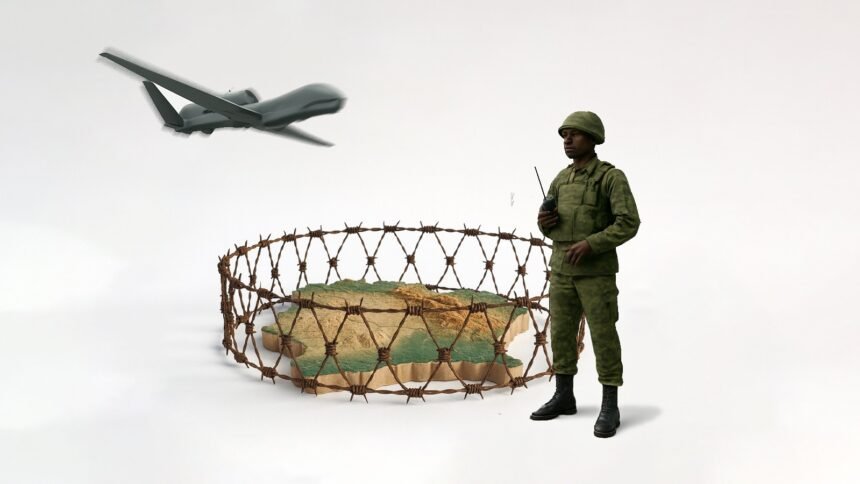
Amid the Sahel’s escalating jihadist maelstrom—where al-Qaeda affiliates like Jama’at Nusrat al-Islam wal-Muslimin (JNIM) orchestrate fuel blockades strangling Mali’s capital and displace millions southward—Ivory Coast emerges as a resolute bulwark, blending diplomatic overtures for U.S. surveillance assets with domestic fortifications to repel the insurgency’s coastal creep. On December 11, 2025, Abidjan’s overture to station American spy planes in its northern reaches underscores a pragmatic pivot: leveraging stable terrain for cross-border strikes against JNIM’s transnational networks, even as French withdrawals and Russian mercenary entanglements fracture regional responses. This analysis situates the Ivory Coast’s multifaceted strategy within the broader Pan-African security landscape, from Biafran-era ethnic fissures fueling northern vulnerabilities to recent Nigerian school rescues that highlight hybrid threats. By fusing intelligence pacts, socio-economic bulwarks, and border hardening, Abidjan not only shields its 28 million citizens but models continental resilience against al-Qaeda’s adaptive menace, demanding unified African Union frameworks to counter the jihadists’ southward pivot.
Pan-African Ramparts: Sahel’s Southern Sentinel in Jihad’s Shadow
Ivory Coast’s crusade against al-Qaeda-linked jihadists embodies a Pan-African imperative: as JNIM and Islamic State Sahel Province (ISSP) metastasize from landlocked infernos in Mali, Burkina Faso, and Niger—claiming over 3,800 lives in 2024 alone—the coastal crescent faces existential spillover, threatening ECOWAS’s economic linchpin. Abidjan’s northern frontier, a 600-kilometer scar abutting Burkina Faso and Mali, pulses with this peril: jihadist incursions, once confined to 2016’s Grand-Bassam beach massacre killing 19, now probe deeper via smuggling corridors laden with arms and recruits. The December 11 push for U.S. spy planes—high-altitude assets like the RQ-4 Global Hawk, previously based in Niger until its 2024 expulsion—signals strategic clairvoyance: post-Niger, Washington seeks footholds, and the Ivory Coast offers Korhogo’s flat expanses as a launchpad for real-time surveillance over JNIM’s fuel ambushes and gold mine extortions.
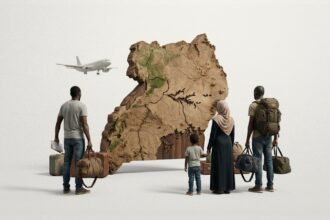
This calculus resonates continent-wide: akin to Nigeria’s frantic school rescues amid Boko Haram-ISWAP hybrids, the Ivory Coast confronts a jihadist ecosystem exploiting Sahelian coups—Mali’s junta ousting French Barkhane in 2022, only to embrace Wagner’s Africa Corps, which prioritizes uranium concessions over counter-insurgency. Pan-African solidarity frays here: the G5 Sahel’s dissolution leaves ECOWAS fractured, with juntas forming the Alliance of Sahel States to rebuff Western aid. Yet Abidjan’s overture—framed as mutual U.S. interests in stemming migration and terror exports—invokes AU visions of self-reliant defense, urging intelligence-sharing hubs from Addis Ababa to fortify the Gulf of Guinea against al-Qaeda’s arc, where 2025 refugee surges from Mali swell Ivorian border camps, straining communal fabrics reminiscent of Biafra’s 1970 displacements.
Ivory Coast’s Fortress: From Beachfront Blood to Border Ironclad
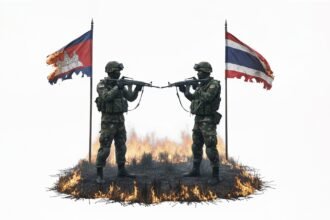
Côte d’Ivoire’s anti-jihadist architecture, honed since the 2011 post-electoral violence that scarred its cocoa-rich polity, pivots on northern bulwarks where al-Qaeda’s tendrils—via JNIM’s Fulani networks—seek sanctuary. President Alassane Ouattara’s administration, re-elected in October 2025 amid jihadist whispers, deploys 5,000 troops to the “Operational Zone North,” a command fusing gendarmerie raids with drone patrols over the Comoé National Park’s smuggling veins. Korhogo’s proposed U.S. enclave—echoing past American P-3 Orion rotations—would amplify this: electro-optical sensors tracking JNIM’s motorcycle swarms, which in November 2025 torched Ivorian border outposts, killing three soldiers and displacing 2,000 villagers.
Historical scars inform this vigilance: the 2002-2011 civil wars, pitting northern Muslim rebels against southern Christian elites, unearthed ethnic fault lines that JNIM exploits, recruiting disaffected youth with promises of pastoral justice amid desertification’s herder exodus. Abidjan’s response layers development with response layers: €49 million (2022-2025) channeled into 200 northern villages for boreholes, solar grids, and youth cooperatives, reducing unemployment from 35 percent to 22 percent in pilot zones and undercutting jihadist zakat appeals. No major attacks since mid-2022 attest efficacy, yet 2025’s uptick—JNIM’s Benin incursions spilling into Ivorian markets—demands escalation: Ouattara’s “zero tolerance” doctrine, blending CROAT intelligence fusion with community imams’ deradicalization, models a hybrid shield, contrasting Mali’s Wagner-fueled atrocities that alienate Fulani clans.
Al-Qaeda’s Insidious Inroads: JNIM’s Coastal Calculus
Jama’at Nusrat al-Islam wal-Muslimin, al-Qaeda’s Sahelian vanguard forged in 2017 from AQIM, Macina Liberation Front, and Ansar Dine mergers, pursues a stealthy southward thrust, eyeing the Ivory Coast’s ports for smuggling emporia. Commanded by Iyad Ag Ghali from Mali’s Kidal badlands, JNIM’s 5,000 fighters—emboldened by 2025’s Bamako blockade—deploy asymmetric feints: taxing gold artisanal mines yielding $500 million annually, while JNIM’s 2024-2025 Benin raids (killing 30 soldiers) probe Abidjan’s 800-km Burkina frontier. Coastal ambitions crystallize here: Grand-Bassam’s 2016 assault, JNIM’s inaugural Ivorian strike, signaled intent to mirror 2015’s Ouagadougou hotel siege, financing caliphate bids via human trafficking and arms from Libya’s post-Gaddafi bazaars.
JNIM’s genius lies in localization: embedding among Ivorian Fulani, who comprise 10 percent of the north, as “protectors” against state neglect, much as ISWAP franchises Nigerian bandits. 2025’s refugee influx—10,000 Malians fleeing JNIM’s Tuareg purges—serves as Trojan vectors, with Abidjan’s interceptions yielding 15 AQIM suspects in October. This calculus threatens Pan-African trade veins: Côte d’Ivoire’s €20 billion cocoa exports, funneled through San Pedro, risk disruption, echoing Ethiopia’s Red Sea port frictions. Al-Qaeda’s adaptive playbook—online fatwas radicalizing 15 percent of Sahelian youth via Telegram—demands Ivorian countermeasures transcend borders, forging AU digital sentinels to sever JNIM’s $100 million illicit streams.
Counter-Insurgency Convergence: U.S. Drones and Ivorian Ingenuity
Abidjan’s spy-plane gambit heralds a counter-insurgency renaissance, combining American ISR capabilities with Ivorian grassroots grit to dismantle JNIM’s command nodes. Post-Niger ouster, the U.S. Africa Command eyes Korhogo as a surrogate hub: Global Hawks, with 30-hour endurance, could map JNIM’s 2,000-km supply chains from Timbuktu to Abidjan, enabling precision strikes absent French Mirage jets’ 2022 retreat. Ivorian officials anticipate a 2026 deployment, timed to Ouattara’s fourth term, framing it as “co-development”: U.S. basing offsets jihadist threats, while Abidjan shares human intelligence from 50 embedded informants.
This synergy builds on precedents: Operation Barkhane’s 2013-2022 toll—4,000 French troops yielding tactical wins but strategic alienation—left vacuums Wagner exploited, prioritizing Central African uranium over Malian stability. Ivory Coast diverges: its 2023-2025 “Northern Shield” integrates 2,000 gendarmes with Tuareg mediators, reclaiming 80 percent of border villages sans reprisals. Socio-economic thrusts amplify: vocational hubs are training 10,000 youth in agro-tech, reducing JNIM recruitment by 40 percent, according to local audits. Yet challenges loom—2025’s Burkina incursions test resolve—necessitating Pan-African calibration: AU-Joint Counter-Terrorism Task Forces fusing Ivorian drones with Nigerian Super Tucanos, transcending Wagner’s predatory model for equitable defense.
Protection Paradigms: Safeguarding Ivory Coast’s Crescent of Stability
Ivory Coast’s al-Qaeda containment strategy establishes protection paradigms that blend fortification with inclusion, shielding its Francophone enclave amid Sahelian storms. Northern perimeters—fortified with 500 km razor wire and thermal cams—curb infiltrations, while “Peace Villages” resettle 5,000 displaced herders, mitigating Fulani grievances that JNIM weaponizes. Clergy and imams, post-Achi’s Nigerian martyrdom, anchor interfaith sentinels: 2025’s Korhogo dialogues avert radicalization, echoing Papiri’s school rescues.
Pan-African extensions beckon: Abidjan’s U.S. pact could seed Gulf of Guinea hubs, exporting models to Ghana and Togo against JNIM’s beachheads in Benin. Challenges persist—elite corruption siphoning 20 percent security funds, refugee strains fostering resentments akin to Biafra’s—but Ouattara’s vision endures: a “fortress of stability” radiating resilience. In this jihad-shadowed crescent, Ivory Coast forges not mere survival, but a blueprint for continental guardianship, where spy planes herald shared sovereignty over submission.