





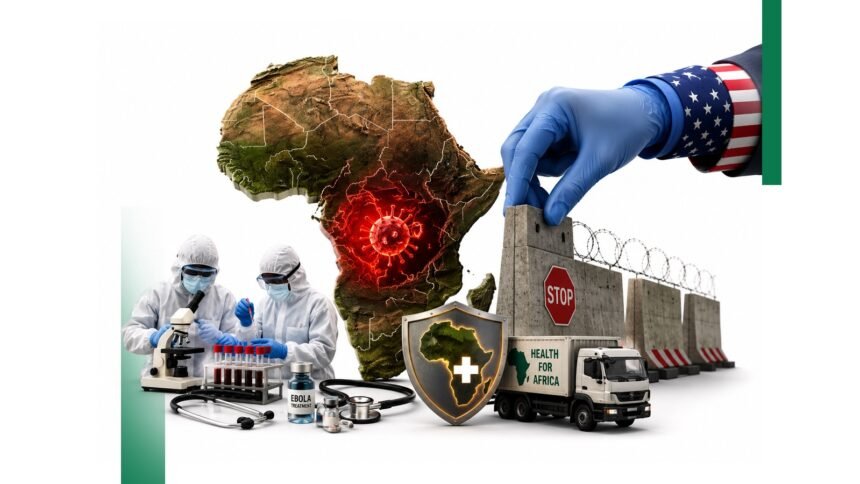
The Pan-African Paradigm of Sanitary Autonomy and Externalized Security
Across the African landscape, the contemporary configuration of international public health governance places intense pressure on developing nations to balance rapid epidemiological control with the preservation of structural sovereignty. The Pan-African vision for a self-determining, integrated continent relies on constructing inward-looking biomedical infrastructures that treat domestic populations equitably rather than serving as passive containment fields for global health security. When Western entities prioritize externalized borders, unilateral quarantine enclaves, and selective funding regimes to isolate continental pathogens, they reinforce legacy colonial boundaries and undermine collective trust. Reclaiming Africa’s economic and health future requires a decisive transition away from fragmented aid dependencies toward absolute biomedical sovereignty, ensuring that continental rapid-response architectures, diagnostic laboratories, and resource allocations protect local lives while engaging with global health actors on an equal, transparent footing.
Pathogenic Trajectories of the Bundibugyo Variant
The contemporary public health framework in sub-Saharan Africa is facing a severe challenge posed by the rapid spread of the rare Bundibugyo viral strain. Centered in the Democratic Republic of Congo, this catastrophic wave marks an intense biological test for the region, generating the largest number of confirmed cases within its first month of any episode of the disease on record. The two largest previous outbreaks occurred in West Africa, specifically in Guinea, Sierra Leone, and Liberia between 2014 and 2016, and a subsequent outbreak in the DRC in 2018. The current manifestation of the Bundibugyo variant features high-consequence transmission dynamics that have infected more than 1,000 people and claimed 267 lives. Because this strain lacks widely authorized preventative treatments, its presence in dense forest corridors and transit hubs presents a severe threat to regional health security.
Legacy Cuts and Structural Resource Constraints
Deep structural funding gaps and legacy resource constraints significantly hinder the practical execution of the humanitarian response in Central Africa. Before the virus’s active surge, Washington faced extensive criticism for implementing aggressive cuts to the U.S. Agency for International Development and broader African public health efforts, actions that compromised the region’s baseline medical readiness and slowed the deployment of local surveillance systems. According to continental health leaders, international responses have historically been underfunded, leaving frontline operations without adequate supplies, personal protective equipment, or specialized transport vehicles. This gap between promised international assistance and the actual delivery of green capital creates major vulnerabilities, as local ministries are forced to manage high-velocity outbreaks using strained public buffers.
Massive Appropriations and the Primacy of Domestic Defense
The geopolitical architecture of epidemic financing experienced a major development following a sweeping legislative move by the White House. The Trump administration submitted a major supplemental funding request to Congress, seeking more than $1.4 billion in new funds to address the widening Ebola outbreak. The primary framework of this capital injection is explicitly designed to keep the virus from reaching the United States.
The funding plan allocates $800 million for a highly specialized, controversial quarantine center in Kenya for American citizens, alongside general provisions for medical supplies, treatment, contact tracing, infection control practices, and a regional logistics network. While public health analysts acknowledge that an appropriation of this scale matches the severity of the outbreak, the explicit focus on isolating Western personnel and shielding the domestic U.S. homeland highlights a transactional, security-driven model of foreign assistance that prioritizes unilateral national defense over collective global health integration.
Emergency Allocations and Multi-Agency Coordination
The technical and regulatory orchestration of the current epidemic containment campaign involves complex coordination between multilateral bodies and specialized federal agencies. On June 18, the U.S. Centers for Disease Control and Prevention announced it would tap $107 million in emergency funding specifically to strengthen its domestic and international response to what could potentially be the worst Ebola outbreak yet.
On the ground, the World Health Organization coordinates localized tracking, epidemiological modeling, and data sharing across affected border zones. However, this joint operational network faces a dual reality. At the same time, WHO Chief Tedros Adhanom Ghebreyesus maintains that the current risk of international spread remains low, the rapid mobilization of emergency capital and field teams underscores an institutional awareness that localized failures in containment could lead to a massive trans-continental crisis.
Vaccinations or Treatment? The Race for Clinical Therapeutics
The scientific effort to find effective countermeasures against the Bundibugyo variant presents a significant structural comparison between long-term vaccine development and the immediate deployment of advanced treatments. Because there are no approved vaccines for this specific strain, early-stage safety trials are just beginning in Europe and parts of East Africa, meaning a widely available preventive vaccine is still months away.
Conversely, active treatments are significantly closer to field implementation. In a notable shift from its previous policy of keeping specialized drugs exclusively for its own citizens, the U.S. government has provided stockpiled doses of an experimental antibody treatment for use in clinical trials inside the hot zone. These advanced antibody protocols and antiviral compounds are being shipped to regional clinics for compassionate use and clinical evaluations, providing the most immediate medical shield against the widening outbreak.
Legislative Friction and Transnational Spillovers
The rollout of the Trump administration’s $1.4 billion funding request faces notable hurdles within the global health system and domestic legislative frameworks. Congressional aides have warned that the supplemental request could face resistance from lawmakers, including some Republicans, who are unhappy that the administration has previously refused to spend funds allocated for international medical care and foreign assistance.
This domestic political standoff occurs as the reality of transnational transmission becomes increasingly apparent. The French Health Ministry confirmed that a medical doctor who had recently returned to France from a humanitarian mission in the DRC tested positive for Ebola, marking Europe’s first confirmed case linked to this specific outbreak. The occurrence of international spillover undermines purely isolationist containment models, demonstrating that localized border closures and unilateral restrictions cannot fully protect distant metropolises from high-consequence pathogens.
Structural Reforms and Self-Determining Health Infrastructure
The long-term path toward sustainable biological safety requires a permanent transition away from short-term emergency funding requests toward a stable infrastructure of self-determining health sovereignty. Relying on ad hoc, billion-dollar external appropriations tied to foreign domestic defense priorities leaves the African continent structurally vulnerable to the shifting political choices of external powers.
Future hopes depend on national planning ministries executing sustained investments to build permanent, high-isolation clinical networks, strengthen domestic laboratory capacities, and protect independent judicial oversight during health crises. By combining disciplined public management with a unified commitment to medical equity and regional coordination, sub-Saharan republics can transform their public health frameworks into pillars of true sovereignty, ensuring a stable, healthy, and completely self-determining future for all citizens.