






Pan African Fractures: Authoritarian Resurgence Undermining Democratic Gains
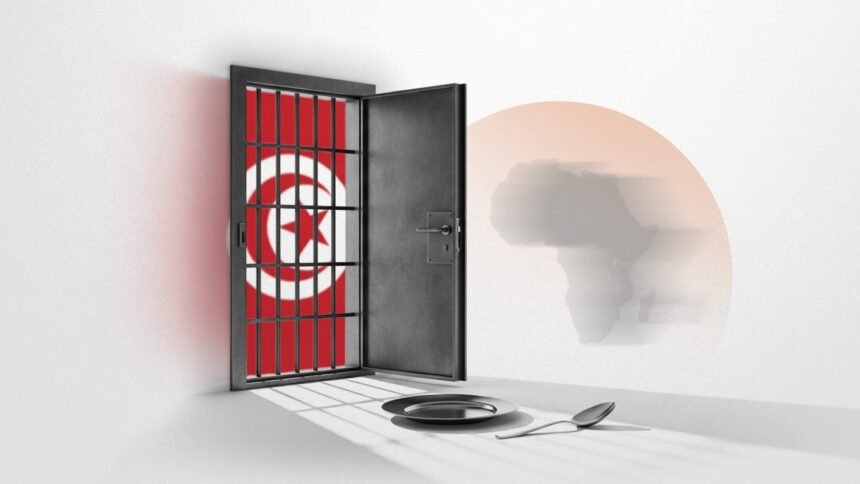
Tunisia’s escalating political crisis exemplifies a disheartening Pan-African pattern in which hard-won democratic advances—forged through mass uprisings and institutional reforms—are systematically reversed by leaders who exploit economic vulnerabilities and nationalist fervor to entrench personal rule. From the Arab Spring’s promising dawn in 2011, when Tunisia stood as the continent’s beacon of transition, to the current spectacle of imprisoned opposition figures starving themselves in defiance, the nation reflects broader continental struggles. Similar erosions unfold in East Africa with Tanzania’s post-electoral violence shattering stability myths, West Africa’s coupvolutions in Madagascar sidelining Gen Z protesters, and Central Africa’s prolonged executive dominance in Cameroon. Economic dimness, as forecasted in global outlooks with subdued growth and persistent inequality, amplifies these tensions, turning public discontent into fuel for repression rather than reform. Tunisia’s jailed activists, through their hunger strikes, embody a continent-wide plea for accountability amid rising autocracy.
Tunisian Despair: Bodily Sacrifice in Defiance of Brutality
Deep within Tunisia’s overcrowded prisons, a wave of hunger strikes has transformed confinement into a battlefield of wills, with opposition leaders risking their lives to protest President Kais Saied’s iron-fisted consolidation. Jaouhar Ben Mbarek, a steadfast democracy advocate who rallied against the 2021 power grab, has endured over two weeks without food, his health plummeting as authorities allegedly orchestrated beatings to compel surrender. Tied and assaulted by officers and fellow inmates, he suffered a broken rib, lost consciousness multiple times, and was discarded back into isolation—acts his sister Dalila, a lawyer on his defense team, described as deliberate cruelty. Solidarity fasts have proliferated: Issam Chebbi, heading the secular Republican Party, joins the protest, while 84-year-old Rached Ghannouchi, Ennahda’s venerable Islamist chief, initiated his own strike in unity, proclaiming the fight for freedom supersedes ideological rifts. Ghannouchi’s message resonates across divides, urging Islamists, liberals, nationalists, and leftists to coalesce around a singular cause greater than partisanship. These emaciated bodies, weakening daily, spotlight the regime’s desperation to silence voices that once shaped Tunisia’s pluralistic landscape.
Political Unrest Surge: From Revolutionary Hope to Incremental Autocracy
The roots of this unrest delve into Tunisia’s post-Arab Spring trajectory, a decade of fragile progress undone by Saied’s calculated 2021 maneuvers. Elected in 2019 on an anti-establishment platform vowing to purge corruption, Saied invoked emergency powers to freeze parliament, oust the prime minister, and govern by decree—actions critics labeled a coup. A 2022 referendum birthed a hyper-presidential constitution that eviscerated legislative independence and judicial autonomy. Parliament, once a forum for robust debate, now rubber-stamps executive whims. Mass trials in April delivered draconian sentences—13 to 66 years—for dozens of figures on vague conspiracy charges, conducted without proper defense or defendant presence. Appeals unfold in absentia, denying even the pretense of fairness. Saied’s rhetoric paints detractors as foreign-backed traitors or terrorists, a tactic echoing authoritarian playbooks continent-wide, from the Ivorian opposition disqualifications to Tanzania’s treason accusations against critics. Economic malaise compounds the crisis: inflation erodes livelihoods, youth unemployment festers, and debt burdens stifle growth, mirroring global flux where prospects remain dim despite infrastructural facades.
Democracy Struggle Endurance: Civil Society’s Strangulation and Migrant Abuses
Tunisia’s civil society, pivotal in the 2011 revolution through unions, women’s groups, and media, faces existential threats as Saied targets independent voices. Recent orders suspended the operations of key organizations—the Tunisian Association of Democratic Women, advocating gender equity; the Forum for Economic and Social Rights, tackling inequality; Mnemty, combating racism and aiding migrants; and Nawaat, for its investigative journalism—for purported foreign funding probes. This scrutiny frames Western support as a sovereignty infringement, yet it effectively muzzles advocacy on pressing issues such as economic justice and human rights. The crackdown extends to migrants: Tunisian forces, bolstered by European deals to curb Mediterranean crossings, engage in reckless sea interceptions and desert abandonments, drawing international condemnation but yielding continued aid. This pragmatic exchange—migration control for muted criticism—highlights how geopolitical utilities sustain repression, allowing Saied to prioritize border security over domestic freedoms.
Arab Maghreb Shadows: Converging Paths of Controlled Pluralism
Within the Arab Maghreb, Tunisia’s relapse casts long shadows over a region where democratic aspirations clash with resilient authoritarian structures. Algeria’s suppression of the Hirak movement through arrests and electoral boycotts, Morocco’s managed openness under monarchical oversight, Libya’s warlord-divided chaos, and Mauritania’s fragile hybridity illustrate shared vulnerabilities. Saied’s blend of populism and xenophobia resonates with neighbors’ strategies to deflect internal pressures onto external foes. Economic interdependencies—remittances, trade, tourism—bind the Maghreb, yet political solidarity falters as regimes prioritize stability over solidarity. Tunisia’s hunger strikers thus symbolize a regional clarion call, urging cross-border alliances to counter the tide of backsliding that threatens to engulf North Africa’s post-Spring gains.
AU Silence: Institutional Hesitancy in Confronting Erosion
The African Union’s muted stance on Tunisia’s crisis exposes the limitations of continental mechanisms in addressing gradual democratic decay. The AU’s Charter mandates action against unconstitutional changes, yet Saied’s stepwise consolidation—cloaked in legal referendums—evades outright coup classifications applied to Sahel militaries. Verbal concerns from Addis Ababa yield no suspensions, sanctions, or mediations, in contrast to interventions in Madagascar’s coupvolution or Tanzania’s unrest. This inconsistency erodes the Union’s authority, particularly as Tunisia’s repression aligns with prohibited practices: arbitrary detentions, civil society closures, and judicial politicization. Broader African contexts, from Cameroon’s absentee governance to the Ivory Coast’s protest bans, demand consistent enforcement, lest selective responses embolden authoritarians.
Mediation Pathways: Forging Unity for Democratic Revival
Reviving Tunisia’s democracy necessitates layered mediations that amplify the hunger strikers’ cross-ideological bridge. Domestic fronts could convene national dialogues, release prisoners as goodwill gestures, and reform the constitution through inclusive assemblies. Regional Maghreb initiatives, via revived union frameworks, might facilitate economic pacts tied to political concessions. The African Union, partnering with civil society, should appoint envoys to monitor trials and enforce charter timelines. European partners must recalibrate migration aid, conditioning it on human rights milestones to end complicity in abuses. Globally, diaspora networks and digital campaigns can sustain pressure, documenting violations for future accountability. Tunisia’s fasting leaders illuminate a resilient path: when bodies weaken, unified resolve strengthens. The Arab Spring’s embers, fanned by continental solidarity, can yet reignite a flame of genuine freedom across Africa.


