





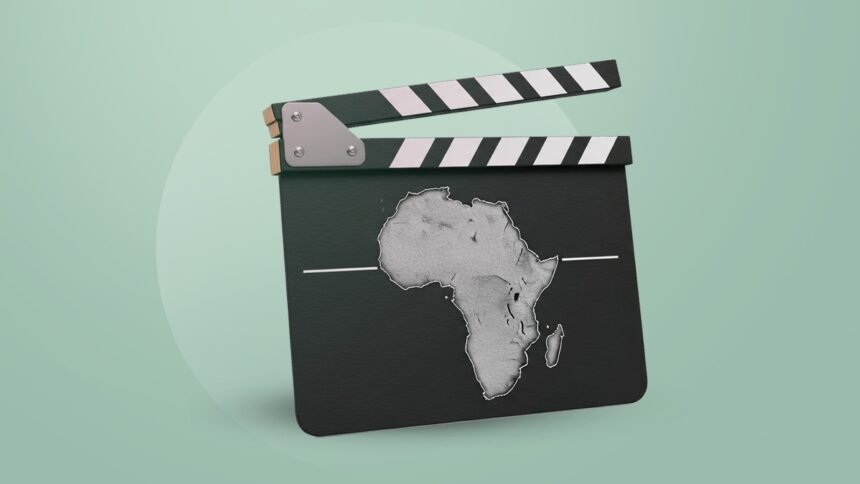
Pan-African Visions: Weaving the Historical Tapestry of African Cinema
African cinema emerges not as a monolithic entity but as a vibrant mosaic, threaded through the continent’s tumultuous history of colonialism, independence, and cultural reclamation. Its origins trace back to the early twentieth century, when European operators, armed with the Lumière brothers’ cinematograph, projected flickering images onto makeshift screens in colonial outposts from Alexandria to Dakar. These early screenings, often ethnographic curiosities designed to exoticize and subjugate, inadvertently planted the seeds of a defiant art form. By the 1920s, Egypt had already birthed Africa’s oldest film industry, producing silent epics like Kiss in the Desert that blended local folklore with Mediterranean flair, establishing Cairo as a luminous hub for Arab-African storytelling.
The true awakening arrived with decolonization in the 1960s, a pan-African renaissance fueled by visionaries who wielded the camera as a weapon against imperial narratives. Senegalese auteur Sembène Ousmane, often hailed as the father of African film, shattered colonial gazes with Borom Sarret in 1963—a stark portrait of urban alienation that prioritized Wolof voices over French subtitles. This era birthed a wave of politically charged works: Algerian documentaries chronicling the War of Independence, Malian epics probing rural traditions, and Congolese satires mocking neocolonial elites. Influenced by Italian neorealism and Third Cinema movements, these films rejected Hollywood’s gloss for raw authenticity, fostering a pan-African ethos of collective memory and resistance.
Yet, history’s weave is uneven. The 1990s video boom in Nigeria—sparked by affordable home recording—catapulted Nollywood into global prominence, producing over 2,500 titles annually and eclipsing even Bollywood in output. This grassroots surge contrasted sharply with North Africa’s more formalized studios and Southern Africa’s post-apartheid reckonings. Today, African cinema stands at a crossroads: a testament to resilience, yet starved of the resources to amplify its pan-African symphony. To harness this legacy, investments must prioritize archival preservation and cross-border co-productions, ensuring that the continent’s visual heritage does not fade into obscurity.
Cinematic Powerhouses: Forging Legacies Across the Continent
At the heart of African cinema, a trio of titans—Nigeria, Egypt, and South Africa—each embodies distinct facets of the continent’s creative dynamism. Nollywood, Nigeria’s behemoth, dominates with its relentless pace and entrepreneurial spirit, churning out narratives that mirror the hustle of Lagos markets and the ache of diaspora longing. From low-budget melodramas to glossy thrillers, it commands a domestic audience of millions and exports tales of resilience that resonate from Accra to Atlanta. Egypt, the cradle of African screens, weaves a tapestry of historical dramas and romantic sagas, its Cairo studios echoing with the ghosts of Umm Kulthum’s melodies and Naguib Mahfouz’s prose. As the linchpin of Arab cinema, it bridges Africa and the Middle East, producing over 100 features yearly that blend operatic flair with social critique.
South Africa, meanwhile, leverages post-apartheid infrastructure to host international spectacles, from District 9‘s speculative grit to Netflix-backed epics filmed amid Cape Town’s windswept coasts. Its output, though smaller in volume, excels in technical polish, drawing Hollywood dollars while nurturing indigenous voices in Zulu and Xhosa. Beyond these leaders, Ghana’s Riverwood pulses with rhythmic comedies, Kenya’s scene innovates through mobile shorts, and Morocco’s Atlas studios lure global crews with tax incentives and desert vistas.
These powerhouses illuminate Africa’s cinematic potential: a $20 billion market capable of generating 20 million jobs if adequately fueled. Yet their uneven development underscores a pan-African imperative: policies must redirect subsidies from extractive industries to film funds, fostering equitable growth. Imagine a continent-wide consortium modeled on the Pan-African Federation of Filmmakers (FEPACI) that channels resources to emerging hubs like Ethiopia and Senegal. Such investments would not merely sustain legacies but ignite a unified front, transforming fragmented industries into a formidable cultural exporter.
Global Spotlights: Illuminating African Narratives at the Oscars and Beyond
African cinema’s forays into global arenas like the Oscars reveal both triumphs and tantalizing horizons. The Academy’s gaze has been sporadic, yet piercing: Algeria’s Z clinched Best Foreign Language Film in 1969 for its blistering anti-dictatorship satire; Ivory Coast’s Black and White in Color followed in 1976, skewering colonial absurdities; and South Africa’s Tsotsi triumphed in 2005, a raw township tale of redemption. Nominees abound—Algeria’s Days of Glory (2006) honored World War II’s forgotten soldiers, while South Africa’s Yesterday (2004) confronted AIDS’s quiet devastation. Performers like Kenya’s Lupita Nyong’o, whose Oscar-winning turn in 12 Years an enslaved person (2013) shattered stereotypes, and Benin’s Djimon Hounsou, twice-nominated for In America and Blood Diamond, embody Africa’s thespian prowess.
Venturing further, Cannes, Berlin, and Venice have embraced the continent’s fervor. Nigeria’s My Father’s Shadow earned a 2025 Caméra d’Or special mention at Cannes, a milestone for West African indies. Tunisia’s Aïcha and South Africa’s Carissa graced Venice’s Horizons sidebar, while Berlin’s Panorama spotlights Ethiopian gems like Haile Gerima’s diasporic meditations. These accolades affirm African cinema’s universality—stories of migration, matriarchy, and mysticism that transcend borders.
The African Movie Academy Awards (AMAA), dubbed the “African Oscars” since 2005, serve as a vital counterpoint, honoring pan-continental excellence from Lagos to Ouagadougou. Yet, global spotlights remain dimmed by barriers: visa hurdles, language biases, and underfunded submissions. Policy adjustments—diplomatic fast-tracks for festival travel and co-financing with international bodies like UNESCO—could amplify these voices. Investments in AMAA’s infrastructure would elevate it as a launchpad, ensuring African narratives not only flicker on foreign screens but command them, fostering a reciprocal cultural diplomacy that enriches global cinema.
Streaming Horizons: Navigating Netflix Equivalents and Digital Frontiers
The digital deluge has reshaped African cinema, with streaming platforms emerging as both saviors and sovereigns. Netflix, with its $250 million infusion into South African and Nigerian content since 2021, has greenlit hits like Queen Sono and Blood & Water, exporting African flair to 190 countries. Yet, local titans like Showmax—Napers’ powerhouse, boasting 13% market share in South Africa—reign supreme, prioritizing telenovelas, reality bites, and Nollywood exclusives that resonate with continental tastes. iROKOtv, the “Netflix of Africa” since 2011, democratizes Nollywood with over 5,000 titles, while nascent players like Kava and Viusasa in Kenya harness mobile-first models for underserved audiences.
These horizons promise boundless reach: Nollywood’s 2024 box office surged to ₦11.5 billion ($7 million), bolstered by streaming deals, with projections eyeing $10.8 billion continent-wide by decade’s end. Yet, challenges loom—internet penetration hovers at 37% in sub-Saharan Africa, throttling access, while algorithms favor Western blockbusters over indigenous tales.
A pan-African digital policy framework is essential: subsidies for broadband expansion, tax breaks for local platforms, and AI-driven content recommendation engines tuned to cultural nuances. Investments from bodies like Afreximbank’s $1 billion Film Fund could seed hybrid models that blend Showmax’s scale with iROKOtv’s authenticity. By adjusting policies to curb data monopolies and incentivize original IP, African streaming could evolve from periphery to powerhouse, ensuring creators capture the value of their stories in an era where screens are the new town squares.
Cultural Echoes: Identity, Icons, and the Pulse of Storytelling
African cinema throbs with cultural echoes, where actors and narratives serve as custodians of identity amid globalization’s gales. Icons like Lupita Nyong’o—whose Kenyan roots infuse roles in Black Panther and Us with unyielding grace—embody the diaspora’s dual consciousness, advocating for Afro-futurism while dismantling Eurocentric beauty norms. Djimon Hounsou’s brooding intensity in Gladiator and Aquaman bridges Benin’s warrior heritage with Hollywood spectacle, while Idris Elba’s Ghanaian-Sierra Leonian charisma in Luther and The Suicide Squad redefines Black masculinity. South Africa’s Charlize Theron, an Oscar laureate for Monster, and Nigeria’s Chiwetel Ejiofor, whose 12 Years a Slave gravitas earned acclaim, amplify these echoes on world stages.
Storytelling, too, pulses with pan-African vitality: Egyptian melodramas exalt familial bonds, Nollywood comedies lampoon corruption, and South African indies dissect the scars of apartheid. Festivals like FESPACO in Burkina Faso—Africa’s cinematic mecca since 1969—or Durban’s DIFF foster this pulse, convening 200,000 attendees to debate themes from climate exile to queer futures.
These echoes demand safeguarding. Policies must embed cultural quotas in broadcasting—mandating 50% African content on platforms—and fund training academies to nurture the next Nyong’o. Investments in icon-led initiatives, like Elba’s Green Door Productions, could preserve linguistic diversity, from Swahili epics to Amharic animations. In doing so, African cinema becomes not mere entertainment but a cultural bulwark, echoing the continent’s polyphonic soul to heal historical wounds and inspire global empathy.
Economic Currents: Revenues, Hurdles, and the Call for Sustained Investment
African cinema’s economic currents flow with promise yet eddy with obstacles. Nollywood alone injects ₦1.97 trillion ($1.4 billion) into Nigeria’s GDP, its 2024 box office cresting ₦11.5 billion amid a 60% surge, while Egypt’s studios yield $300 million annually and South Africa’s co-productions lure $1 billion in foreign spend. Continent-wide, the sector teeters on $20 billion in potential, rivaling Europe’s mid-tier markets.
Yet, currents crash against piracy’s reefs—siphoning 50-75% of revenues, a $4.5 billion annual hemorrhage—and funding famines that confine budgets to scraps. Infrastructure gaps yawn wide: erratic power blackouts stall shoots, scant studios hobble post-production, and skills shortages leave VFX dreams unrealized. Distribution remains a labyrinth, with foreign dominance crowding local shelves.
These hurdles demand bold interventions. Governments must enact stringent anti-piracy edicts, harmonized via AU protocols, and allocate 1% of creative budgets to revolving film funds. Private capital—mirroring IFC’s proposed equity vehicles—could bridge gaps, targeting $100 billion in creative exports. Adjusted policies, like Morocco’s scaled, pan-African rebate model, would magnetize investors, creating ecosystems where revenues recirculate locally. Investment is not charity but calculus: a $20 billion infusion could spawn 20 million jobs, fortifying economies against volatility while exporting soft power.
Future Frames: Policy Blueprints, Initiatives, and a Resurgent Horizon
The future of African cinema gleams with possibility, framed by streaming booms, AI innovations, and pan-African solidarity. Netflix’s local bets and Showmax’s dominance herald a subscriber surge to 100 million by 2030, while AI tools democratize effects—Ethiopian indies crafting savanna VFX on smartphones. FESPACO’s biennial gatherings and PAFF’s diaspora bridges will evolve into hybrid hubs, blending VR premieres with policy forums.
Yet, this horizon hinges on deliberate action. Pan-African initiatives like FEPACI must be revived with AU backing, with the drafting of a Continental Cinema Charter: standardized rebates, IP fortresses, and co-production pacts. Policies adjusted for equity—gender quotas in funding, rural studio grants—will diversify voices, from Sahelian nomads to Saharan futurists. Investments in public-private hybrids totaling $5 billion annually could build solar-powered lots and AI academies, propelling output to 10,000 titles per year.
In this resurgent frame, African cinema transcends screens to sculpt identities, economies, and alliances. It beckons a world weary of homogeneity, offering tales of ubuntu and defiance. The imperative is clear: invest now, adjust boldly, or risk consigning a renaissance to the cutting-room floor. Africa’s silver screen awaits its directors—will we seize the reel?