





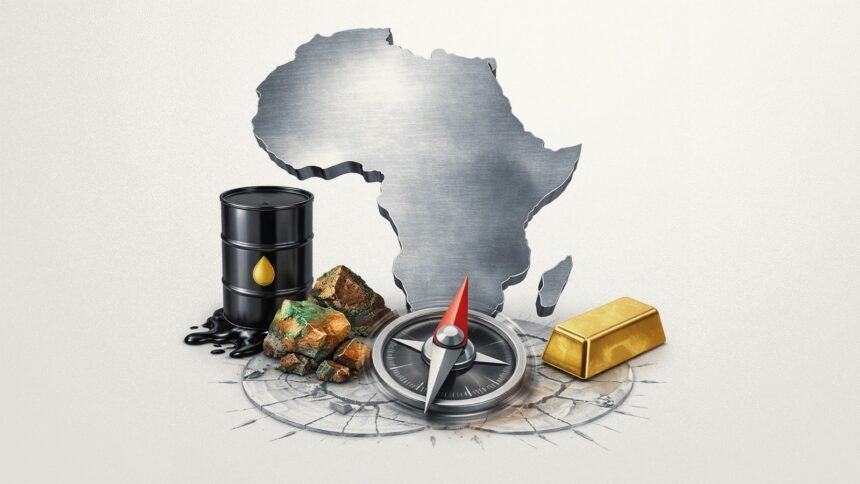
In an era marked by escalating global uncertainties, the dramatic rise in prices of key commodities such as oil, copper, and gold has thrust Africa into a pivotal position. As a continent richly endowed with these resources, Africa stands at the crossroads of opportunity and peril. The recent spikes, driven by intertwined geopolitical forces and economic shifts, underscore the need for strategic foresight. This analysis delves into the historical context of these price movements since 2020, explores their implications for African economies, and charts potential pathways forward, emphasizing the continent’s quest for resilience amid volatility.
Pan-African Perspectives on Resource Dynamics
Africa’s narrative in the global commodity arena is one of abundance, shadowed by exploitation and uneven benefits. Holding substantial reserves of oil in nations like Nigeria and Angola, copper in the Democratic Republic of Congo and Zambia, and gold in South Africa and Ghana, the continent contributes significantly to world supply—approximately a quarter of global gold output and vital shares of copper and oil. Yet, this wealth has often translated into dependency rather than empowerment, with raw exports dominating trade patterns.
Since 2020, commodity prices have exhibited extreme fluctuations, reflecting broader global disruptions. The pandemic initially suppressed demand, leading to historic lows, but recovery phases intertwined with geopolitical events propelled unprecedented highs. For instance, oil prices plummeted below $20 per barrel in early 2020 amid lockdowns, only to rebound sharply as economies reopened and tensions mounted. Copper and gold followed suit, with gold serving as a haven during uncertainty. These swings highlight Africa’s vulnerability: while exporters gain from peaks, importers face inflationary pressures, exacerbating food and energy insecurity across the region.
The African Union’s vision, encapsulated in Agenda 2063, seeks to transform this dynamic by promoting value addition and intra-continental trade. Initiatives like the African Continental Free Trade Area aim to reduce reliance on external markets, fostering a unified approach to harnessing resources for collective prosperity. However, persistent challenges such as infrastructure deficits and governance gaps hinder this transformation, leaving the continent exposed to external shocks.
Geopolitical Currents Fueling Market Volatility
The surge in commodity prices cannot be divorced from the web of international rivalries and conflicts. Tensions between major powers, including US-Iran standoffs and broader Middle Eastern instability, have directly inflated oil prices by threatening supply routes. Similarly, trade wars and sanctions have disrupted copper markets, while gold’s allure as a hedge against uncertainty has intensified amid global fragmentation.
Africa, though not always at the epicenter of these conflicts, feels the ripples profoundly. Resource-rich regions often become arenas for proxy influences, where foreign interests vie for control, amplifying local instabilities. For example, disruptions in global supply chains due to these tensions have led to price volatility that benefits African exporters in the short term but fosters economic unpredictability. Weak dollar policies and interest rate decisions in advanced economies further compound this, making commodities more affordable for non-dollar holders and boosting demand.
Within Africa, these external pressures intersect with internal dynamics, such as ethnic conflicts over mining rights or political unrest in oil-producing zones. The continent’s leaders, through forums such as the African Union, have advocated for diplomatic solutions and diversified partnerships to mitigate risks. Yet, the persistence of these currents underscores the need for robust continental mechanisms to shield economies from exogenous shocks.
Trajectories of Oil, Copper, and Gold Valuations
Examining price trends since 2020 reveals a pattern of recovery and acceleration. Oil, benchmarked by Brent and WTI, averaged around $42 per barrel in 2020 amid a demand collapse, rising to $71 in 2021 and peaking at $100 in 2022 due to a post-pandemic rebound and supply constraints. By 2023, averages hovered at $82, dipping slightly in 2024 before recent spikes pushed Brent to $69 and WTI to $64 in early 2026, fueled by fears of Middle Eastern disruptions.
Copper’s journey mirrors this volatility, starting at approximately $2.80 per pound in 2020, surging to $4.23 in 2021 on industrial recovery, and stabilizing around $4 in subsequent years before reaching record highs of over $6 per pound in 2026. This escalation stems from demand in green technologies and infrastructure, alongside supply concerns from mine disruptions.
Gold has seen the most dramatic ascent, from $1,770 per ounce in 2020 to $1,799 in 2021, holding steady around $1,800-1,943 through 2023, then accelerating to $2,387 in 2024, $3,333 in 2025, and nearing $5,560 in 2026. Its role as a refuge amid fiscal deficits and conflicts has driven this unprecedented rally.
Africa’s contributions have been instrumental in stabilizing global supply during these fluctuations. Oil from West African fields has buffered shortages, copper from Central African belts has met electrification needs, and gold from Southern and West African mines has satisfied safe-haven demand. However, without processing capabilities, much of the value accrues elsewhere, limiting local gains.
Economic Transformations in Resource-Rich Continents
The price spikes present a double-edged sword for African economies. For exporters, windfall revenues can fund infrastructure and social programs, potentially reducing poverty in nations like Zambia or Ghana. Higher copper prices, for instance, bolster fiscal balances in the Democratic Republic of Congo, while gold booms aid South Africa’s mining sector. Yet, volatility breeds uncertainty, deterring long-term investments and exacerbating debt burdens when prices fall.
Importers, conversely, grapple with inflationary surges driven by elevated oil prices, straining budgets and fueling social unrest. Across the continent, these dynamics widen inequalities, with resource curses manifesting in underdevelopment despite abundance. The African Union’s commodity strategy emphasizes diversification, urging shifts toward manufacturing and services to capture a greater share of value chains.
Opportunities abound in the green transition, where Africa’s copper and other minerals are crucial for renewables. Strategic investments could position the continent as a hub for battery production, fostering job creation and economic resilience. However, realizing this requires addressing corruption, improving governance, and enhancing skills to navigate global market shifts.
Pathways to Sustainable African Progress
To harness these spikes for enduring growth, Africa must prioritize sustainable development frameworks. The African Union’s efforts, including the Commodities Strategy, aim to add value to raw materials, reducing export vulnerabilities. By promoting agro-processing and mineral beneficiation, nations can build resilient economies less swayed by price swings.
Infrastructure development, such as energy grids and transport networks, is vital to integrating markets and lowering costs. Climate adaptation, given the continent’s exposure to droughts and floods affecting mining, must align with global green agendas. Education and innovation hubs can equip youth to participate in high-value sectors, turning demographic dividends into economic assets.
International partnerships, while essential, should emphasize equity and avoid debt traps. The future lies in self-reliant strategies that leverage price booms to fund transitions, ensuring that geopolitical risks do not derail progress.
Safeguarding Continental Harmony and Stability
Price volatility intersects with peace and security, often exacerbating conflicts over resources. In regions like the Sahel or Eastern Congo, spikes can fuel militias seeking control of mines, displacing communities and hindering development. Oil-rich areas face similar risks, with environmental degradation from spills sparking unrest.
The African Union has intensified mediation through mechanisms such as the Peace and Security Council and has deployed forces to stabilize hotspots. Efforts to silence guns by 2030 include addressing root causes like inequality amplified by commodity swings. Challenges persist: weak institutions, cross-border smuggling, and external interference complicate resolutions.
Future stability demands inclusive governance, where revenues fund conflict prevention and community reintegration. By linking resource management to peacebuilding, Africa can mitigate risks and foster environments conducive to investment and growth.
Reimagining Africa’s Place in the World Order
As geopolitical tensions reshape global orders, Africa’s commodity wealth positions it as a strategic player. Price spikes amid US-Iran frictions or trade wars highlight the continent’s leverage, yet dependency risks marginalization. The African Union advocates for multilateral reforms, pushing for fairer trade and debt relief to amplify voices in forums like the G20.
The outlook hinges on agility: diversifying beyond commodities, embracing digital economies, and forging alliances with emerging powers. By 2030, with Agenda 2063 milestones, Africa could emerge resilient, turning volatility into vehicles for integration and influence. The path ahead, though fraught, offers a canvas for a redefined global standing, where resources fuel sovereignty rather than subjugation.