






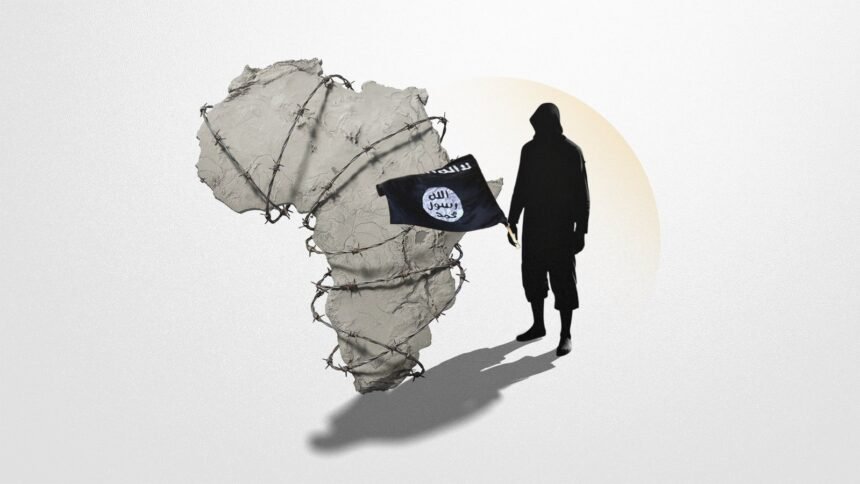
While Western narratives proclaim the Islamic State’s territorial demise in the Middle East as a definitive victory, Africa’s lived reality paints a starkly different portrait: ISIS affiliates and inspired militants continue to unleash terror, displacing millions and claiming thousands of lives across the Sahel, Horn, and beyond. From ISWAP’s abductions in Nigeria to JNIM’s sieges in Mali, the group’s ideology endures through hybrid networks blending jihadism with banditry, exploiting ethnic fissures and economic voids. This analysis contrasts global perceptions with African realities, underscoring how radicalization persists through online propaganda and local grievances, and demands robust Pan-African responses to reclaim security from this unrelenting scourge.
Pan Africa Under Siege: ISIS’s Enduring Grip
Across the Pan-African landscape, ISIS’s proclaimed downfall in Syria and Iraq rings hollow, as its ideological embers ignite fresh conflagrations from Lake Chad to the Sahara. Western assessments, fixated on the 2019 collapse of the Middle East caliphate, overlook how ISIS has metastasized through African franchises like Islamic State West Africa Province (ISWAP) in Nigeria and Islamic State Sahel Province (ISSP) in Burkina Faso and Mali. These offshoots, commanding thousands of fighters, orchestrate attacks claiming over half of global terrorism deaths in 2024, per security indices, while displacing 4.2 million in the Sahel alone. In Nigeria, ISWAP’s November 2025 Borno market bombing killed 12, echoing the group’s evolution from Boko Haram’s 2009 roots to a transnational menace taxing ransoms for arms.
This siege manifests in hybrid warfare: jihadists ally with bandits for logistical muscle, as seen in Papiri’s school abductions, where 315 pupils were seized, with ISWAP fingerprints on ransom videos. Pan-African unity fractures under this assault—ECOWAS schisms post-Sahelian coups leave coastal states like the Ivory Coast fortifying borders against JNIM incursions—yet communal resilience flickers: interfaith vigils in Kaduna mourn slain priests like Edwin Achi, while AU condemnations urge intelligence fusion. Africa’s burden amplifies global blind spots: while Sydney’s Hanukkah attack draws headlines for ISIS-inspired lone wolves, Sahelian villages endure daily raids, underscoring how the group’s dark-web propaganda—viral fatwas and AI-crafted calls to arms—sustains radical fervor amid poverty rates exceeding 50 percent in hotspots.
ISIS Phantoms in Africa: From Caliphate Ruins to Local Reigns
ISIS’s African phantoms defy Western obituaries, thriving through decentralized command that adapts Middle Eastern tactics to continental terrains. In the Sahel, ISSP’s 2025 offensives mirror the caliphate’s brutality: village razings in Niger displace 300,000, enforcing sharia courts that tax gold mines for $200 million annually. Nigeria’s ISWAP, splintered from Boko Haram in 2016, controls Borno enclaves, abducting schoolgirls like Papiri’s 315 to force conversions and swell ranks, with 100 freed in December amid partial ransoms. This reign terrorizes communities: Fulani herders, squeezed by desertification shrinking pastures 40 percent, join as foot soldiers, blending jihad with resource wars reminiscent of Biafra’s 1970 ethnic starvations.
Global contrasts sharpen here: while ISIS’s Sydney-inspired shooters radicalize online via Telegram outrage, African affiliates embed locally, exploiting governance voids where police ratios lag at 1:1,000. Central Africa’s Islamic State Central Africa Province (ISCAP) in Congo and Mozambique raids churches, killing 150 in 2025, while Somalia’s ISIS faction competes with al-Shabaab for port taxes. These phantoms sustain ISIS’s brand: dark-web servers host recruitment videos glorifying Gaza as justification for anti-Western strikes, radicalizing 20 percent of Sahelian youth per AU estimates. Africa’s enduring siege demands recalibration—Western aid, like U.S. drones in the Ivory Coast, must align with Pan-African ownership to exorcise these specters.
Counter-Terror Crossroads: Africa’s Battle Against ISIS Hybrids
At counter-terror’s crossroads, African states grapple with ISIS hybrids that fuse ideology with opportunism, outpacing fragmented responses. Nigeria’s Multinational Joint Task Force, which has reclaimed 70 percent of ISWAP territory since 2015, deploys Super Tucano jets for precision strikes, yet overstretch—battling bandits, separatists, and Delta militants—yields partial victories, such as the 100 pupils freed in Papiri. Mali’s Wagner pact, following the 2022 exit of French Barkhane, prioritizes mines over masses, enabling JNIM’s Bamako blockade that starves 2 million. Ivory Coast’s December 2025 U.S. spy plane bid exemplifies adaptive countermeasures: Global Hawks to track JNIM convoys, bolstering northern shields that repelled 15 incursions in 2025.
Pan-African innovations emerge: Mauritania’s amnesty-theology model deradicalizes 1,000 fighters. At the same time, the AU’s G5 Sahel echoes the call for hybrid forces blending kinetic operations with development—€50 million for Sahelian boreholes, reducing recruitment by 30 percent. Challenges abound: Russian mercenaries in the Central African Republic suppress rebels but commit atrocities, alienating populations and fueling ISIS recruitment. Effective crossroads navigation requires unity: ECOWAS intelligence hubs fusing Nigerian drones with Ivorian informants, transcending Wagner’s plunder for community-centric patrols that heal ethnic rifts.
JNIM’s African Onslaught: Al-Qaeda’s Shadow Over Sahel
Jama’at Nusrat al-Islam wal-Muslimin (JNIM), al-Qaeda’s Sahelian spearhead, unleashes an onslaught mirroring ISIS’s resilience, encircling Mali’s Bamako with fuel ambushes that displace 500,000 in 2025. Forged in 2017 from AQIM and Macina alliances, JNIM’s 6,000 fighters tax gold flows for $300 million, funding drone strikes and border raids into the Ivory Coast and Benin. This shadow extends Africa’s terror web: JNIM’s Burkina sieges claim 4,000 lives, while alliances with Nigerian bandits hybridize threats, as in Kwara’s church abductions killing two.
Al-Qaeda’s calculus exploits Sahelian voids: French failures in Mali—Barkhane’s tactical myopia, ignoring grievances—ceded ground to JNIM’s “protector” narrative among Fulani, swelling ranks amid 60 percent poverty. Pan-African countermeasures lag: junta’s Russian tilt isolates ECOWAS, yet Ivory Coast’s U.S. drone overture could illuminate JNIM’s Kidal bases. Eradicating this onslaught demands holistic sieges: AU deradicalization, weaving imams with economists, transforming jihad’s shadow into communal light.
Al-Qaeda’s Pan-African Web: From Sahel to Horn Entanglements
Al-Qaeda’s web ensnares Pan-Africa, from JNIM’s Sahel dominion to al-Shabaab’s Horn strongholds, where 2025 offensives reclaim Somali towns amid Ethiopian-Eritrean border tensions. In Somalia, al-Shabaab’s 7,000 militants tax Mogadishu’s ports for $100 million, funding IEDs that kill 2,000 annually, while alliances with JNIM export tactics southward. The Horn’s entanglements amplify: Tigray’s flux risks jihadist footholds, echoing Biafra’s ethnic wars, where grievances birthed insurgencies.
This web’s threads radicalize via Telegram fatwas, inspiring lone wolves like Sydney’s Hanukkah shooters, yet Africa’s toll dwarfs: al-Qaeda affiliates displace 3 million in Sahel-Horn axes. Pan-African unweaving requires entanglement: AU peacekeeping in Somalia, fused with Ethiopian drones, to sever webs and foster stability.
Peacekeeping Paradigms: AU’s Role in ISIS-Al-Qaeda Containment
African Union peacekeeping paradigms evolve to contain ISIS-al-Qaeda hybrids, deploying 20,000 AMISOM troops in Somalia to reclaim al-Shabaab enclaves, yet funding shortfalls—$160 million annually—hinder efficacy. In the Sahel, AU’s post-G5 blueprints urge the deployment of standby forces, blending Nigerian contingents with Malian mediators to counter Wagner’s predatory patrols. Paradigms shift: community-centric models in Mauritania amnesty 1,500 fighters, while AU deradicalization hubs in Addis Ababa train 5,000 imams to dismantle online propaganda.
Challenges persist: Ethiopian-Eritrean brinkmanship diverts resources, mirroring Central African mercenary voids. Effective containment demands paradigm fusion: Pan-African financing for hybrid missions, transforming peacekeeping from reactive deployments to proactive resilience.
Radicalization Realms: Online Lures Sustaining African Terror
Radicalization’s realms thrive online, where ISIS-al-Qaeda’s dark-web servers and AI-crafted posts sustain African terror, radicalizing 25 percent of Sahelian youth amid Gaza outrage. In Nigeria, ISWAP’s Telegram channels glorify abductions like Papiri’s, recruiting via poverty promises, while JNIM’s fatwas are embedded in Fulani forums. This digital lure outpaces containment: Western deplatforming falters against encrypted apps, fueling lone wolves from Sydney to Bamako.
Pan-African countermeasures: AU cyber units monitor 10,000 channels and fuse community elders’ counter-narratives to reclaim realms. Realms’ reclamation hinges on addressing roots—50 percent unemployment, ethnic marginalization—transforming lures into ladders of opportunity. Africa’s radicalization battle endures, demanding vigilance lest online shadows eclipse continental dawn.


