

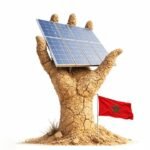





Pan-African Economic Unity
Across the sprawling expanse of Africa, a continent rich in diversity and potential, the dream of unified economic sovereignty has long been a beacon for its people. Rooted in the philosophies of leaders like Kwame Nkrumah and Julius Nyerere, Pan-Africanism envisions a collective strength that transcends colonial borders, fostering intra-continental collaboration to harness shared resources and talents. Today, this vision materializes through frameworks such as the African Union’s Agenda 2063, which aims to achieve an integrated, prosperous Africa by 2063, emphasizing self-reliance and equitable growth. With a population exceeding 1.4 billion and a combined GDP nearing $3 trillion, the continent’s youthful demographic—over 60 percent under 25—presents both a challenge and an opportunity. Historically, Africa’s trade has been outward-focused, exporting raw materials to former colonial powers while importing finished goods, perpetuating dependency. Yet, recent shifts, including the operationalization of the African Continental Free Trade Area (AfCFTA) in 2021, signal a turning point. AfCFTA, covering 1.3 billion people and potentially the world’s largest free trade zone, seeks to boost intra-African trade from its current 18 percent to over 50 percent by 2030, reducing reliance on volatile commodity exports. This unity is not abstract; it involves harmonizing standards, investing in cross-border infrastructure like the Lagos-Abidjan highway, and promoting digital economies to connect rural farmers with urban markets. In this era of global realignments, Pan-African strategies are vital for navigating external pressures, from U.S. tariffs to Chinese investments, ensuring that Africa’s growth benefits its citizens rather than distant shareholders.
Africa’s Oil Legacy
The story of oil in Africa is one of promise unfulfilled, a tale woven from mid-20th-century discoveries that transformed sleepy coastal towns into bustling hubs of extraction. Beginning with Algeria’s Hassi Messaoud field in 1956 and Nigeria’s Oloibiri well in 1958, oil became the continent’s economic lifeline, propelling nations like Angola, Libya, and Egypt into the global energy arena. Nigeria, Africa’s top producer, outputs around 1.4 million barrels daily, while Angola’s deepwater reserves and Algeria’s gas fields contribute significantly to OPEC quotas. This hydrocarbon wealth has funded infrastructure booms, from Luanda’s skyscrapers to Abuja’s highways, but at a steep cost. Geopolitically, Africa’s oil is entangled in global turmoil: U.S. escalations toward Venezuela disrupt supply chains, as Venezuela’s heavy crude complements African blends for Chinese refineries, while Russia-Ukraine conflicts spur drone attacks on infrastructure, inflating prices as seen in 2025’s 2.6 percent weekly surge to $60.08 per barrel. Environmentally, the legacy is grim—Niger Delta spills have contaminated farmlands, displacing communities and fueling insurgencies, while gas flaring in Angola exacerbates climate change, contributing to extreme heatwaves that parch the Sahel and reduce agricultural yields by up to 20 percent annually. The “resource curse” looms large: oil revenues, often accounting for 70-90 percent of exports, distort economies, inflate currencies through Dutch disease, and breed corruption, as evidenced by scandals in Libya’s divided oil sector. Amid falling global prices in 2025, oil-dependent nations face fiscal strains, with revenues plummeting and currencies weakening, underscoring the urgency for diversification. Yet, oil’s grip persists, with new explorations in Namibia and Senegal promising short-term boons but long-term vulnerabilities in a world pivoting to renewables.
Pathways to Non-Oil Prosperity
Venturing beyond the shadows of crude, Africa is charting bold pathways to non-oil prosperity, transforming its vast agricultural lands, mineral wealth, and innovative spirit into engines of sustainable growth. Leading this charge are nations like South Africa, whose exports of automobiles, machinery, and precious metals now surpass oil in value, fostering a manufacturing base that employs millions. In East Africa, Kenya’s floriculture and tea processing sectors generate over $1 billion in annual revenue. At the same time, Ethiopia’s textile and apparel industries, bolstered by industrial parks, have attracted global brands and created hundreds of thousands of jobs. Rwanda, often hailed as Africa’s tech hub, leverages its “Silicon Savannah” to export digital services, from fintech apps to drone deliveries, drawing investments that propel GDP growth above 8 percent. Morocco, with its phosphate reserves, has evolved into a leader in fertilizer production, exporting value-added products to Europe and Asia, while Ghana and Côte d’Ivoire process cocoa into chocolate and cosmetics, capturing higher margins in global value chains. The AfCFTA accelerates this shift, enabling seamless trade in non-oil goods such as Ugandan coffee and Senegalese textiles, with projections of 30 million new jobs in agro-processing alone. Digital innovations, such as mobile money in Kenya’s M-Pesa ecosystem, bridge gaps, allowing smallholders to access markets without intermediaries. However, this prosperity demands robust policies: vocational training to equip youth, renewable energy to power factories, and supply chain enhancements to withstand climate shocks such as droughts. By prioritizing sectors like tourism, pharmaceuticals, and green technologies—such as solar panel assembly in Tunisia—Africa can mitigate oil’s volatility, building resilient economies that prioritize local value addition and inclusive development.
Tariff Transformations in Africa
Tariffs, once formidable barriers fragmenting Africa’s economic landscape, are undergoing a profound transformation, evolving from obstacles into opportunities for continental cohesion. Historically, high duties—averaging 12 percent on intra-African goods—have stifled trade, making it cheaper to import from Europe than from a neighboring country, a relic of colonial divide-and-rule tactics. The AfCFTA marks a seismic shift, committing to eliminating tariffs on 90 percent of goods over a decade, with sensitive sectors like textiles phased in gradually. This liberalization has already spurred growth: intra-African trade rose 20 percent in 2024, with non-oil exports such as Ethiopian flowers to Kenya and South African machinery to Zambia flowing more freely. Leading nations exemplify success—Nigeria’s trade surplus with ECOWAS jumped 223% in Q1 2025, driven by non-oil items such as urea and cashew nuts. Yet, non-tariff barriers persist: bureaucratic red tape at borders, inconsistent standards, and poor infrastructure inflate costs by up to 40 percent. Solutions emerge through digital tools, such as single-window customs systems in Rwanda and mutual recognition agreements for products, easing phytosanitary hurdles for West African cashews. This transformation empowers marginalized groups—women-led cooperatives in Senegal’s shea butter trade now access broader markets, while youth entrepreneurs in Uganda’s agro-tech sector scale regionally. Geopolitically, lower tariffs counter external pressures, such as U.S. reciprocal trade policies under AGOA, by bolstering self-sufficiency. The challenge lies in equitable implementation: protecting infant industries without resorting to protectionism, and ensuring that small states like Lesotho benefit alongside giants like Nigeria. Ultimately, these tariff reforms bridge divides, fostering a Pan-African marketplace where commerce drives unity and prosperity.
BRICS: Africa’s Trade Revolution
In the evolving global order, the BRICS—comprising Brazil, Russia, India, China, South Africa, and expanded members such as Egypt, Ethiopia, Iran, and the UAE—herald a trade revolution for Africa, challenging U.S. dominance and accelerating non-oil diversification. South Africa, as the bloc’s African linchpin, channels 40 percent of its trade through BRICS partners, importing Chinese machinery for assembly lines while exporting minerals to Indian refineries. This alliance fosters de-dollarization: Nigeria, a BRICS partner, settled 36 percent of its crude in rupees and yuan in 2025, bypassing petrodollar premiums amid U.S. tariffs. Ethiopia’s exports to Russia surged 60 percent, including coffee, while intra-BRICS trade gaps of $500 billion offer untapped potential for African commodities. Geopolitically, the BRICS counters Western sanctions by providing Russian wheat to drought-hit nations and Brazilian agrotech to Zambian farms, reducing dependency on IMF loans. China’s $50 billion in BRI investments build African infrastructure—rail in Kenya, ports in Djibouti—facilitating non-oil flows, such as Moroccan phosphates, to India. However, asymmetries abound: Chinese loans, while bridging gaps, risk debt traps, echoing past imbalances. BRICS evolves beyond trade into multipolar platforms, with tools like BRICS Pay enabling non-interference development, as noted by Ethiopian economists. For Africa, this means leveraging resources for technology transfer, as in South Africa’s renewable energy exports. The revolution demands diplomacy: balancing India’s rivalry with China, ensuring African voices shape agendas. By 2025, BRICS+ spans 54 percent of the global population, offering Africa a pathway to sovereignty, with trade surpluses with the bloc offsetting deficits elsewhere, reshaping dynamics from extraction to equitable partnership.
Sustainable Development Horizons
Africa’s journey toward sustainable development amid non-oil transitions is a tapestry of triumphs and trials, where environmental imperatives intersect with economic ambitions. Climate change amplifies challenges: extreme heatwaves, projected to intensify by 2030, slash agricultural productivity by 10-20 percent in the Sahel, displacing millions and exacerbating food insecurity in nations like Chad. Oil-dependent economies face dual pressures—declining fossil revenues amid global shifts to renewables, coupled with $10 billion annual losses from droughts and floods in 2024. Yet horizons brighten with adaptive strategies: the Sustainable Africa Scenario envisions achieving energy goals through solar grids powering rural enterprises, as in Morocco’s Noor complex, which exports green energy. Leading nations are pioneering this: Kenya’s geothermal and wind farms generate 90 percent of its electricity from renewable sources, supporting non-oil sectors like tourism. Debt burdens, swollen by fossil subsidies, divert funds, but BRICS financing offers alternatives, funding hydro in Ethiopia without stringent conditions. Skills gaps hinder progress—600 million people lack access to electricity, stunting digital growth—but vocational programs in Rwanda train youth in AI and robotics. Environmental stewardship integrates indigenous knowledge, such as precision farming in Zambia, to combat heat, while the AfCFTA mandates value chains that prioritize eco-friendly practices. Prospects include 30 million agro-jobs, green mineral processing for electric vehicles, and carbon markets valuing African forests. The imperative is holistic: policy harmonization to attract investments, public-private partnerships for resilient infrastructure, and Pan-African solidarity to negotiate fairer climate finance at summits. This horizon promises not just survival, but a thriving continent where development harmonizes with ecology.
Future Visions for Africa
Envisioning Africa’s future beyond oil unveils a vibrant mosaic of innovation and resilience, where diversified economies propel the continent to global prominence. By 2063, Agenda 2063 foresees an integrated Africa with intra-trade at 60 percent, and non-oil sectors such as biotech and e-commerce driving growth. Nations like Nigeria aim for $1 trillion GDP through tech hubs, while South Africa’s automotive exports evolve into electric vehicles, tapping lithium reserves. BRICS partnerships accelerate this, with de-dollarized trade fostering stability amid geopolitical shifts. Climate adaptation turns challenges into assets—solar-powered agro-hubs in the Sahara combat heat, creating jobs for 200 million youth entering the workforce by 2030. Digital leaps, from blockchain in supply chains to AI in healthcare, bridge urban-rural divides, empowering women entrepreneurs in fintech. Yet visions require action: investing $170 billion annually in infrastructure, reforming education to build STEM skills, and greening policies to meet net-zero goals. Pan-African unity, through AfCFTA and alliances, ensures equitable gains, reducing inequalities that fuel conflicts. In this future, Africa emerges not as a periphery but a pioneer, its ingenuity fueling a renaissance that inspires humanity.


