




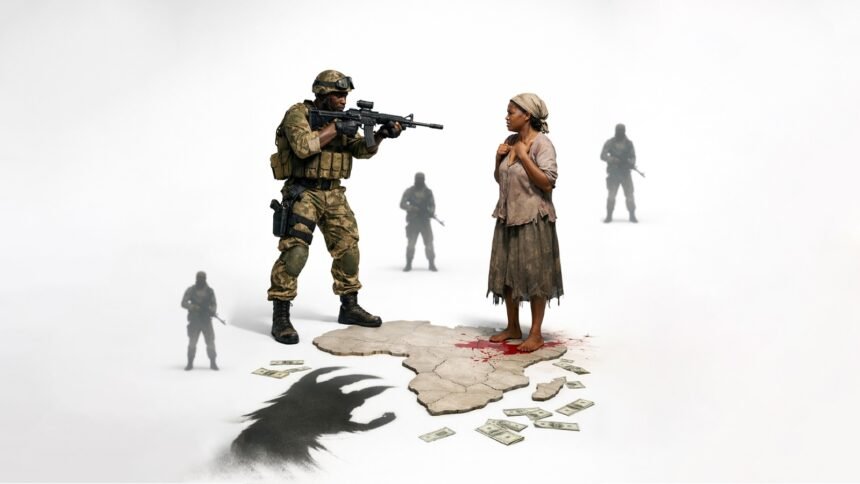
The Sahel’s counter-terror efforts have unleashed a grim paradox: in Burkina Faso and Mali, government forces and their allies have killed far more civilians than jihadists since 2023, according to documented incidents. This pattern, Burkina Faso’s military and pro-government militias responsible for over 1,255 civilian deaths versus jihadist tolls, with 2025 figures showing 523 versus 339 in Burkina and 918 versus 232 in Mali, fuels recruitment for groups like JNIM and ISSP while eroding legitimacy and stability. As Pan African security fractures under junta rule and foreign influences, these casualties expose the human cost of operations that prioritize force over protection.
Pan African Perils: Bloodshed’s Continental Shadow
Pan-African perils deepen as civilian casualties from counter-terror campaigns in Burkina Faso and Mali ripple across the Sahel, displacing millions and undermining continental unity. State forces’ actions, drone strikes, convoy escorts, and village raids have claimed thousands since 2023, outpacing jihadist killings and creating a cycle of fear that jihadists exploit for recruitment. In Burkina, pro-government Homeland Defense Volunteers alongside troops have executed civilians in abandoned villages like Sakoani, where entire populations were “exterminated.” Mali’s armed forces, partnered with Russian paramilitaries, have surged into drone warfare, with 66 civilian strikes in 2025 alone killing 155.
This shadow threatens Pan-African cohesion: AU initiatives for regional stability clash with ECOWAS sanctions isolating juntas. At the same time, violence spills into Niger and the Ivory Coast, straining refugee camps and trade. Perils demand Pan-African recalibration, joint oversight mechanisms to curb excesses and address root grievances like Fulani marginalization, lest civilian bloodshed erodes trust in state institutions and empowers jihadist narratives across borders.
Burkina Faso & Mali: Counter-Terror’s Brutal Frontlines
Burkina Faso and Mali stand as counter-terrorism’s brutal frontlines, where junta-led operations have inflicted disproportionate civilian harm amid surging jihadist threats. In Burkina, security forces and allied militias have committed 33 documented mass killings since 2023, resulting in 1,255 deaths, more than twice jihadist tolls, with 2025’s 523 civilian fatalities versus 339 by JNIM and ISSP. Mali mirrors this: military and Russian allies killed 918 civilians in 2025 against 232 by militants, often via drone strikes on gold mining sites like Inatiyara, where 50 perished in July 2024.
Frontlines’ dynamics: troops escort convoys through contested zones but execute “suspects” en route, as in eastern Burkina’s abandoned villages. Militants control swathes of territory, forcing the state’s reliance on heavy force that alienates communities. Burkina Faso and Mali’s juntas, post-coups in 2022 and 2020, prioritize survival over accountability, with abuses like collective punishment bolstering JNIM’s “protector” image among Fulani herders. This brutality risks long-term defeat, as civilian deaths swell militant ranks in a region where 60 percent youth unemployment already breeds vulnerability.
Civilian Casualties: The Hidden Human Cost
Civilian casualties form the hidden human cost of Sahel counter-terrorism, where Burkina Faso and Mali’s operations have claimed thousands of non-combatants since 2023, dwarfing jihadist killings in verified data. HRW documented 57 incidents with 1,837 civilian deaths, 1,255 by state forces and allies, patterns of encirclement, execution, and drone bombardment in populated areas. Mali’s 2025 drone surge alone killed 155 civilians, often at artisanal sites, while Burkina’s militias razed villages like Sakoani, leaving 100 bodies in one assault.
Cost’s human face: families torn apart, survivors fleeing into jihadist zones for “protection,” and communities radicalized by perceived state brutality. Casualties exacerbate displacement, over 2 million in Mali and Burkina, fueling famine and disease. This toll exposes operational flaws: indiscriminate force in rural heartlands where jihadists embed among civilians. Addressing it requires precision tactics and community safeguards, lest civilian deaths become the insurgency’s most potent weapon.
Counter-Terrorism Efforts: Force’s Fatal Flaws
Counter-terrorism efforts in Burkina Faso and Mali reveal the force’s fatal flaws, where aggressive campaigns by state militaries and allies have killed more civilians than militants, undermining the very stability they seek. Burkina’s troops and Homeland Defense Volunteers, alongside Mali’s forces, partnered with Russian paramilitaries, have resorted to collective punishment, raids on “suspect” villages, and drone strikes on gatherings, yielding 1,255 civilian deaths in Burkina since 2023 versus jihadist figures. Mali’s 918 civilian toll in 2025 highlights drone warfare’s escalation, with strikes on gold mines and convoys claiming dozens.
Flaws’ consequences: excesses alienate populations, boosting JNIM recruitment and enabling territorial gains. Efforts’ tactical focus on escorts and raids ignores governance voids, perpetuating cycles where militants regroup in forests like Alagarno. Fatal flaws demand reform: rules of engagement that prioritize civilian protection, intelligence-led precision, and the integration of local voices to transform counter-terrorism from a source of resentment into a tool for lasting security.
Russia vs. France: Proxy Influences on Atrocities
Russia versus France proxy influences shape atrocities in Burkina Faso and Mali’s counter-terror landscape, where junta shifts from Paris to Moscow have amplified civilian killings. France’s Barkhane withdrawal post-coups left voids filled by Russia’s Africa Corps and Wagner, whose mine-guarding roles coincide with 918 civilian deaths in Mali in 2025, often via heavy-handed ops mirroring Moura-style massacres. Burkina’s military, emboldened by Russian arms, has escalated brutality, outpacing jihadist tolls.
Influences’ proxy perils: Russia’s resource-driven security prioritizes extraction over rights, fueling recruitment, while France’s legacy sanctions isolate juntas without curbing abuses. Atrocities’ geopolitical ripple: US attempts to rebuild ties clash with Russian entrenchment, complicating Sahel alliances. Balancing proxies requires Pan-African mediation, regulating foreign forces to minimize civilian harm and prevent proxy wars from deepening the region’s wounds.
Political Unrest: Instability’s Civilian Catalyst
Political unrest catalyzes civilian casualties in Burkina Faso and Mali, where junta dominance post-coups has entrenched military impunity amid delayed elections and repression. Burkina’s pro-government militias and Mali’s transitional regimes, facing opposition boycotts, prioritize survival, enabling excesses that killed 1,255 civilians in Burkina since 2023. Unrest’s unrest: protests against abuses swell jihadist ranks, with Fulani communities viewing state forces as greater threats than militants.
Catalyst’s cycle: political instability diverts resources from governance to crackdowns, sustaining 2025’s 523 Burkina civilian deaths by troops. Unrest’s resolution: inclusive transitions with civilian oversight, AU-facilitated dialogues, and accountability mechanisms to break the cycle, ensuring political will aligns with human security for lasting stability.