



Pan-African Citadel: Ironclad Borders Amid Balkanization Phantoms
The African Union’s foundational creed, etched in the 1963 Charter and reinforced by the 2000 Constitutive Act, elevates uti possidetis juris—the sanctity of colonial boundaries—to dogmatic reverence, a prophylactic against the specter of endless fragmentation that haunted decolonization’s dawn. This doctrine, born from the 1964 Cairo Resolution’s collective trauma over irredentist skirmishes, has armored the continent against over 50 secessionist insurgencies since independence waves crested in the 1960s. From Nigeria’s Biafran cataclysm (1967-1970), where ethnic Igbo aspirations drowned in a million deaths, to Angola’s Cabinda enclave’s perennial grumblings, the AU’s anti-separatist firewall has prevailed, admitting only two sovereign ruptures: Eritrea’s 1993 divorce from Ethiopia after three decades of carnage, and South Sudan’s 2011 secession via a 98.83% referendum, lubricated by oil revenue pacts and Comprehensive Peace Agreement fatigue.
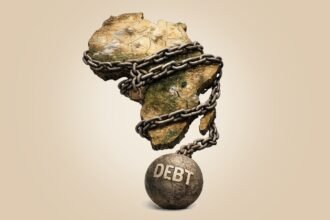
Yet this monolith cracks under the tectonic forces of socioeconomic change. Hyperinflation in Zimbabwe, Somalia’s anarchic implosion, and Mali’s jihadist vortices have incubated proto-states like Somaliland—a de facto democracy since 1991, boasting GDP growth from livestock exports yet marooned without formal kin—while Azawad’s Tuareg rebels in 2012 briefly hoisted the Azawad flag before French interdiction. Economic crises amplify these fissures: Africa’s $1.2 trillion debt overhang (2025 IMF figures) and youth bulges (60% under 25) render peripheral regions powder kegs, where resource curses—diamonds in Kasai, cobalt in Katanga—fuel “liberation” rhetoric masking elite predation. The AU’s paradox deepens: championing self-determination against Western Sahara’s Polisario while excommunicating fellow travelers, exposing a realpolitik where Pan-African solidarity bows to great-power patronage and domestic stability imperatives. As climate migrations swell Saharan flanks and Chinese Belt-and-Road tentacles probe borders, the citadel confronts an existential query: can enforced unity withstand the gale of aggrieved peripheries, or must it evolve toward confederative flex?
Wastes of Contention: Western Sahara’s Half-Century Haunt
Sprawling across 266,000 square kilometers of dune-swept desolation—larger than the United Kingdom—Western Sahara remains Africa’s last colonial redoubt, a Spanish protectorate until Madrid’s 1975 capitulation amid Franco’s deathbed throes. The Madrid Accords partitioned it between Morocco and Mauritania. Still, Rabat’s Green March—350,000 civilians flooding the sands—ignited the Polisario Front’s 16-year war, claiming 10,000 Moroccan lives before the 1991 UN-brokered ceasefire birthed MINURSO to midwife a self-determination plebiscite. Voter roster rancor—Morocco’s settler influx ballooning “eligible” Sahrawis from 74,000 to 200,000—derailed it indefinitely, freezing a de facto bifurcation: Rabat controls 80% behind a 2,700-kilometer berm labyrinth, while Polisario’s Sahrawi Arab Democratic Republic (SADR) administers a Tindouf sliver from Algerian exile camps sheltering 173,000 refugees.
Resources tantalize: Bou Craa phosphates (world’s third-largest reserves, fueling 10% of Morocco’s exports), Atlantic fisheries (20% of EU catches pre-boycotts), and untapped solar/wind (Dakhla’s Atlantic Trade Port eyes green hydrogen hubs). Demographics tilt Moroccan: 500,000 residents, two-thirds settlers, lured by subsidies amid 70% youth unemployment in camps. Algeria’s $1 billion annual lifeline—arms, diplomacy—sustains Polisario, framing the feud as Algiers-Rabat proxy, exacerbated by 2021 border closures and 2023 drone dogfights. Recent escalations—Polisario mortar barrages post-2020 ceasefire rupture—herald MINURSO’s obsolescence, as Rabat’s $10 billion infrastructure blitz (highways, airports) entrenches normalcy, challenging the UN’s “non-self-governing” imprimatur.
Legitimacy’s Labyrinth: Africa’s Selective Sovereignties
African statehood transcends the Montevideo criteria; it mandates AU imprimatur —a gauntlet few surmount without great-power midwifery. South Sudan’s triumph—IGAD-brokered, oil-split 50/50, AU-swift admission—juxtaposes with Somaliland’s limbo, despite 30 years of peace, elections, and the DP World lease of the Berbera port. Eritrea’s 1993 nod rode Mengistu’s fall; Ambazonia’s (Cameroon’s English-speakers) 2017 revolt withers under French/ECOWAS indifference. For Western Sahara, Morocco’s autonomy blueprint—2007 offer of devolved legislature under Rabat’s crown—garners tidal validation: Trump’s 2020 recognition (Abraham Accords quid for Israel ties), Biden’s tacit continuity, and 2025 cascade—France (2024), Spain (2022), Germany (2024), UK (2025), Belgium/Poland/Ghana/Dominican Republic (recent). Israel echoed in 2023; the UAE/Saudi orbit aligns.
US foreign policy pivots to a transactional approach: 2020 Sahara nod unlocked Moroccan F-35 bids and counter-terror bases; 2025 Dakhla consulate foray (October delegation scouting premises) signals an investment surge amid UNSC penholdership. EU-UN nexus frays—Strasbourg rulings voiding Rabat’s resource pacts—yet Brussels eyes fisheries/phosphates. AU’s SADR seat (since 1984) endures, but 30+ members defected post-2020, isolating Algiers. “Normalization” barters abound: Israel pacts yielded sovereignty nods; economic distress (camps’ 80% aid dependency) erodes resolve. Pitfalls loom—referenda ghosts haunt—but momentum favors fait accompli, where recognition accrues to the resolute builder, not the righteous claimant.
Polisario Inferno: Nomad Nationalism’s Unquenched Blaze
Forged in 1973 as anti-Spanish maquis, Polisario transmuted into Sahrawi vanguard post-Green March, melding Marxist-Leninist cells with Bedouin mobility to evict Mauritania (1979) and bleed Rabat via “war of the dunes.” Ideological steel—SADR’s 1976 proclamation, gender-equal battalions, Smara’s ghost capital—sustained Tindouf’s 50-year republic-in-exile, where 90% youth were radicalized amid rationed futures. Algeria’s crucible honed professionalism: Cuban-trained pilots, Russian ordnance, culminating in the 1991 stalemate.
Ceasefire complacency cracked in November 2020—breach dubbed “treason”—unleashing drone swarms and artillery duels, reclaiming 10% territory. October 2025 erupts anew: mass camp protests decry US UNSC draft nixing referenda for autonomy; Polisario spurns talks, vowing “no negotiations under occupation.” Liberation’s dilemma: heroism ossifies into insurgency when patrons (Algiers’ gas slump) waver, refugees age (50% born post-1991), and global indifference mounts. Yet flames flicker—diaspora hackers leak settler abuses, youth TikToks amplify #FreeSahara—interrogating endurance: can guerrilla grail prevail against Rabat’s bounty, or must it pivot to hybrid warfare in multipolar sands?
Rabat’s Berm Bastion: Counter-Insurgency as Nation-Building
Morocco’s repertoire transmutes conquest into consolidation: 1980s berms—sandwalls laced with sensors, 100,000 troops—choked infiltration; today, a $50 billion “Southern Provinces” renaissance (2021-2030) births Dakhla Atlantic City and Laâyoune tech parks, forging 1 million jobs. Autonomy tantalizes: tribal jish (feudal pacts) repackaged as “advanced regionalization,” co-opting notables via $2,000 pensions.
Diplomacy dazzles: 2020 Abraham Accords netted US/Israel nods; 2025 UNSC lobbying, Trump letter hailing “irreversible sovereignty.” Dakhla consulate (October 2025 scouting) heralds hubs, investments—US firms eye $15 billion renewables. Challenges gnaw: smuggling cartels, jihadist spillovers (AQIM), and settler-Sahrawi frictions. Rabat’s genius: rebrand “insurgency” as Algerian meddling, insurgency as terrorism—post-9/11 windfall. Efficacy tests limits: prosperity gradients (Laâyoune GDP per capita thrice camps’) erode base, but unaddressed identity festers, risking Sahel contagion.
Horizons of the Hammada: Trajectories Toward Twilight or Triumph
October 2025’s UNSC vote looms as a fulcrum: the US draft’s autonomy pivot, MINURSO curtailment could cascade recognitions, embalming SADR. Trump’s “peace deal” overtures—Algiers-Rabat détente—dangle Nobel bait, yet Polisario’s brinkmanship courts isolation. Economic headwinds—global phosphate crash, Algerian fiscal vice—press compromise: confederation? Resource royalties? Africa’s lattice strains: AU’s unity mantra yields to pragmatism as 40+ states back Rabat. For Sahrawis, realism beckons—leverage greens, lobby BRICS—or perdure in principled penury. Morocco’s surge presages recalibration: sovereignty sans referendum, where power, not polls, anoints states. The hammada’s whispers warn: unresolved, it festers into Africa’s forever war, a cautionary mirage in unity’s vast expanse.